Kevin Kelly still runs Emerald Packaging the same way his father did 60-plus years ago: with an old school, high-touch approach. But that doesn’t mean nothing has changed for the company.
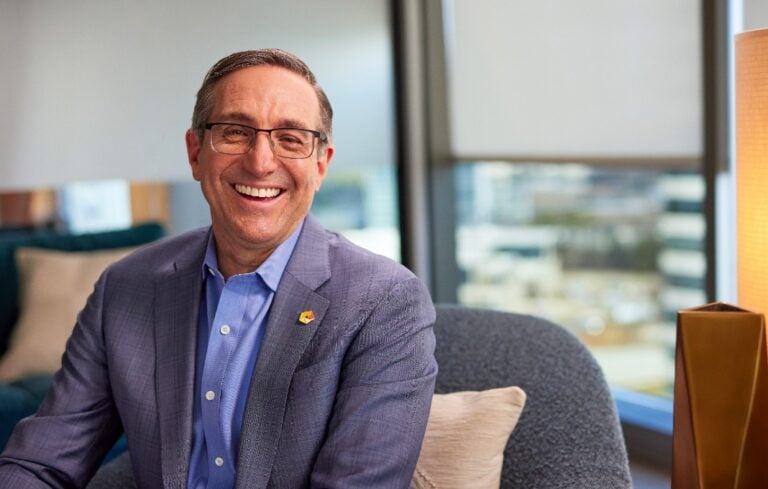
Kelly is the CEO of the family-owned company based in Union City, California, that makes flexible plastic packaging used primarily for fresh produce. “I emphasize ‘family-owned’ because it’s not family-run anymore,” says Kelly. “That transition kept us alive.”
He spoke with Chief Executive to shares how he’s grown the business, balancing family tradition, outside talent and industry demands.
Tell us about Emerald Packaging, your manufacturing operations and how the company has grown.
We began more than 60 years ago in a small factory in Berkeley, California with a four-color printing press and a bag machine. Back then we focused on bread bags because we were near bread makers. My father founded it with three partners and gradually bought them out, the last in 1993. Since then, we’ve been a family-owned business.
I emphasize “family-owned” because it’s not family-run anymore. Sure, I’m CEO. I set strategy, oversee marketing and work on government relations. But we have a non-family president who runs the day-to-day from finance to sales to operations. Ops is run by a pro, as is sales. That transition kept us alive. As family-owned companies grow, most need outside talent to sustain the company. Smart families recognize this.
I became CEO in 1999, three years after joining the business, having spent 10 years writing for BusinessWeek. The company had lost sales in the previous two years, shrinking nearly 20 percent to $16.5 million. It got so bad that our bank froze our line, so I had to stretch suppliers out 90 days.
Today we top $90 million and are solidly in the black. The bank thing scared me so much I try never to go into the line and haven’t for over a decade. We turned things around by investing in modern equipment—everything we had was old and outdated—and aggressively going after sales.
In fact, within seven years of taking over we had $50 million in sales, but I had outrun our management skills, and the place was imploding. That’s when I hired a process control engineer and she began to put procedures and quality systems in place.
We haven’t gone out and bought a lot of companies. Instead, we’ve steadily grown the place by focusing on a market—produce packaging—and dominating it. When you go to the produce section and see anything packaged, that’s likely us.
We’ve kept investing in equipment, and these days focus on innovation. For instance, we’re the first company to use food grade recycled plastics in retail packaging. We figured out how to make it, put money behind it and are way ahead of the competition.
Today, we have a company that runs 24/7, 362 days a year. Five hyper-modern printing press, 34 bag lines and about a dozen other pieces of finishing equipment. We produce more than a billion packages a year. These days we call Union City, California our home and have 200,000 square feet of factory space.
What does it mean to run a business with an old school, high-touch approach, like your father did?
I think I’ve taken it beyond my father, but in a logical extension. I really do believe that we have a moral responsibility as employers to keep up our end of the bargain. Increase sales and profits so we can pay bonuses and give raises and not lay people off. That’s the basics.
I also believe that smaller companies must work with employees where they are to ensure products get out. It’s also how you build loyalty and retain people. In a small company if you lose a person, it really hurts, whereas larger ones just plug someone else in.
So, what does this mean? When an employee lost a family member, I brought food to their house and said the rosary with them. We’ve loaned money to an employee to ransom his brother who was kidnapped in Mexico. During Covid I came to work every day. I felt I couldn’t ask people to work and not be here. We also put extensive safety measures in place.
High touch also means walking the floor and talking to people, listening to their feedback about their job or about their father’s health or so on. You must keep it human. Be self-deprecating. Most private equity comes along and destroys that, which is why I’ve avoided selling.
You’re known for your efforts to transform the plastics manufacturing industry through dedication to environmental stewardship. Tell us about that.
I’ve been a persistent critic of the industry’s failure to address the recycling of our products by helping to fund collection, sorting and reprocessing systems. As a result, almost all plastic ends up in landfills. Legislators have finally gotten fed up with this, which has resulted in some draconian regulations.
I’ve worked to incorporate recycled content into our packaging and spearhead the development of compostable materials. We’re also joining a consortium of national brands to help fund the recycling of packaging, a proof-of-concept effort to show it can be done. I talk to customers constantly about environmental issues and try to show them an enlightened path forward. Sometimes it works. Often it doesn’t.
Back at the ranch we recycle all our waste, including plastic, and have slashed our water use and installed solar energy. Despite being a plastics company we’re a certified California Green Business, one a few manufacturers to earn the honor.
I also talk to groups and meet with legislators and regulators and explain the function of our packaging, not just its form. Our packaging, given the technology in it, extends shelf-life and reduces food waste, a huge contributor to greenhouse gases.
In fact, the state of Oregon released a study saying produce packaging reduces greenhouse gas more than it contributes. Folks don’t know this. I’m out there teaching.
What’s next for Emerald Packaging?
We aim to crack $100 million within the next two years by revving up our sales program. We’re looking at putting in a second facility closer to our eastern customers. New equipment, as well. We’re already trialing new compostable materials and even paper-based produce packaging that can be recycled in a curbside bin.
I’m hoping the next generation will join eventually, or we turn the company over to our employees. I already say it’s not my company, it’s theirs, it’s every employee’s company. Neither of us make money without the other. The company doesn’t survive one without the other.
I take this so seriously I’ve banned the utterance of “my company” in the home or among the family. Words matter. They say what you believe.