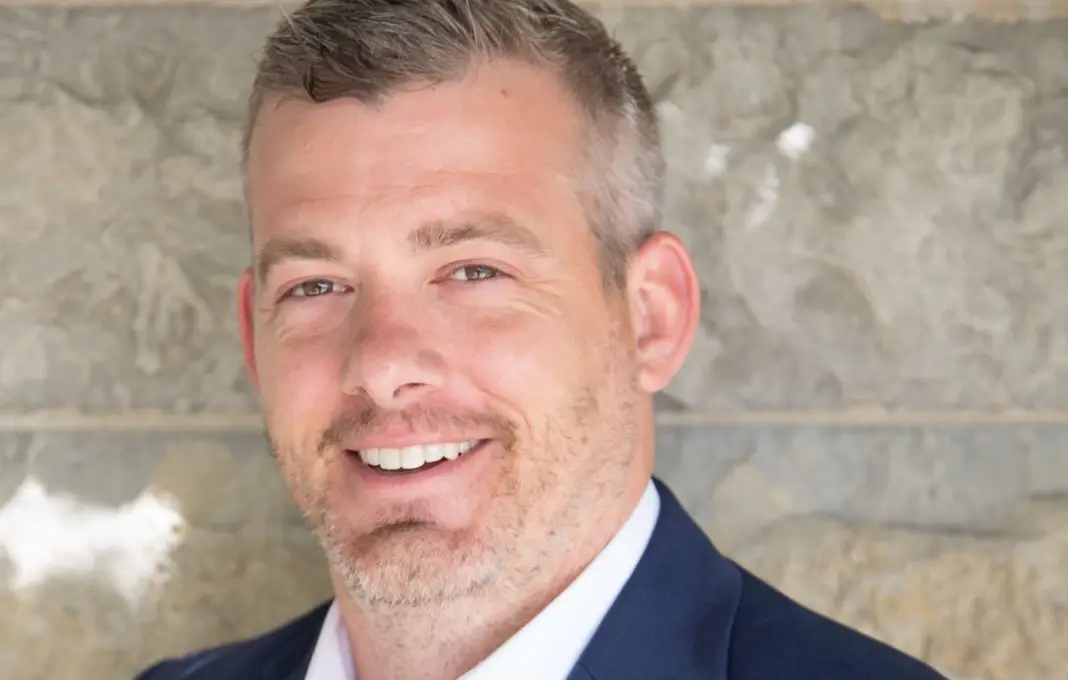
If anyone has felt the pain of uncertainty this past year, it’s manufacturers. But for Dave Ring, not knowing is just part of the deal. “Business loves certainty, and the thing is, everything’s uncertain,” he says. “That is sometimes frustrating, but if everything’s known, it can be boring to a certain extent.”
Ring is the CFO of Sentry Equipment—a 100-year-old manufacturer serving highly engineered industrial environments, and one of the earliest employee-owned companies in the U.S., launching its ESOP 40 years ago. It’s that component, supporting employees, that Ring chooses to focus on. “With this role, it’s helping people get through the clutter and create a strategy or manage a message that helps give some direction and support the strategy of the business.”
In an interview, Ring talks about getting comfortable with uncertainty, harnessing the power of storytelling and knowing when to hold firm. The following Q&A has been trimmed and edited for length and clarity.
Sentry works mainly with highly engineered industrial environments. How do you handle agility and uncertainty in the current manufacturing climate, versus a more commercial manufacturer?
Sentry Equipment is employee-owned. It’s a very unique concept. And that brings an additional piece of pride for individuals to show up to work. They know what they do makes an impact on the value of the business, and that gets returned to them through the ESOP [Employee Stock Ownership Plan] itself from a retirement standpoint.
Given that structure, being employee-owned, warrants a lot of free-flowing discussions, transparency, when we have issues being able to collaborate with one another.
For us specifically, being a manufacturer, being in the industrial space, we’ve always been on the forefront of trying to push some of the shop innovation, using a lot of automation, using machinery. We definitely had our challenges over the course of time. People saw it as potentially job loss for us; that was never the intent. It was just making sure that we were as efficient as possible, staying up with the current trends, being able to afford appropriate pricing with our employees.
Once that started garnering steam it was really a strategy behind that that we created that revolves around three key facets: agility, velocity and employee experience. We saw that we’d be able to adhere to the changes in the environment around us if we focus on those core things and always be relevant for our customers.
When you sense some kind of disruption or uncertainty in the greater world, where do you look first? Are you looking at dashboards? Are you listening to conversations that are happening among your people?
It’s all of that. It’s not just dashboards, it’s talking with individuals, sales teams, purchasing teams, what are they feeling? You can read articles every day. It’s coming at a rate that you can’t even keep up with. So, it’s kind of piecing that all together. And as we come together and talk about those things, it’s not any one person’s insights. It’s taking similarities that multiple people are seeing, multiple people are saying, multiple data points are pointing toward. You kind of get to a, “This feels like something’s going on here,” and you dig a little bit deeper, and you realize that’s where you want to focus your energies.
It’s less of a top down, not demand, but instrumentation, and more of a collective conversation. Does that seem accurate?
Yeah, that’s a blessing and a curse. As an ESOP, we say everyone has a voice, but not a vote, which is semi-true to a certain extent. It allows for individuals within the respective areas, departments, roles to have more of a voice. Taking that information can be exhausting at times and sometimes lead you down rabbit holes, but there’s nuggets in there, and you can kind of connect those dots.
That’s one of the key roles from a CFO standpoint. One of our responsibilities is being able to communicate the story and manage emotions. There’s a lot of people with a lot of opinions in the business, and I think it’s key upon this role to be transparent with what’s going on with the business as it pertains to the results, provide some insights into where we’re heading and getting, give a positive spin on it to stay optimistic, in light of whatever’s coming at us.
There’s always change. Business loves certainty, and the thing is, everything’s uncertain. There’s no guarantee. That is sometimes frustrating, but if everything’s known, it can be boring to a certain extent. It’s about that journey. With this role, it’s helping people get through the clutter and create a strategy or manage a message that helps give some direction and support the strategy of the business.
What’s the trigger point when you know that you need to change course? And how do you communicate that to the rest of your team?
Within accounting, within the CFO role, a lot of that is numbers-based. You’re looking at numbers as they’re coming at you, and you try to look at trends. You don’t necessarily look at points in time, you look at longer periods of time to say, “Is there something here that we need to adjust to?” Because, if we adjusted on a monthly basis, it would be incredibly chaotic and you’re trying to avoid chaos. For our business, we’re looking at the industries we play in, we’re looking at some of those news points and we’re looking at data points within those industries that might pertain to how it impacts us.
Do you have any examples of a moment that you had to pivot quickly or you decided, “No, we’re going to stay the course”?
I’ll give you a recent example. A lot of our products support energy industry—oil and gas, power generation—and a lot of that is fossil fuel-based. If you see what’s in the news today, you can’t go a day without reading something about artificial intelligence. And this has been going on for quite some time, but obviously it’s like the topic du jour over the last year or two. If you look at artificial intelligence in and of itself, the ability to do that requires a lot of computing power and it consumes a lot of energy. So, you’re starting to hear more and more about the infrastructure of AI, data centers going up throughout the country in some way, shape or form.
And like it or not, the grid in and of itself, the most stable form of providing that energy, is fossil fuel-based currently. So given that, we saw some headwinds against us for years, based upon the desire to go green. AI is requiring more conversations about the infrastructure and the grid and, like it or not, a lot of that’s going to come from some of those fossil fuels. So, how do we support those industries and take on that demand? Because then on top of artificial intelligence, [you] still need to heat homes. You still need to power communities.
How do you balance your short-term cost discipline with those longer-term investments?
It’s the biggest challenge. It helps when you have a picture that’s being painted right now: We see there being growth in the near-term future, next couple years for sure. So that helps be able to make some decisions that we might not have been [able to make] in the past, or our ability to maybe spend a little bit more than we have in the past. There’s a little less of a risk given that outlook in the industries which we play in. So, this is the point in time we want to make sure that we’re capitalizing on some of the opportunities, but supporting our customers as they figure this out along the way. We don’t have all the answers, nor do I expect we do, but we just want to be there for our customers to help support them and be a value-added supplier right next to them.
How do you personally make those decisions when you don’t have all the data or when the data’s incomplete?
No different than most companies. You’re doing SIOP planning, so you’re looking at what the funnel’s telling you. That has to help support some of those thoughts that you’re reading in the news. If you see a sales funnel or opportunities start to grow, you’re starting to connect some of those dots. You point some of those things out within my role, with my peers, they’re feeling the same thing within the respective areas, whether it be the shop floor, whether it be within engineering, whether it be the sales team, you’re kind of leaning on them to say like, “Are you seeing the same picture?” And it’s kind of a collective decision at the end of the day. I’m not trying to take a cop out. Because there’s certain things that I’m going to have to be the one to stand behind, but at this point in time using your peers, using your coworkers to help you gain that trust that what you’re seeing is there makes it easier to make some of those decisions.
What advice would you have for other manufacturing CFOs?
I alluded to the pace of change. The pace of business today is pretty fast. I don’t think it’s going to slow down at all. I think for each and every person that’s unique in terms of how they are able to scan the environment, utilizing the tools, resources that they have around them to be able to capitalize on that. I think that’s key. I also think specifically with the role, each company has an expectation of their finance department, specifically the CFO. And it’s up to that individual to make sure that they’re aligned with that or if they see something different to potentially make the change.
I think there’s more and more that’s being asked of this role becoming more operational than just a numbers cruncher. Not only being able to tell the story, but being able to say, “What can you now do?” The story says something, what do you do to make it to where you want to be or where you want it to go? Working with other departments in other areas to help get it to where you’d like it to be. Being more operational in nature is important, for CFOs to constantly be challenging themselves.
In general, I’m a student of learning. I think the moment you stop learning is the moment you start to lose your value. So up until the day you retire, I think you have to constantly look at how you can continue to learn as an individual and how you can help share and spread that wealth throughout the organization.