How do you know the agreement you experience within your leadership team is real and not just ego-stroking? If you can’t say with 100 percent certainty, this is for you.
Far too many leadership teams operate under a quiet, evasive challenge called artificial harmony. It’s what happens when teams nod in agreement, limit pushback and move forward without effectively pressure-testing ideas. On the surface, everything looks and feels aligned. Underneath, dissent goes unspoken, accountability erodes and execution suffers.
Artificial harmony is often mistaken for trust, collaboration or maturity.
The Biggest Lie Leaders Tell Themselves
The biggest lie behind artificial harmony is simple: we’re aligned. What’s usually happening is more subtle, and it follows a predictable pattern. There are three truths leaders are often holding at once, whether they realize it or not.
First, the leader creates the conditions. Through what they reward, tolerate, interrupt or ignore, leaders send constant signals about what’s acceptable and what isn’t.
Second, the team adapts to those conditions. Over time, members of the leadership team learn that challenging ideas carries more risk than staying quiet. The internal calculus becomes clear: It’s safer to agree than to stand firm.
That learning doesn’t come from a single moment. It’s shaped over time through small signals. Who gets interrupted. Who gets labeled as difficult. Which challenges are welcomed and which are brushed aside. Eventually, people convince themselves that withholding dissent is the better move. They rationalize staying quiet as being supportive, respectful or a team player.
In truth, they’re protecting themselves. Their reputation. Their standing. Their role on the team. And in some cases, their livelihood.
Third, the leader misreads the adaptation. Silence gets mistaken for alignment. A lack of pushback feels like buy-in. Leaders assume that if something were truly wrong, someone would say something.
When that assumption goes unchallenged, artificial harmony takes hold. Decisions move forward. Alignment feels real. And yet, no one can quite put their finger on why execution keeps falling short.
What Artificial Harmony Looks Like in the Room
Artificial harmony isn’t hard to spot once you know what to look for. The signs are typically more behavioral than verbal. You’ll see literal and figurative nods instead of questions. Pushback might show up once, then disappear. Someone who was vocal early in the meeting gets shut down and goes quiet for the rest of the discussion. Eye contact fades as people feign notetaking to divert their gaze. The same voices dominate while others retreat.
After the meeting, questions suddenly surface in the ever-popular “meeting after the meeting.” Hallway conversations pick up. Small cliques form, and in those circles, everyone knows exactly what needs to be done but is unwilling to say it to the broader group. People talk around issues instead of addressing them head-on. Buy-in becomes half-hearted. Accountability fades. Execution slows. This is how teams end up “agreeing” in the room and disengaging everywhere else.
The Business Cost
Artificial harmony doesn’t just affect team dynamics. It shows up in business performance. When ideas don’t get fully pressure-tested, assumptions move forward without being challenged or refined. As a result, teams spend more time fixing problems after the fact than they did debating and strengthening the idea when it mattered. Everyone “agreed” to the direction, but that agreement didn’t hold up once execution began.
Over time, this pattern compounds. Missed revenue targets. Lost productivity. Go-to-market plans that stall or slip. Teams spend more time reacting than innovating. Your best people disengage or burn out. Infighting and finger-pointing increase. HR conversations skew toward performance issues instead of strategic brainstorming and growth.
Leaders feel the drag everywhere, but the root cause often traces back to decisions that were never fully debated, challenged or strengthened before the team said yes.
How to Disrupt Artificial Harmony in Real Time
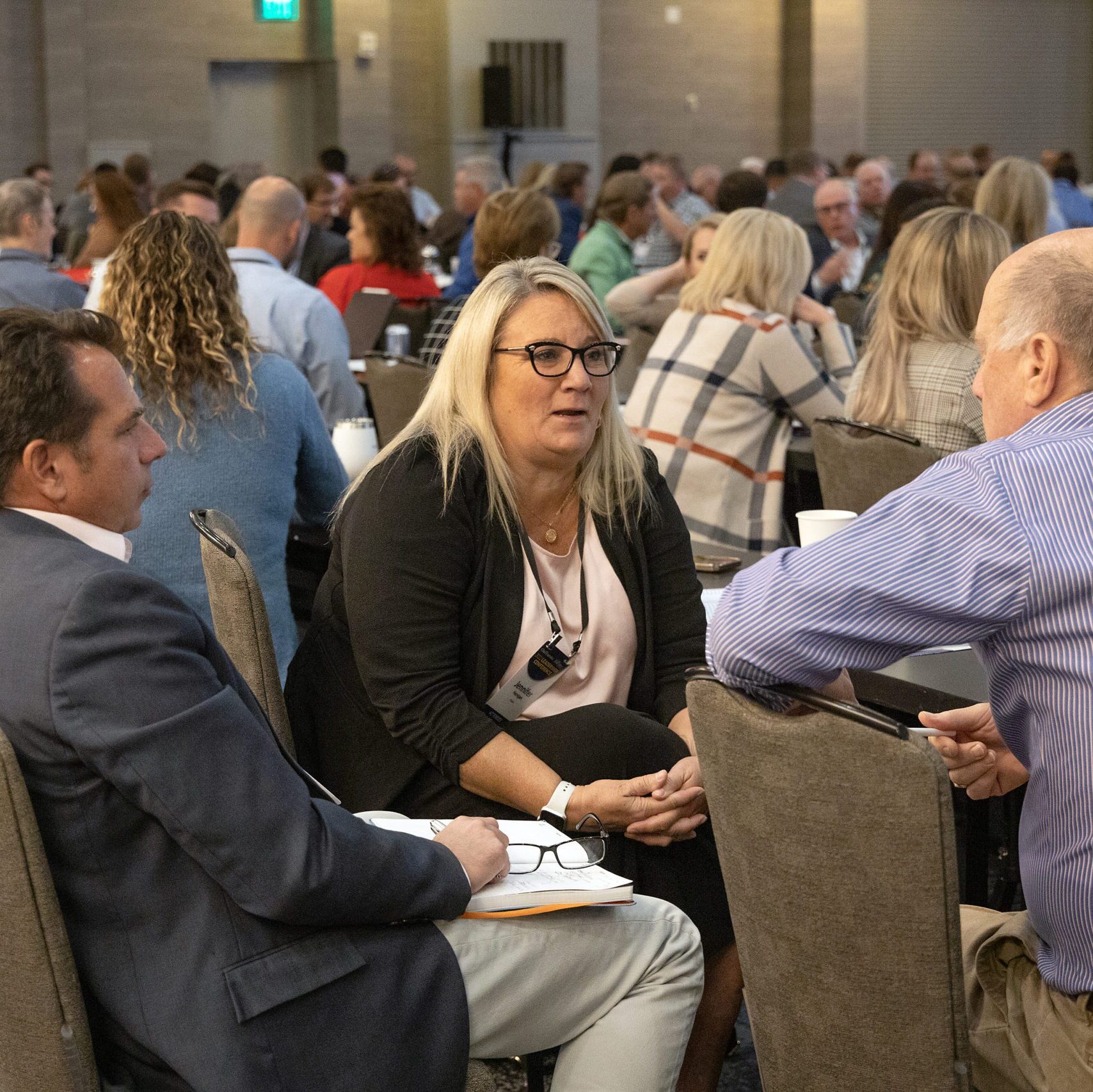
Fixing artificial harmony doesn’t start with better communication training or trust exercises. It starts with disrupting the pattern in the moment. Leaders need to experiment with behavior that can feel uncomfortable but necessary. That might mean pausing a meeting and naming what you’re experiencing: “It doesn’t feel like we’re challenging these ideas, and we need that.” It might mean intentionally creating dissent by breaking people into groups of two or three and asking a simple question: “What needs to be said that hasn’t been?”
Another effective move is appointing a contrarian. One person’s role in the meeting is to poke holes, challenge assumptions and explore how a good idea might fail. The goal isn’t negativity. It’s pressure-testing before commitment. Sometimes all it takes is simply appointing someone as The Contrarian for the meeting. These actions send a clear signal: agreement isn’t the goal. Better thinking is.
A Challenge for Leaders
Here’s the challenge. If you haven’t explicitly asked for dissent, you might not actually know if your team is aligned. You’re guessing. You’re inferring. You’re filling in the gaps with assumptions that may be doing more to protect your ego and reinforce comfort than to risk finding out your idea isn’t as strong as you think.
Silence is not agreement. Nods are not buy-in. A lack of resistance is not surefire proof. In your next leadership meeting, don’t move forward until you’ve asked a version of this question: What concerns are we not talking about?
Then stop. Watch who speaks. Watch who doesn’t. Watch what happens.
If no one challenges anything, don’t take that as confirmation. Take it as your first and most obvious clue that artificial harmony may be at play. That’s data. And it’s a signal that something about how the room operates needs to change. Honest, sometimes uncomfortable dialogue is how real commitment gets built.
And leaders who learn to invite that discomfort outperform those who hide behind harmony every time.