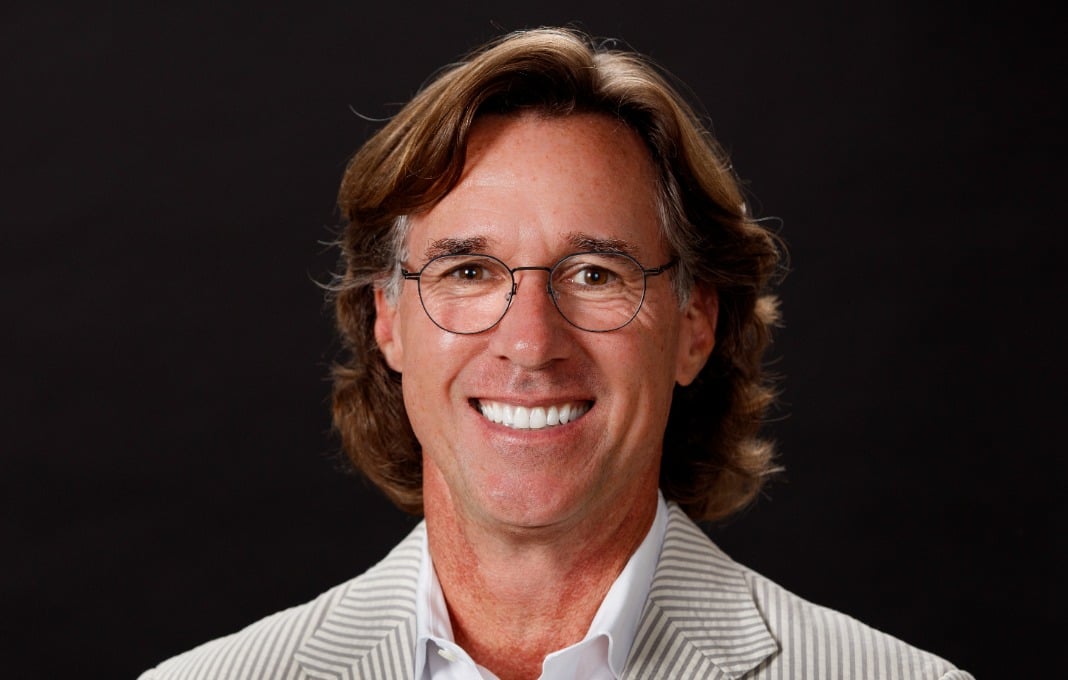
For many CEOs, the challenge isn’t starting up—it’s sustaining momentum, scaling with purpose and proving ROI in increasingly skeptical markets. Tim Berney has been doing all three for more than three decades, growing VI Marketing and Branding from a one-man media shop into a 70-person agency known for “behavior change marketing” that delivers measurable impact for public and private clients alike.
Berney has applied behavioral science not only to marketing campaigns, but also to how he builds leaders and advances female leadership in the C-Suite. In this interview, he shares how VI grew from a scrappy startup into a national contender, why modeling behavior beats messaging every time and what’s next for the agency—and for the executives who work with it.
Tell us about VI Marketing and Branding, and how it’s grown over the years.
When I graduated college, my first job was at a small media-buying firm. The owner had little experience, and even less interest in working, so within six months, everyone had quit except me. Eventually, he told me that he was moving back to where he was from to work with his dad. That might have been fine, except for one issue—he hadn’t been paying the media bills, and we were getting cut off.
So, I did the only logical thing at the time: I started my own firm. I went to the clients I had brought in, mostly mom-and-pop businesses, and told them I was opening my own shop. Since they’d only ever worked with me anyway, it wasn’t a tough sell.
I knew I’d have exactly $1,300 in income when I opened my doors. To pay the bills, I waited tables at night, rented a tiny office, bought a desk, a chair and a phone and launched Visual Image Media—what’s now VI Marketing and Branding. Ninety days later, I had enough business to quit waiting tables—helped by the fact that seeing your ad guy serving dinner isn’t the best look.
A few years later, I partnered with two talented colleagues, one in creative, one in account service, and together we started landing larger accounts, competing with much bigger agencies. We didn’t have much infrastructure, but we had strategy, conviction and a deep understanding of what our clients needed. That combination carried us far.
Fast forward more than three decades later, and VI has grown into a full-service marketing and branding agency with 70 employees. We’ve helped public and private organizations drive real behavior change and deliver measurable impact. I no longer have partners, but I’ve got a phenomenal team.
If there’s one lesson I’ve learned from the journey, it’s this: You don’t have to have it all figured out. Adapt, figure it out as you go and bet on yourself. That’s how VI was built, and it’s how we continue to grow.
You have a track record of delivering ROI-driven marketing programs that influence behavior and generate leads. How you are able to accomplish this?
Behavior change marketing is rooted in the science of social marketing—an approach traditionally used to shift public attitudes and behaviors around issues like tobacco use, HIV testing and seatbelt safety. At VI, we’ve applied this same methodology to areas like recycling, energy efficiency and water conservation, achieving measurable, ROI-driven outcomes.
The process is systematic: We start by raising awareness of an issue, then work to change attitudes, influence behaviors and ultimately, reshape social norms. One of the most important lessons we’ve learned is that modeling desired behavior is far more effective than simply telling people what to do. People need to see the behavior we want them to adopt.
For example, when we worked with the City of Colorado Springs on long-term water conservation efforts, we didn’t shame residents for overwatering lawns or wasting water. Instead, our campaigns showed people adjusting sprinklers to avoid watering sidewalks, turning off faucets while brushing their teeth and running full dishwasher loads.
This resulted in the city saving more than 7 billion gallons of water in one summer season, compared to the previous year with no campaign. That’s not just a powerful environmental outcome. It’s a tremendous ROI for the city and a boost to public trust.
While social issue campaigns often rely on empathy to connect with audiences, consumer campaigns tend to be driven by status, convenience or personal benefit. But the principle remains the same: modeling behavior and creating relatable, aspirational examples drive the most sustainable change.
Whether we’re encouraging safety belt use, or promoting smart energy consumption, behavior change marketing works because it humanizes the message. It shows, not tells.
You are passionate about advancing female leadership within the Young Presidents Organization—tell us about that and how you’re involved.
The Athena Program within YPO was launched several years ago to recognize that many women begin their careers later, take time away to raise families or simply haven’t been afforded the same opportunities as men.
YPO members must typically qualify before the age of 45, meeting specific business criteria such as company size and payroll. The Athena Program maintains those same standards but introduces a small age waiver for women to create a more level playing field.
I became involved as the Athena Champion for YPO’s Western U.S. Region while serving on the Regional Executive Committee. When I was approached about the role, it was an immediate yes. My leadership team at VI is 75 percent female, and I’ve seen firsthand the impact women have when they’re given the opportunity and encouragement to lead. I believed YPO would be a stronger, more dynamic organization with more female leaders contributing their perspectives and insights.
The first three years were considered a pilot program to see if we could gain acceptance, and traction, for the age waiver as long as other eligibility requirements were met. I championed the effort within my region, creating awareness for the program, advocating for the idea among all chapter leaders, and I recruited more female members to my own chapter.
Previously, women made up just over 10 percent of the membership of the organization. At last count, I believe that we have about doubled the number of female members in YPO. I believe that traditional YPO members see the value that these women bring to our chapters, and the international organization, as a whole. I am proud to have played a role in that.
What’s next for VI Marketing and Branding?
What’s next for VI is scaling with purpose. We’ve had several consecutive record-breaking years, and now we’re focused on evolving from a great regional agency into a national force—without losing the culture and values that got us here. We plan to continue to double-down on our behavior change focus, and to bring this approach into new categories, while showing that world-class marketing can come from anywhere.
We’re also investing heavily in data-driven creativity—the intersection of behavioral science, brand strategy and measurable outcomes. That’s where the industry is going, and it’s where we’ve always thrived.
Culturally, what’s next is equally important. We’ve built a team that leads with ownership, candor and clarity, and we’re doubling down on that. The future of VI is about growing the business, yes, but it’s also about growing leaders who can think bigger, take smart risks and carry this agency forward for the next three decades.