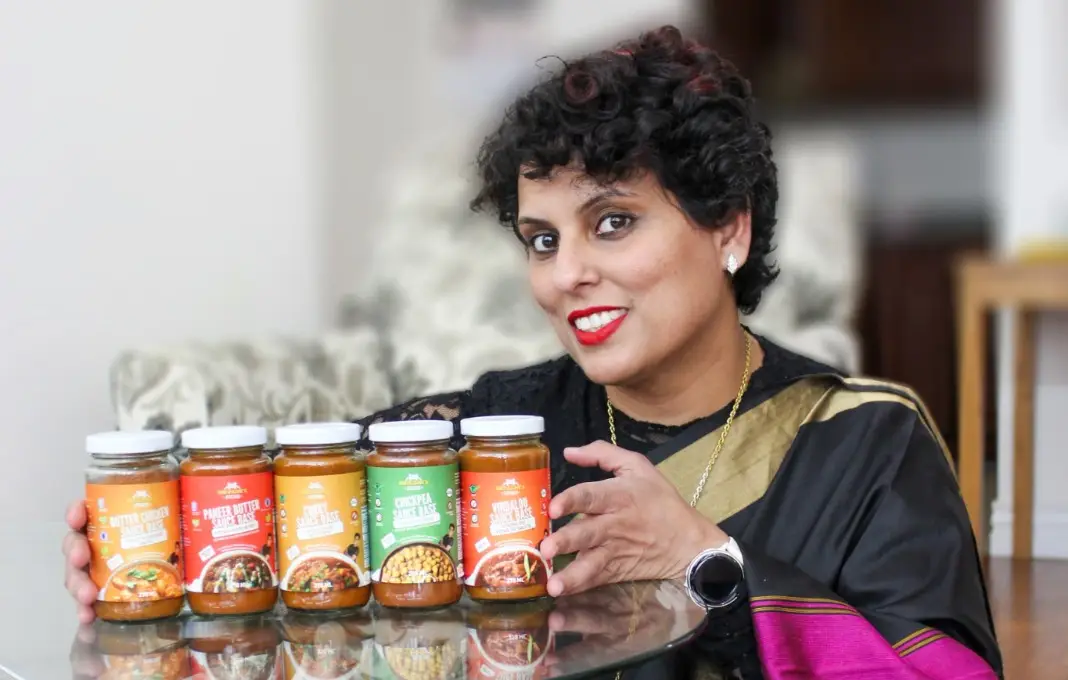
Shivani Dhamija knows what it means to shut down a dream and still protect the business. When the pandemic forced her Halifax restaurant to close, she turned a near‑bankruptcy into the catalyst for a higher‑margin, scalable model by shifting Shivani’s Kitchen from a single location to a national food manufacturer whose clean‑label curry sauces and paneer now sit on shelves at Walmart, Costco, Sobeys and Superstore.
Today, the award‑winning founder says that learning to detach from a struggling concept, listen hard to customer demand and pivot quickly is what allowed her to build a resilient brand that’s on track for significant growth.
How did you bounce back after the setback of your restaurant closure?
My restaurant shut down in 2020 due to the pandemic just two years after its launch. Initially, it felt like a massive setback—both financially and emotionally. But once I processed the failure, it was time to bounce back. I reframed my perspective and saw it as a chance to pivot.
Even while running my restaurant, I was selling sauce bases and spice blends to other restaurants. In 2019, I started talking with Sobeys grocery store chain and landed a deal by 2020. That groundwork allowed me to quickly pivot to manufacturing and retail, so what looked like a major setback actually became the start of our national growth.
This experience taught me important lessons about resilience, flexibility and the need to match a business with market demands. While the projections for the restaurant were great and I was super excited, I could have benefited from deeper market research. Listening to your customer and their feedback beats everything.
I knew that my customers already liked my spice blends and sauces, so I should have focused more on that than directing my energy and time towards opening a restaurant. This experience also helped me understand the value of detachment and being open to change when faced with challenges.
What are the signs that CEOs need to watch out for to pivot their business to prevent failure?
Some key signs that it’s time to pivot include:
1. Overreliance on one client or sales channel. If most of your revenue depends on one source, any change there can be risky. Hence, you should start looking for alternate avenues whether that’s diversifying your clients or sales channels.
2. Recurring cash-flow problems. If your business is struggling to cover basic expenses despite effort, that is a sign that your processes need to change.
3. Declining profits even when sales grow. If your margins keep shrinking despite higher volume, you might want to consider a pivot.
4. Changing customer preferences. If your offerings aren’t keeping up with what people want, you may risk falling behind. I learned this the hard way with my restaurant. When I noticed these patterns, I shifted my focus to the products people loved the most—my sauces and paneer. I also explored new ways to grow. That change not only saved the business but also set the stage for unprecedented expansion.
Take us through the steps of growing a food brand from local roots to national retailers.
Farmers’ markets are an effective testing ground. At farmers’ markets, you can talk directly with customers, get quick feedback and begin to build your brand. This is your first proof of concept. This can help pave the path for selling in local stores, provincial chains and eventually national retailers—although those come with their own set of challenges.
Each stage changes your audience and economics. At each stage of growing a local food brand, you will face a tradeoff. Selling in local stores broadens your audience, but you lose the personal interaction you get at farmers’ markets. So your packaging, messaging and social media have to do the talking for you. Profits also get tighter as more people take a cut, so you need to sell more and work more efficiently just to keep making money.
The middle steps are where brands are made or lost. Before pitching to national chains, ensure you have food safety certifications like HACCP or SQF, packaging that’s ready for retail with barcodes and bilingual labels, and a strong social media presence to show there’s demand. You’ll also need to scale up your operations, with reliable production, good logistics and enough financing to handle big purchase orders.
In short, the journey is planned and strategic. Farmers’ markets provide proof of concept. Local stores evaluate retail performance. Provincial chains assess your supply chain and brand story. Only then do you present to national retailers, confident that you can deliver quality and volume nationwide.
At Shivani’s Kitchen, this method helped us become profitable after five years in the consumer packaged goods industry.
What does the future hold for Shivani’s Kitchen?
At Shivani’s Kitchen, growth is not just about distribution. It’s about creating genuine loyalty and sharing our story. We want to be the top premium Indian food brand in Canada and beyond. Our goal is to bring the flavors and culture of home-cooked Indian meals to every table.
In the next few years, we plan to reach $10 million in annual sales. We also aim to grow our retail and food service presence while continuing to innovate with products made with utmost care and authenticity.