Everyone at Lawson Products is pulling in the same direction: helping the industrial distributor of maintenance, repair and operations (MRO) supplies sell more adhesives and cutting tools, ladders and slings, waste receptacles and welding tools through the 900 sales reps who help the Chicago-based company generate $1.2 billion in annual revenues.
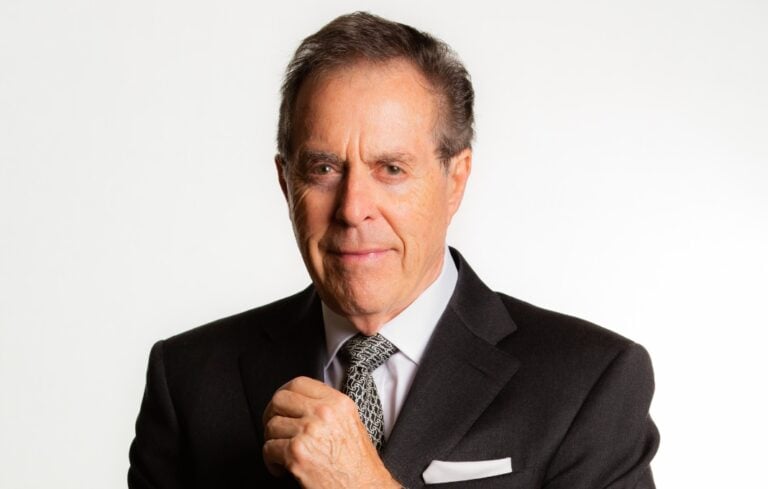
The shoulders into the task notably include those belonging to Sue Eaglebarger, Lawson’s vice president of human resources, who has professionalized and elevated human capital management at the company in her role but also continues to recognize that it’s the reps who pay the bills and must be supported.
“The rest of the business, including products and marketing, supports what sales needs to do, so we can grow revenues,” Eaglebarger says. “We help everyone understand, regardless of his or her role, that at the end of the day, it all has to do with us growing revenues.
“You might be marketing, or you might be in a position where this is not quite as evident, such as accounts payable, but all of us function in some way to help us be a better company to do business with. That’s what we’re always trying to do with the highest performance: No matter what you do, you play key roles in that.”
Lawson’s is a culture that Eaglebarger has learned well, because she’s spent her entire 34-year career at the company, where she entered as a corporate communications assistant. She’s been in her current role for 24 years.
“I’ve learned about the HR function, building a true HR team, talent, acquisition, hiring and interview skills,” she says. “What’s been great is not only my opportunity to grow with the company, but also that we’ve had several really transformational times within our organization—really positive changes and reorganizations to stay competitive in our industry.
“That’s provided an opportunity to stay current, work with new leaders.” These changes have included Lawson’s merger with two other distribution-related companies in 2022 into a holding company that still operates as Lawson Products.
Lawson employs a total of about 1,300 people, including about 500 in its distribution centers as well as the sales reps. The variety of functions and roles all pulling in the same direction is one of the main dynamics that keeps Eaglebarger growing in her role.
“We have people who work in warehouses, picking and packing and shipping products, and complexity around that in issues such as compliance, and then the corporate side of the business, with marketing and salespeople and finance—what does our ledger look like? And we have customer service. We have a broad spectrum, and I like that.”
None of these people are sitting still, either. Lawson Products has “pretty aggressive growth goals for the next two years,” Eaglebarger says, “so we’ve made lots of changes in our go-to-market strategy to accomplish that. From an HR perspective, that means we’re heavily focused on change management and employee engagement, on career pathing and talent development and structure issues.”
Here’s some of what Eaglebarger is learning (and teaching) along the way:
Culture still reigns. The pandemic scrambled Lawson Products’ culture as well as that of most other companies, leaving Eaglebarger to help define what that culture is now. It’s a priority.
“What are the pillars of that culture, what do we want it to be, and where are the gaps?” she says. “We’re trying to take a look at what [employees] view as important today versus what we don’t have, and what leadership believes we need to do, and how to benchmark against that—and from there, we’ll fulfill” the identified needs.
One important such area for culture-building, Eaglebarger says, is “how do you continue to provide opportunities for people to collaborate and learn from each other and form a true sense of teamwork, helping people navigate comfortably through an organization and who to go to for certain information?”
Water-cooler strategy. Covid, of course, changed in-person relationships at work, and restoring and refining norms in that area remain an important priority for Eaglebarger even now.
“Loose connections are important,” she says. “How do we promote those chance meetings or encounters that can really help someone grow their career, or an idea? How do we force them when they used to happen naturally? Culturally, that’s top of mind for me.”
Making hybrid work. In a similar vein, Eaglebarger is still navigating Lawson’s post-pandemic approach to working on-site that includes remote work for white-collar employees. “If you want to get top talent, it’s important to offer that,” she says.
“Full remote won’t work: Everyone corporate has to be in [the office] two days a week. Wednesday, we’re all in; you can pick Tuesday or Thursday as well. That’s key: We don’t want people, when they do come in, to experience a dystopian environment. We use those days for cross-functional and team meetings and to promote culture. We also do town halls. That’s part of what keeps us an organization.
“But we’ve also found that most people can work remotely on a sustained basis, even if we don’t want them to do it. We also don’t have people come to work sick; they can work at home. And of course everyone has a better home-life balance by cutting out commutes.”
HR elevated. As her role has grown, Eaglebarger has expanded the vistas and purviews of her staff. “I always talk to my team about how, as HR has evolved, we should think of ourselves as businesspeople first and HR professionals second,” she says.
“To be a good HR professional, you have to understand the business and strategic objectives of the company and how each team is working toward achieving them, because at the end of the day, it’s people who will get the job done. And we can’t help them until we understand them.”
Dealing with Gen Z. As Americans in their twenties and early thirties keep surging into the workforce, CHROs must account for their generational strengths, weaknesses—and demands, in a labor-tight environment.
“The biggest thing is how they communicate,” Eaglebarger says. “They’re much more comfortable shooting off a message and solving problems that way. Also, defining their career paths is important to them. They want to understand how their job fits in, and they want to grow. They typically love feedback. They want to understand: Are they hitting their goals and meeting expectations?
“On the other hand, with work-life balance, they’re much more courageous about holding that line than prior generations. That’s something leaders have to adapt to: When extra work is required at times, this is a cohort of individuals who put a lot of value on balance. And if you have high-performing talent you want on your team, you have to be cognizant of that.”
Pendulum swings. At the same time, Lawson Products is seeing a bit of rebalancing of the job market as evinced in its recruiting process.
“We definitely see an increase in the number of candidates for each job opening,” Eagleburger says. “We’re much more back into a business-as-usual flow of candidates. So if we wanted to take a harder stance [with employees’ expectations], we could. I’m not suggesting we don’t have certain expectations. But we still encourage leaders to be thoughtful about that, because from my view, these are the employees of our future, and we want to keep high performers.”
Mental health concerns. Employers nationwide say they’re experiencing an explosion of interest by employees in mental health benefits, and Eaglebarger concedes that “it’s probably a weak spot for us. We pretty much still have a standard package that includes mental health.
“It’s something we’ve thought about but haven’t done much differently, as far as bringing in speakers and things like that.”