The West and Southwest continue to demonstrate remarkable innovation and growth in 2026. From semiconductors in Arizona and quantum technologies in Colorado to lithium batteries in Nevada, many states in the region are positioning themselves at the forefront of emerging technologies.
1. TEXAS*
Border Boom
As the saying goes, everything is “big” in Texas. In 2025, the Lone Star State released Bigger, Better Texas, a five-year strategic economic development plan to solidify the state’s future and economic prosperity. The 155-page plan notes the state’s economic diversity and that no single industry accounts for more than 10 percent of its GDP, as well as that exports outpace overall U.S. export growth between 2015 and 2021.
And while major cities like Houston, Dallas, Austin and San Antonio capture most of the headlines, there’s big growth quietly happening in smaller border areas. As of spring 2025, more than $40 billion in economic development projects were underway in the Brownsville area, including contracts with companies like SpaceX, Amazon and Next Decade. Despite its small size, more than 3.5 million people live on both sides of the river within a 60-mile radius. Officials also cut the ribbon on the new Greater Brownsville Tech District, which will cover more than 770 acres and include a first phase of more than 1.3 million square feet of industrial space.
“By combining our cost advantages with a skilled workforce and strong infrastructure, we’re creating the ideal environment for companies to invest, grow and create high-paying jobs for our community,” said Gilberto Salinas, president & CEO of the Greater Brownsville Incentives Corporation, in a press release. “Our focus remains clear: attract leading companies and help them create opportunities for our community.”
*State’s rank in the 2025 Chief Executive Best & Worst States for Business (ChiefExecutive.net/bestworst-states-business)
7. UTAH
Preparing for the population surge
A high quality of life and thriving economy are expected to drive significant population growth in Utah in the coming years. Long-term planning projections released by the Kem C. Gardner Policy Institute indicate the state population will grow from nearly 3.6 million today to more than 5.6 million by 2065. It notes that the most prominent industries for employment growth will be healthcare, professional, scientific and financial services.
The fintech industry is thriving in Salt Lake City. Global fintech leader iCapital added 200 new jobs in an expansion. Coast, a financial services platform that simplifies fleet fuel payments and expense management, is also investing $10 million and adding nearly 100 new jobs. And rapidly growing SoFi Technologies is investing more than $3 million and adding 410 new, high-paying jobs. “We’re thrilled to expand SoFi’s presence in Utah. We’re proud to have opened our first office here in 2016 and brought Galileo, one of the many great fintech companies born in the Beehive State, into the SoFi family,” said Eric Schuppenhauer, interim president of SoFi Bank, in a press release.
Utah is also seeing growth in other sectors. American Pacific Corporation, a leading manufacturer of specialty chemicals for the aerospace and defense industries, is working on a $100 million capacity expansion project in Cedar City. Redo, a tech company focused on supporting e-commerce brands, is investing more than $3 million and adding 682 jobs in Salt Lake City over the next five years.
8. NEVADA
Big opportunities in biotech and batteries
The biotech and lithium battery industries are driving new opportunities in Nevada. Lithium Americas is developing one of the world’s largest lithium mines in Northern Nevada, the Thacker Pass lithium mining project, which will produce 40,000 metric tons of battery-quality lithium carbonate annually. Lyten is also constructing a $1 billion lithium-sulfate battery gigafactory near Reno, which will employ 200 people and produce up to 10 GWh of 100 percent domestically manufactured lithium-sulfur batteries annually.
Meanwhile, Southern Nevada is quickly becoming a biotech hub, with new investments in research and startup funding, and more than 9,400 professionals working in the sector. In the spring of 2025, UNLV’s Desert Forge Ventures launched, offering up to $1 million in funding for deep-tech startups, including biotech innovators. UNLV is investing in biotech infrastructure through a 122-acre R&D park, and the $10 million BioHealth Innovation challenge also offered funding for a biosciences incubator lab in the Southern Nevada Medical District.
10. ARIZONA
Clean rooms and clear paths for a semiconductor surge
Arizona’s history of semiconductor manufacturing dates back to the 1940s, and it has rapidly emerged as a leading player in the industry. Since 2020, Arizona has attracted more than 60 semiconductor projects totaling over $210 billion in capital investment. State officials have recently doubled down on the momentum by funneling more funds into infrastructure development and workforce development.
In 2024, Intel also launched its first U.S.-registered apprenticeship program for semiconductor manufacturing facility technicians. Gateway Community College in Phoenix also has a semiconductor-focused Future48Workforce Accelerators, which offers customized, hands-on training to support the semiconductor industry. The facility features a full-sized clean room where students can learn the basics of semiconductor processing, including cleaning, probing, photolithography and automated handling.
The Future48 Workforce Accelerators program has since expanded to support other advanced manufacturing sectors. This includes a battery accelerator partnership in Pinal County and Central Arizona College, and an aerospace and defense-focused Future48 Workforce Accelerators at Chandler-Gilbert Community College in Mesa.
15. MONTANA
Booming in Big Sky country
Manufacturing growth is surging in Montana. An October 2025 report by the Montana Manufacturing Extension Center at Montana State University found the sector generated more than $2 billion in labor earnings in 2024. Bozeman also remains a growing hub for tech companies, with notable activity centered around Montana State University’s Innovation Campus. The campus is designed to foster collaboration between MSU researchers, entrepreneurs and companies focused on technology, science and sustainability. Big Sky Digital Infrastructure also announced in August 2025 a data center campus that will integrate renewable power, battery storage and strategic long-haul fiber.
Meanwhile, other parts of the state are seeing notable growth, with nearly $1.5 billion worth of construction projects underway in Billings at the end of 2025. The Great Falls Development Alliance also released a new three-year plan to expand jobs, housing and economic opportunities across the region. The 2026-2028 strategy outlines four areas of focus, one of which is to target industries like food processing, biosciences, defense, energy and tourism.
16. IDAHO
Doubling down on dairy
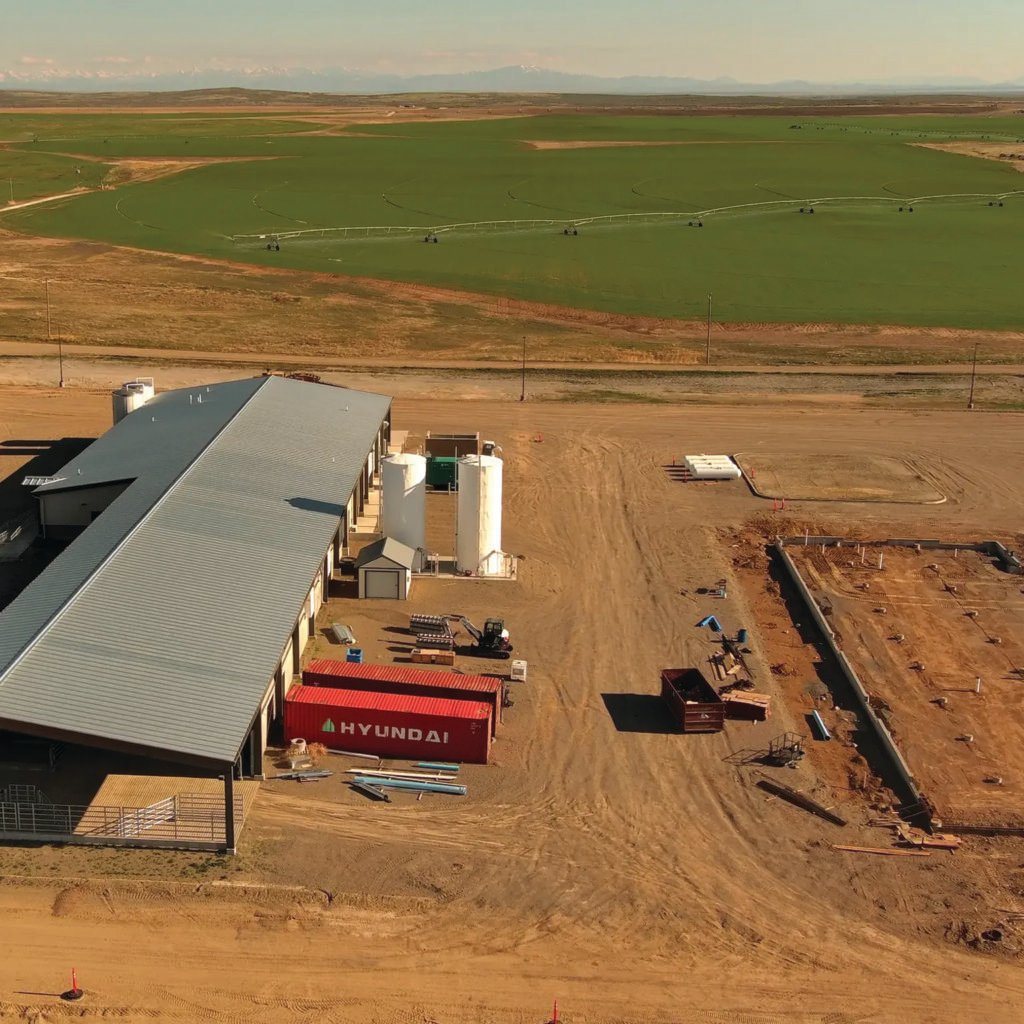
research dairy when completed in 2026. Photo courtesy of University of Idaho
Idaho remains one of the top milk-producing states, and the industry now contributes more than $4 billion to its state economy. The Idaho Center for Agriculture, Food and the Environment (Idaho CAFE) in Rupert is under construction and will be the world’s largest research dairy when completed in 2026. Led by the University of Idaho, it will eventually host a herd of 2,000 cattle. The facility will include a commodity barn, a calving and research barn and a classroom to spur innovation and efficiency in the industry and help train personnel. The burgeoning milk industry has also driven other dairy investments in the state. In March 2025, Chobani made its single-largest investment in history, a $500 million expansion at its facility in Twin Falls. Idaho Milk Products is also constructing a $200 million plant in Jerome that is on track to be operational by early 2026.
20. WYOMING
Growing opportunities in rare earth minerals
While China has dominated the global rare earth industry for decades, new discoveries and developments in Wyoming may change that trajectory. Rare earths are needed for components in manufacturing smartphones, electric vehicles and other products. The Northeast part of the state is home to one of the highest-grade rare earth deposits in North America. In 2025, the first domestic rare earth mine in more than 70 years opened in Ranchester, and it is expected to start producing ore in 2028 or 2029. Fluor Corporation noted the feasibility of large rare earth mineral deposits at Ramaco Resources’ Brook Mine and the ability to produce up to 1,242 tons annually.
New executive orders and faster federal permitting are expected to drive more rare earth industry growth in the coming years. “Wyoming continues to be a leader in energy innovation, including the expansion of our critical mineral industries and energy technologies,” Gov. Gordon said at a press conference in July 2025. “This project illustrates the exciting potential for Wyoming coal and rare earth minerals, with their role in expanding Wyoming’s energy economy and strengthening national security.”
33. COLORADO
A quantum revolution
The field of quantum science, the study of all things small, offers significant opportunities in the Centennial State. Since being designated as a Regional Technology and Innovation hub in 2023 by the U.S. Economic Development Administration, the state is quickly establishing itself as a quantum hub with new investments, initiatives and research. More than 30 companies, including Infleqtion, Maybell and Atom Computing, are already advancing quantum technology in Colorado and employing over 3,000 workers. Many of these companies build hardware and supply components that enable quantum computing.
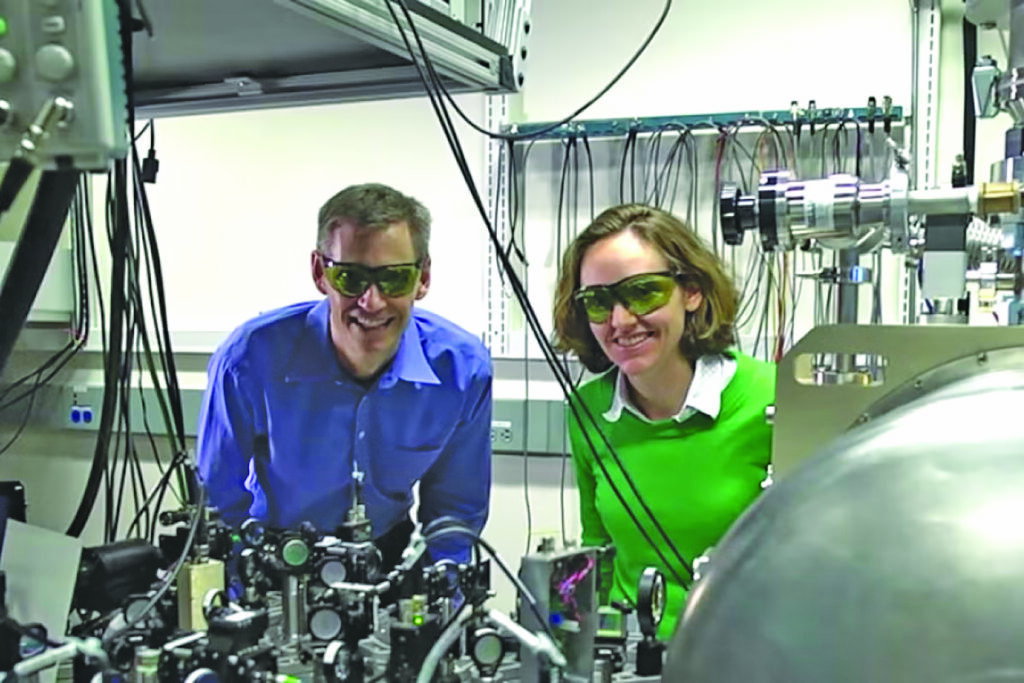
The CUbit Quantum Initiative at the University of Colorado Boulder has spun several quantum startups, including LongPath Technologies, which uses quantum technology to monitor emissions for the oil and gas industries. Another company, Mesa Quantum, is working to build the world’s smallest atomic clock. In Arvada, the 70-acre Quantum Commons celebrated the opening of its first major building in late 2025. “By bringing together our world-class higher education system with the companies that are helping to shape the future of computing, this incubator will help drive forward the next chapter for quantum in Colorado, driving more jobs and economic development,” said Gov. Jared Polis in a press release.
37. NEW MEXICO
Enchanting foreign investment
Over the past year, New Mexico has witnessed a surge in large investments from manufacturers and tech companies, including several foreign-owned entities. In September 2025, commercial fusion energy company Pacific Fusion announced it would locate a $1 billion research and manufacturing campus in Mesa del Sol. The state also announced a first-of-its-kind global business accelerator and commercialization center to boost foreign direct investment. The NMexus Center is designed to serve up to 40 companies every year and help companies from Europe, Asia and the Middle East get the tools, knowledge and network they need to expand operations in the state. Officials expect the NMexus Center to have a $400 million combined economic impact on the region over the next five years.
“Today marks a new chapter for New Mexico, as we’re seeing the tangible results of our efforts in global trade bear fruit,” said Rob Black, economic development cabinet secretary, in a press release. “Through NMexus and our international partner organizations, we have created an economic super-highway for companies to start and grow their presence in the U.S.—creating jobs and manufacturing opportunities.”
44. OREGON
Semiconductor strength and small business support
Several companies, including Intel, Onsemi and Microchip Technologies, announced thousands of layoffs in Oregon’s “Silicon Forest” in late 2025. Nevertheless, the semiconductor industry remains a strong economic driver in the state. The $21 billion industry employs more than 30,000 Oregonians and accounts for nearly 15 percent of the total U.S. semiconductor workforce. There’s also a strong talent pipeline with more than 6,000 students majoring in semiconductor-related fields at Oregon State’s College of Engineering. And despite the cutbacks, some companies are still expanding. For example, Analog Devices recently completed a $1 billion expansion of its facility in Beaverton in late 2025 and is opening new worker training programs.
Meanwhile, the state is also continuing to nurture its small business community. In late 2025, Business Oregon received $29 million through the State Small Business Credit Initiative (SSBCI) to expand access to capital for startups through business loans, guarantees and equity investments. “Oregon’s entrepreneurs are driving innovation and economic growth across every corner of the state,” said Sophorn Cheang, director of Business Oregon, in a press release. “This SSBCI investment allows us to deepen our support for small businesses, particularly those in underserved and rural communities, and ensure they have the financial tools and resources needed to grow and thrive.”
45. WASHINGTON
Innovation in the evergreens

Commerce Director Joe Nguyen celebrate AMI’s expanded footprint in Spokane County. Photo courtesy of Washington Department of Commerce
Several tech companies announced significant layoffs in 2025, including 2,300 layoffs at Amazon and 3,200 at Microsoft, in 2025, which had an outsized impact on the Evergreen State. The Seattle Times noted that tech employment in the state fell 6 percent between mid-2022 and early-2025. Nevertheless, technology and innovation culture remain strong in Seattle. WalletHub ranked the state fifth most innovative in the nation based on its share of STEM professionals, STEM jobs and students’ scores on advanced placement tests. “Washington has always been a hub for innovation, from aerospace to clean energy, and I’m proud that our state is getting the credit we deserve,” said Commerce Director Joe Nguyen in a press release. “We’re doubling down on that legacy by investing in communities, empowering entrepreneurs and building a future where opportunity is shared across every zip code.”
Tacoma-Pierce County is also working on its 2026-2030 strategic plan, which will focus on improving the business environment, attracting and retaining quality jobs and developing a long-term vision for the county. Japan-based Kowa Company, a global leader in R&D and manufacturing, announced in August 2025 that it would establish a manufacturing facility in Frederickson. In June 2025, AMI Metals also announced that it will double its footprint at its Spokane Valley location to increase its capacity to process aluminum for the aerospace industry. Portal Space Systems also announced an expansion of its footprint and 75 new jobs in Bothell.
50. CALIFORNIA
A new blueprint for growth
In early 2025, Gov. Gavin Newsom released the California Jobs First Economic Blueprint, a statewide plan to drive economic growth and job creation over the next decade. Officials from 13 economic regions engaged more than 10,000 residents and experts who identified key sectors for driving local economies in the future. It identified priority sectors in three categories where the state can strengthen and accelerate growth or “bet” on emerging sectors. The blueprint then breaks these categories down into pilot sectors in each area. It is also paired with more than $125 million in funding to support new, ready-to-go projects aligned with the state’s strategic sectors, ensuring every region benefits from the growth.
The plan also includes more than $29 million to fund apprenticeships and job programs to create 500,000 new training slots by 2029. “California’s economic dominance and success are grown local, with contributions from each diverse region of our state,” said Gov. Newsom in a press release. “From agriculture to clean energy to film to every industry in between, our Golden State owes its success to the people, communities and industries that make it work. I am proud of the collaborative work of Californians from every region who developed this statewide Economic Blueprint.”