Like many CEOs, Luis Valls, co-CEO of Turtle, is accustomed to grappling with uncertainty. Over his 22-year tenure, the electrical and industrial distribution company based in Clark, New Jersey, persevered through its share of supply chain disruptions, regulatory hurdles and assorted other disruptions. What’s different for Turtle today is the speed, scale and breadth of changes hitting from all directions, injecting new risk into everything from supply chains and capital allocation to talent development. “Volatility isn’t temporary anymore—it’s structural,” says Valls, citing the impact of tariffs and geopolitical tension on his company’s supplier markets as an example. “Lead times for critical equipment like transformers, switchgear and grid infrastructure can stretch years. You can’t react your way out of that.”
He’s far from alone in that assessment. Across industries, CEOs report disruptive shocks that once came in sequential waves are now converging and accelerating into a maelstrom of competing forces. Technology is reshaping business models faster than planning cycles can adapt, even as demographic shifts redefine both labor markets and consumer demand. At the same time, geopolitical volatility threatens to derail everything from supply chains to capital allocation.
“The speed of the planning cycles, the investment cycles—how quickly change can manifest— that’s what’s hitting everybody differently today,” says Jeanne Johnson, a principal in KPMG’s advisory practice. “Decisions that once unfolded in predictable annual rhythms are now overlapping and, at the same time, investment cycles are getting compressed.” The result is less time to gather perfect information and shorter windows to course-correct when something goes sideways, pushing more real-time judgment onto CEOs and their teams. Leaders are continually under pressure to answer a fundamental question: “How much information is enough to make what kind of change at what pace?” says Johnson. “But while you’re figuring all this out, while you’re calibrating this, you’ve got to keep moving.”
We spoke to six CEOs to get a sense of how they’re adapting. All of them—across industries and geographies—agreed that what the moment demands is an approach to strategy anchored by long-term conviction, yet flexible enough to evolve as conditions change. They shared their tactics for mitigating risks upfront, tightening discipline and guarding against decision paralysis.
‘Start With What Won’t Change’
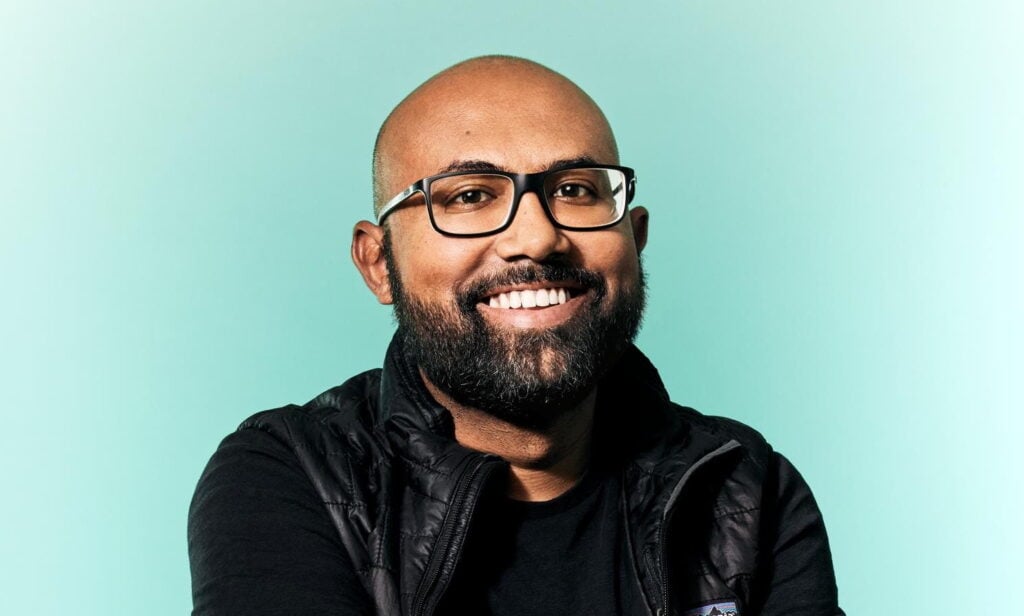
Sadi Khan, CEO, Aven
Fintech / Mountain View, California
A veteran of Facebook, with its infamous move fast and break things motto, Aven Co-founder and CEO Sadi Khan is no stranger to leading amid disruption. In noisy and unpredictable marketplaces, he advocates focusing on the goalposts that will endure. “The most valuable approach to strategy is to start with what won’t change,” he says. “Because at any given point in time, there are often a handful or subset of variables that are probably not going to change. And what you can do is index on those.”
For his fintech company, one anchor is simple: Consumers will always prefer and benefit from a lower cost of capital. That fundamental truth doesn’t vary with interest rate cycles, regulatory changes or new technologies. To achieve its mission of reducing the total cost of borrowing, Aven relies on removing friction and creating efficiencies by driving technology innovation that reduces transactional costs. Early on, that required solving highly specific constraints, such as the “wet signature” requirement for mortgage documents.
The team wrestled mightily with the decision to invest heavily in building a proprietary, patented robotic arm to automate the digital notary and document-signing process that allowed borrowers to complete the lending process remotely, reducing time and cost. Khan recounts a classic dilemma of build versus buy. “Initially we were like, “Oh man, like should we even build this thing?,” he recounts. “‘We’re a startup. We have very little capital. Should we allocate it to inventing an entire new way of doing signatures?’ We were not in the signature business, we were in the asset-backed credit card business at that time.”
Advice from a longtime board member who pointed out the enormous potential the tool would unlock and asked about the capital entailed helped inform the decision. “He said, the value of this is so high that if you’re reasonably confident you’re not going to die, you should go ahead,” says Khan. “That was eye-opening to me. And it’s been invaluable as we continue to invest heavily in long-term bets because we think that longer-term conviction over the shorter term is the only true alpha left in the game. Everything else kind of washes out. If you believe in something and can hold a longer-term view that you’re willing to bet on, you will win as long as you don’t die. At the end of the day, the advantage we have over others is that we think over a longer time horizon. Everything else kind of washes out.”
‘Design Resilience Into The System’
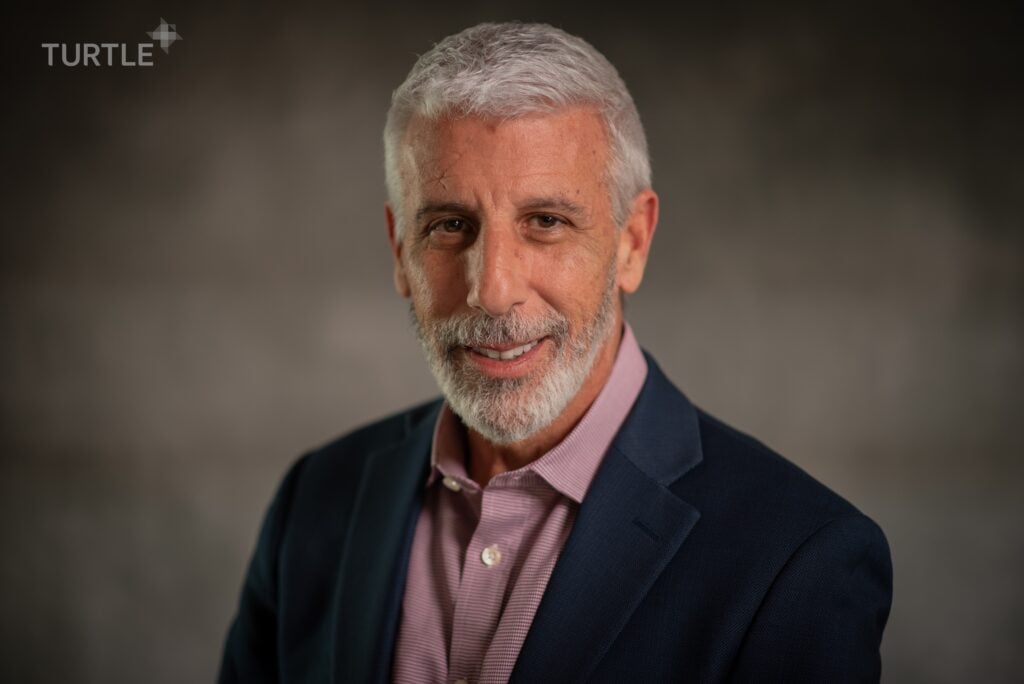
Luis Valls, Co-CEO, Turtle
Electrical and industrial solutions / Clark, New Jersey
At Turtle, an overarching mission to evolve from a transactional distributor into trusted infrastructure solutions partners drives the approach to strategic planning. “Our job is to absorb complexity, so that our customers don’t feel it,” explains Valls. “Because in critical infrastructure, a missed shipment isn’t just an inconvenience, it’s downtime, lost revenue or operational risk.”
In recent years, the 103-year-old company has take a number of steps to guard against supply shortfalls, including embracing dual sourcing globally, building strategic inventory, staging long-lead equipment early and forming deep partnerships with manufacturers around the world to ensure capacity well ahead of need. “Before, supply chain was taken for granted; now it’s a strategic part of our infrastructure planning,” says Valls, who references recent trips to Turkey and Mexico to research potential OEM partnerships. “You can’t react your way out of volatility, so we design resilience into the system upfront.”
Turtle is also frontloading its management of talent-related risks. Mindful of the demographic shifts that may lead to workers with deep expertise and institutional knowledge leaving faster than they can be replaced, the company invested in training and mentorship programs and also sought out ways to capture learning digitally as a resource for new employees. As a result, employees now have access to software that can address questions and guide them through processes on demand in real time.
“We’re also in the process of conducting a companywide skills-gap analysis,” says Valls. “We’re looking at not only what skills our people need today but tomorrow, and how do we start preparing them for that? We think it’s important to have a roadmap for this new generation where they can see that they can grow and be challenged.”
‘Longevity At A Company Is Underrated’

Eran Mizrahi, CEO, Source86
Sourcing Solutions / Los Angeles, California
For Source86 CEO Eran Mizrahi, whose business centers on sourcing products from global markets, uncertainty is embedded in the company’s model. As an importer, his company sits at the intersection of interest-rate swings, foreign exchange volatility, tariff policy shifts and fluctuating market sentiment. As a result, when tariff unpredictability intensified in early 2025, the company was forced to flip from a focus on accelerating growth by introducing new products and scaling up staff to risk mitigation.
“On strategy, the first thing we’re trying to do is identify areas under our control where we can reduce or manage risks,” says Mizrahi, who describes adopting a “smoke detector” practice of constantly monitoring inventory exposure, interest-rate sensitivity and cash management. “When tariffs went crazy and customers were looking to cancel every order they had with us, we had to almost open our books up to our customers and to our suppliers and figure out how to communicate a lot faster to make sure we could react. We were in hyper alert every day looking at cash and being very deliberate about every inventory decision because one wrong turn could put us in a lot of danger.”
Tighter relationships with customers, suppliers and lenders coupled with a winnowing field as less resilient competitors faltered ultimately strengthened the company. Source86 emerged with disciplined approaches to virtually every function, from robust quoting tools and scenario-analysis capabilities to more thoughtful hiring and resource allocation practices.
Rather than front-loading hiring, a wave of hires unlocks only if specific sales or cash-flow indicators are met. Marketing budgets are deployed in discrete tranches tied to performance thresholds. If the metrics aren’t there, the spend is switched off. “We’re asking: What do we need to see? How long will it take? What’s the maximum we’re willing to lose?” Mizrahi says. “We’re not being as aggressive with new initiatives as in the past, and we build in exit paths along the way.”
One thing that hasn’t changed: his commitment to a strong people function, which at Source86 means consistent practices more in line with large corporations than the ping-pong tables and happy hours some startups boast. The company maintains clear salary bands, transparent promotion paths, predictable pay increases and long-term incentives. Rather than traditional performance ratings, Source86 practices performance enablement, Mizrahi explains, “doing everything we can to make sure that our employees are moving forward, that where you are today is not where you are tomorrow.”
It’s not an altruistic approach. In an era when job-hopping is common, the value of tenure compounds, says Mizrahi, citing companies like Costco, where a long-serving workforce has become a competitive advantage. “It’s Mazlow’s hierarchy—with that framework people feel safe. They know what the expectations are and how they will be rewarded for managing those things. We’re aggressive about people progressing because we want people to stay and be part of the success. If you can do that, the value is incredible. Longevity at a company is underrated.”
‘The Biggest Mistake Is Paralysis’

Sonya Mughal, CEO, Bailard
Wealth management / Foster City, California
Spending 32 years at a 57-year-old wealth management company has given Sonya Mughal, CEO of Bailard, a unique perspective on navigating market cycles. Her chief takeaway? “The biggest mistake is paralysis—convincing yourself that the environment is so different than what you have seen in the past that you have to throw all your tried-and-true disciplines out the window,” she says. “Environments can be quite terrifying. They can look different and present differently, but thinking you’ve got to somehow come up with something radically new or not do anything at all is not the way to handle volatility.”
At Bailard, adherence to six core values—accountability, compassion, courage, fairness, excellence and independence—sees the company through both turbulent and tame market cycles. During times of volatility, Mughal cleaves to those values. “For me, the guiding North Star is independence, because we’re largely employee-owned so we’re each answerable and accountable for every single decision,” she says. “There’s no deep-pockets bank, insurance company, private equity shop. So there’s a heavy weight that comes with that.”
To instill accountability in a workforce that spans generations—from entry-level hires to employees in their 80s—Bailard cultivates autonomy through mentorship. Mughal also purposefully recruits for cultural fit and uses a rigorous cross-function, committee-based approach to vet candidates. “There will be five or six of us, and we do not talk with one another during the process; we have our HR person collect notes,” she explains. “That way everyone has already put their notes down when we meet so no one voice can drown out the others. It’s a way to avoid groupthink so that when you have unanimity around the right candidate it’s real—not from people trying to influence one another. That’s worked brilliantly for us in terms of surfacing talent.”
‘Hold Your Strategic Plan Loosely’
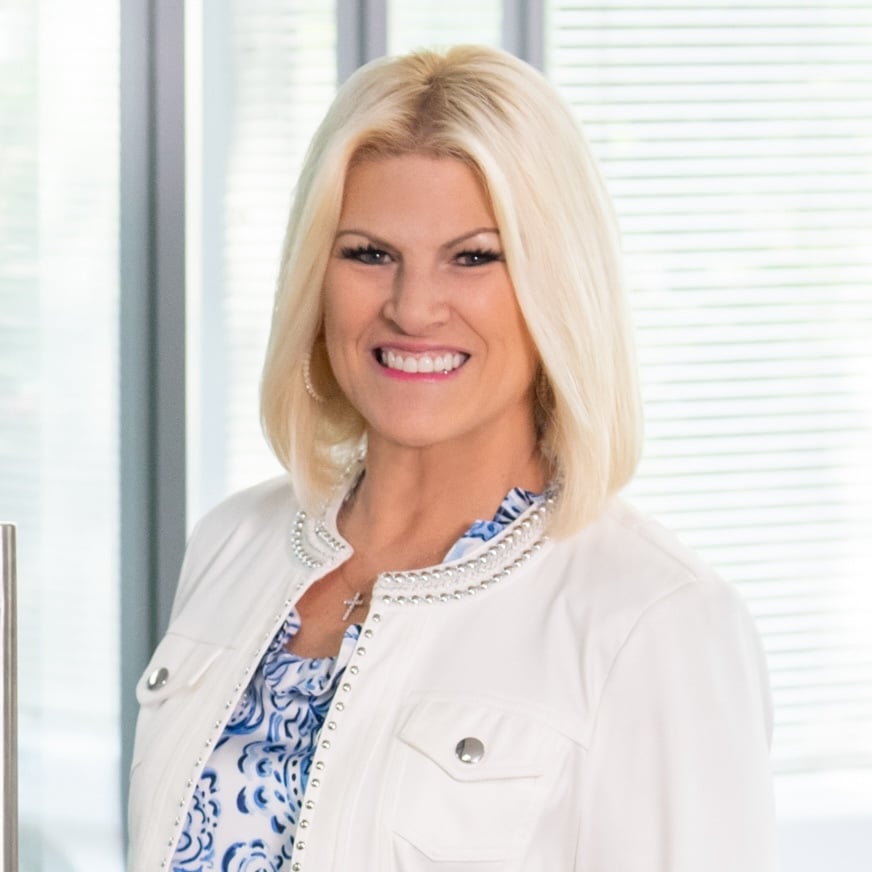
Lisa Nichols, CEO, Technology Partners
IT Staffing / Chesterfield, Missouri
At Technology Partners, CEO Lisa Nichols embraced compressed planning cycles and a focus on agility to lead 450-plus employees working in an industry in which strategy has to be actively managed, constantly stress-tested and frequently redirected. “I believe in having strategic plans, in goals, but you have to make sure you’re holding your plan loosely,” she says. “We’ve chunked ours down to quarterly goals because of the changing landscape. Because if you go off course just by one degree and don’t realign, you can end up 100 miles from your intended destination.”
Nichols also shuns top-down directives. Instead, she and her leadership team communicate an overarching direction for the organization, then push individual goal-setting down to employees, each of whom is charged with developing quarterly “top 10” objectives. Across the company, top 10s—and progress toward reaching them—are captured digitally and can be viewed by any team member.
“We don’t dictate to them, we say, ‘Here’s where we’re going, how do you fit into that?’” explains Nichols. “Then at the end of the quarter, every individual has to look and go, ‘Why didn’t I get my top 10s done?’ And, ‘For the next quarter, are those goals still relevant or do I need to adjust a little bit?’ So we’re continually setting goals and adjusting as we go.”
Not surprisingly, the use of artificial intelligence has been featuring prominently across every function at Technology Partners. Mindful of the need to ramp up familiarity with the vast and growing universe of AI tools, Nichols tasked her employees to invest time in experimenting and report back to peers in regularly scheduled AI Day idea-sharing sessions.
“We’re learning from one another and also bringing in third-party partners we’ve worked with that share what they’ve been doing with AI for clients in different industries,” says Nichols. “There’s really not a function area of our company where AI is not infused… And, of course, we have our own AI group that goes in and talks with clients about AI road-mapping because sometimes it’s hard to know where to start. So it’s about having a Sherpa to guide you through climbing that mountain.”
‘Act A Lot More Like A Startup’
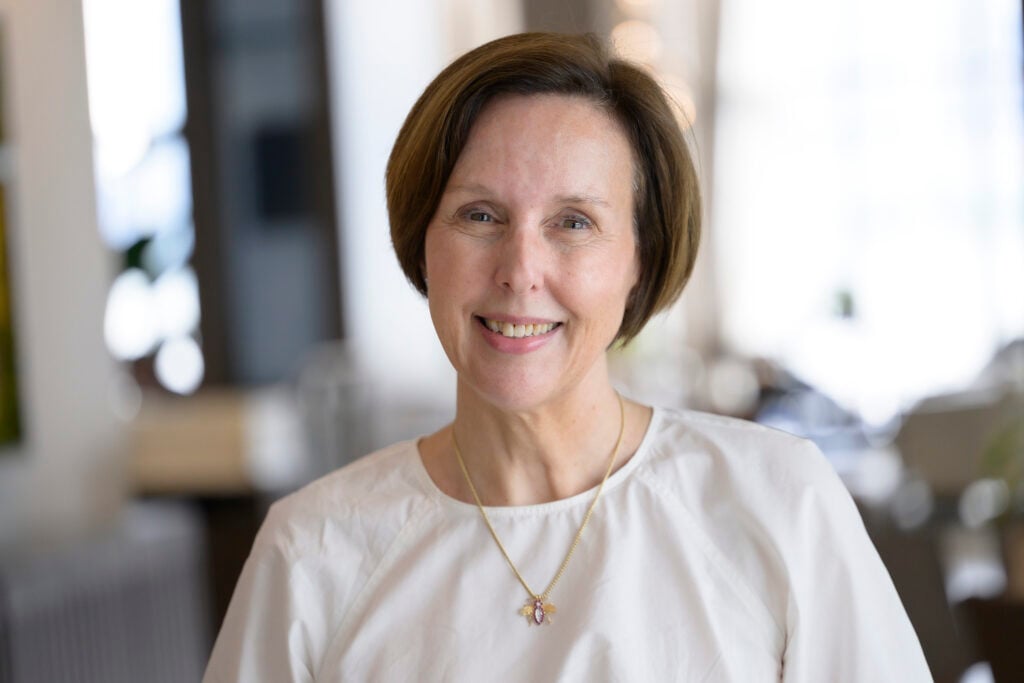
Catherine Wolfe, General Manager, Wolters Kluwer’s
CT Corporation / New York, New York
The more chaotic the times, the more nimble a company needs to be, says Catherine Wolfe, general manager of CT Corporation, a division of Wolters Kluwer providing corporate services and entity management solutions. “When the degree of change feels overwhelming, it’s important to pick a point on the horizon and head toward it because you can get very distracted by all the possibilities and implications,” she says. “So you need a clear strategy you can focus on executing—but then be prepared to pivot as needed. I choose to focus on opportunities because there are so many great stories of businesses starting up during economic downsides.”
For a large division of a large company, adopting a startup mentality is no easy feat, she acknowledges, adding that Wolters Kluwer is leaning on AI to achieve it. “On the opportunity side, we can actually act a lot more like a startup,” says Wolfe. “Startups focus on experiments, on learning, doing things initially that are reversible rather than really big projects and pivoting much more quickly rather than really big projects. Whereas if you think about change at a big company—for example if you think about changing a big tech stack you already have—it’s like modernizing an old house, right? It’s more expensive and takes longer than you’d ever think.”
AI, however, is allowing companies to build and test new processes far more quickly. At CT, Wolfe’s focus has been on deploying AI both to help the company identify customer needs and speed up the development and iteration process of testing and refinement for new products and services. Forming Tiger Teams to oversee and drive that iteration process is another tactic Wolfe adopted to emulate the agility of startups. For each potential opportunity, a small group of employees from relevant functions is pulled together, given an ambitious timeline and goal and charged with figuring out next steps and reporting back.
Key to success is permission to fail. “The group members need the safety to know that we all know it might not work, but let’s see what we can do,” says Wolfe, who cited a recent sales and marketing initiative to access a promising growth market as an example. In that case, the Tiger Team developed and launched an effort aimed at converting more website visitors to customers. While results were initially disappointing, by identifying and correcting missing elements the team was able to boost the conversion rate by 450 percent over three months.
“What we’re learning is that at a big company, if you can kind of pull things out and focus on them, you can get to a result—whether to keep going and scale up or to walk away—much faster,” says Wolfe. “But you do need to start with some sort of strategy; otherwise it’s kind of random. And you really have to be okay with it not working, which you make possible by keeping it at a level that you can walk back if it doesn’t work. That takes the stress out of it, and honestly, it’s fun—that innovation experience, especially when things work.”