
By Melanie Nolen and Michael Emperor
WHEN ALLIED MINERAL PRODUCTS CEO JON TABOR’S wife reflects on their 41-year marriage, she jokes they’ve only been “together for 23”—the other 18 years, he was overseas. “I spend eight weeks a year in China, three weeks a year in South Africa and then two to four weeks just around,” says Tabor, adding he also travels inside the United States, “maybe cumulatively three or four weeks a year to see a customer, see a supplier, see acquisition targets.”
Tabor brushes aside the suggestion that virtual tools could be an effective substitute for in-person visits, even if it could be a big help to his health and longevity. “When you get off your Teams or Zoom call,” he says, “I hope I’m sitting at the desk of the person you’re trying to sell something to because we’ll sell right around you.”
That can-do ethic—and its consequences—are a reality many C-Suite executives know well: always on, constantly traveling, perpetually stressed. They also know the real-world implications for their personal health, as well as for the resilience, energy and prosperity of their organizations and American business overall. The stakes could not be higher. And yet, the health of this critical group remains largely misunderstood.
That led Chief Executive and Mayo Clinic to embark on a study into the health and well-being of the U.S. C-Suite—surprisingly, the first study of its kind. Despite the criticality of American business leaders in shaping the global economy and the lives and fortunes of hundreds of millions of workers in the U.S and around the world, no one has ever fielded a sizable study of this group until now.










In October 2025, Chief Executive’s research division conducted polling using a set of validated screening questions compiled by the Mayo Clinic Executive Health program, which asks an extensive battery of questions on everything from stress, sleep and exercise to deeply personal questions about alcohol consumption, heart health and prescription medications.
Given the sensitive nature of the information, we wondered whether anyone would respond at all. But you did, and in large numbers. Overall, more than 1,000 CEOs, CFOs and CHROs at businesses across every region, company size and industry in America filled out the 40-plus question survey. More than 600 of those who took part in the survey also agreed to follow-up interviews—far more than we could handle given the level of detail and scale of the project.
The result is an unprecedented look into the lives and heath of the American leadership class, with surprises that should cause a reevaluation of what others believe about you—and what you believe about yourself.
Business leaders in the U.S., it turns out, are a pretty healthy lot. Yes, you are far more stressed than the average American, but you sleep about as well and eat better; you work more—a lot more—but work out more, too. And when it comes to drinking, you’re hardly teetotalers but not excessive either: 57 percent limit themselves to fewer than three alcoholic drinks weekly, with 39 percent consuming less than one, as U.S. alcohol consumption fell to a new low in 2025.
But the biggest difference between U.S. business leaders and the average American is likely access to healthcare and their attention to their health: 90 percent of surveyed executives have had a physical exam within the past year versus about 20 percent of all U.S. adults, and 77 percent of executives who are not at an optimal weight say they are making or ready to make significant lifestyle changes to improve their health.
That’s because, says Cornerstone University CEO Gerson Moreno-Riaño, health management is just part of the job: “To manage all the challenges and opportunities and difficulties, you need to be in the best shape you’ve ever been.”
Where you live has a lot to do with how you live, the study shows. Despite higher stress and more sedentary habits, Southern executives, for instance, rank No. 2 in quality of life, underscoring that personal satisfaction often defies clinical metrics. “Less pollution, less noise. All of that affects your quality of life,” said Allied Alloys CEO Nidhi Turakhia. “It’s a lot more laid back than New York. I’ve been in New York several times, and I always say I can’t live there. It’s too fast.”
Lynanne Kunkel, CHRO and chief transformation officer at Vail Resorts, who grew up on the east coast, then spent the better part of her career in the Midwest before moving to Colorado, says location is a major influence on lifestyle and believes her region bears a strong focus on health and the outdoors. “It also helps that Boulder has 300 days of sunshine,” she says. Plus, after decades in various HR roles at companies like Whirlpool and P&G, she now works at a ski resort company. “So, we spend a lot of time on the sport of skiing.”
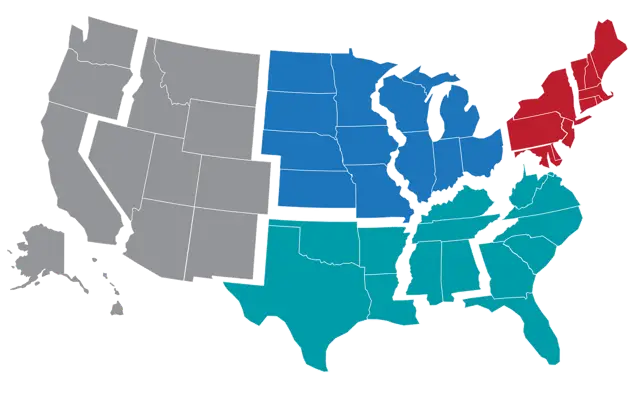
Pacific: Lowest meat consumption: 9% don’t eat beef, poultry, fish or pork and highest proportion of vegan executives (4%)
Mountain: Lowest BMI (26.2, tied with execs in the Mid-Atlantic), lowest number of execs with medical conditions (43%) and lowest alcohol consumption: 41% don’t drink alcohol or only do so occasionally
Southwest: The region has the highest BMI among executives (28.7), and 26% rate their level of physical activity as inactive or sedentary, but they also report the lowest stress level (6.0 / 10) and are the most motivated to make lifestyle changes (51% rate their motivation 8 or above)
South: Highest stress (6.6 / 10) but best sleep quality (6.3 / 10)
South: The region has the highest proportion of execs who fast intermittently (13%) and the lowest number of smokers or former smokers (13%) but also has the worst diet (eating out/prepared foods most often in a week)
Northeast: Highest physical activity: 46% participate in high-intensity physical activity regularly. Execs also report the best quality of life (8.0 / 10) despite having the worst sleep quality (5.9 / 10)
Middle Atlantic: Lowest BMI (26.2, tied with Mountain region execs), Lowest quality of life (7.4, tied with Midwest region execs) and highest proportion who eat fruits & vegetables daily (65%)
Midwest: Lowest quality of life (7.4, tied with Middle Atlantic region execs)
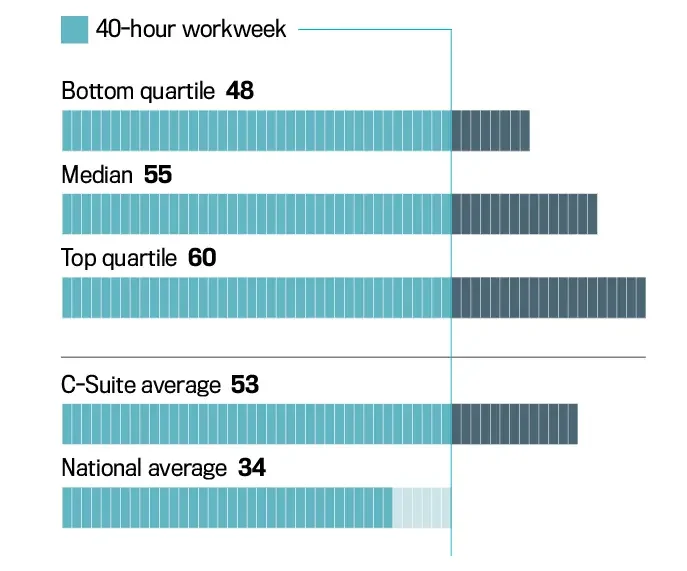
That need to be in top shape is easy to understand based just on the hours C-Suite executives report working: an average of 53 hours per week, nearly 20 hours more than the U.S. national average of 34 hours reported by the St. Louis Fed this year.
And that’s just the time spent in the office; the weeks are, in reality, much longer. “Even though you’re not in the office,” says Pierre-Luc Chicoine, a 20-plus year veteran CFO who now runs his own consulting firm. “You’re constantly thinking about that stuff, so you’re always on.”
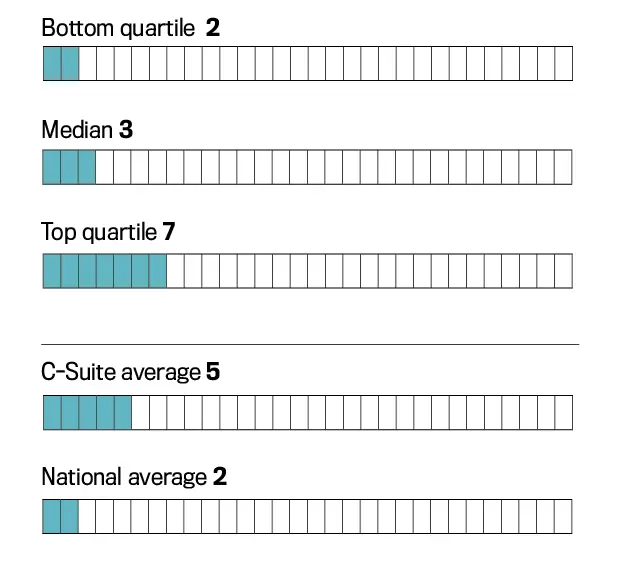
Senior executives travel five days per month on average, more than twice the national worker’s average of two days, with the quartile traveling the least reporting spending two days on the road vs. seven for the quartile traveling the most. (The most frequent travelers? Agriculture executives, who are on the move eight days per month.)
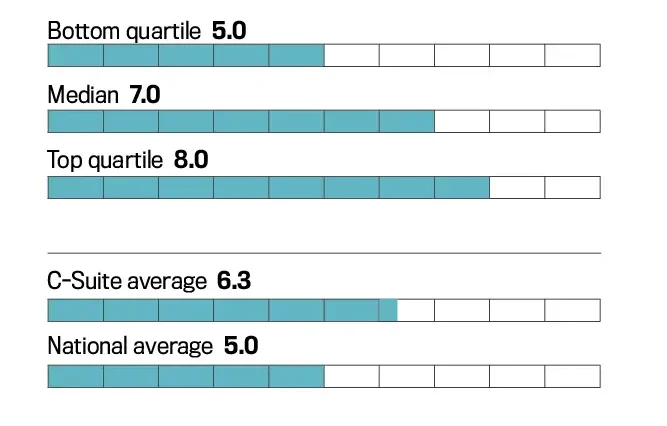
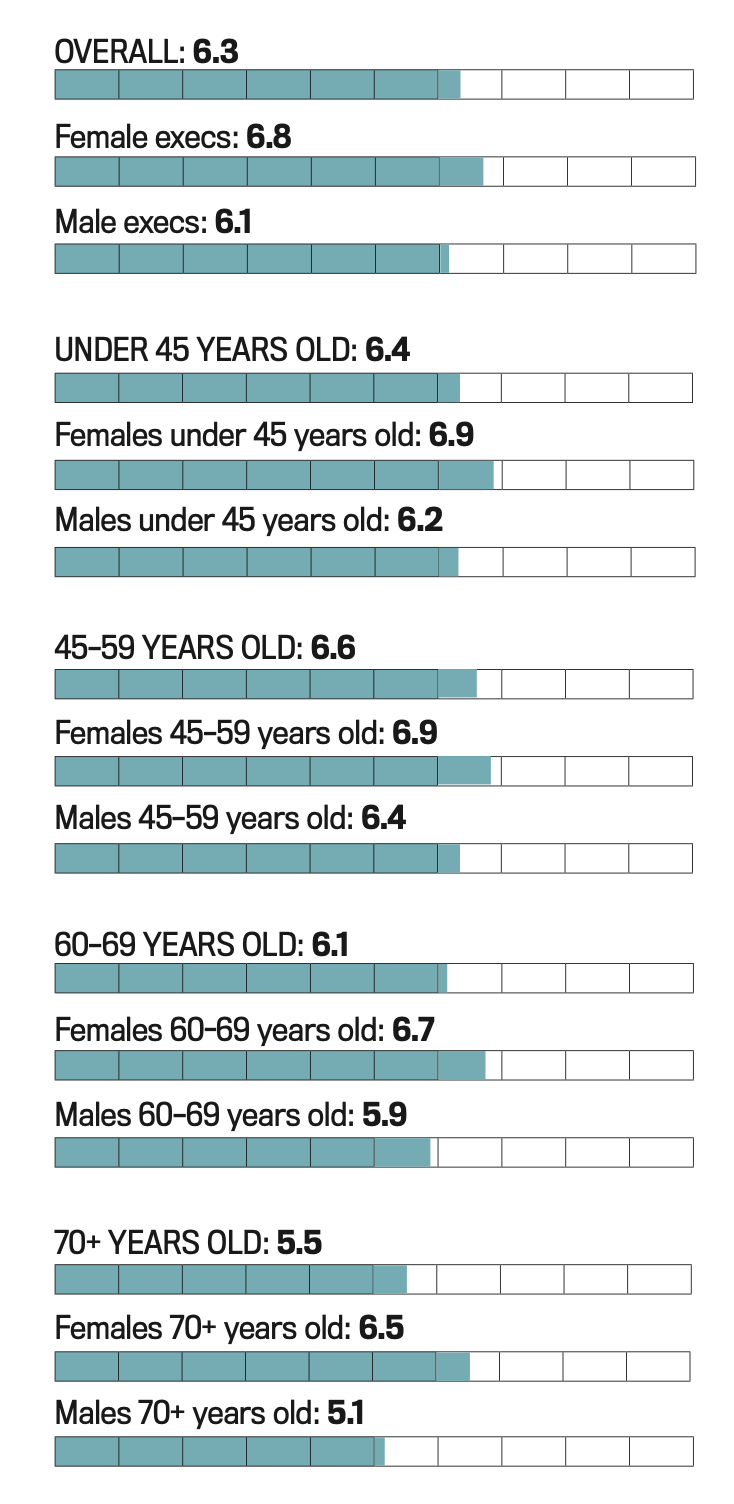
This “always-on” lifestyle shows up in stress data. On a 10-point scale, C-Suite executives report an average stress score of 6.3, compared to the 5.0 reported by U.S. adults, according to the American Psychological Association.
Among our survey respondents, women executives report higher stress levels than men (6.8 vs. 6.1). For Allied Alloys CEO Nidhi Turakhia, this finding reflects a tendency for women to carry more homelife responsibilities. “I laughingly call it my second job,” she says. “And it’s very stressful to be able to balance the two.”
Age also plays a factor. Executives under the age of 60 record the highest stress at 6.5 on average, while reported stress levels among those over 80 drop to 5.0, as experience tempers strain. “We’re not seasoned,” agrees Turakhia, who is in her 40s. “And then having to compare with the baby boomer generation and their work ethic…. It’s a lot of pressure.”
Brent Bauer, M.D, a Mayo Clinic Executive Health physician, says the key is not to approach “stress management” as an isolated challenge but as part of an overall program for optimizing health. In his practice, he helps executives create a strong foundation across seven domains, including exercise, nutrition, sleep, social connections, spirituality and outdoor time. “The seventh domain is stress management,” he says, “recognizing that the first six domains are an integral part of helping an individual thrive, even in the highly stressed times of the past decade.”
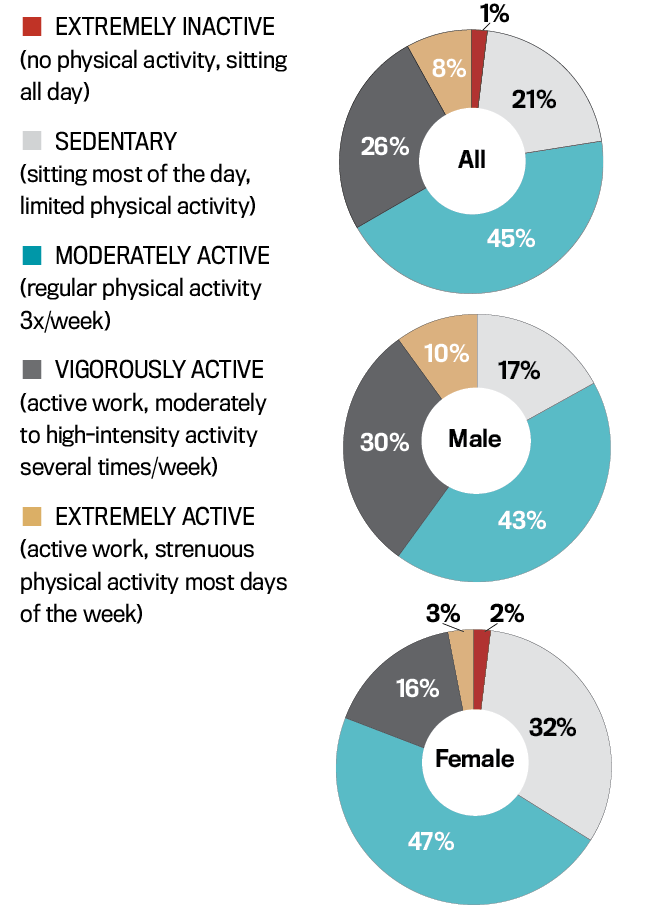
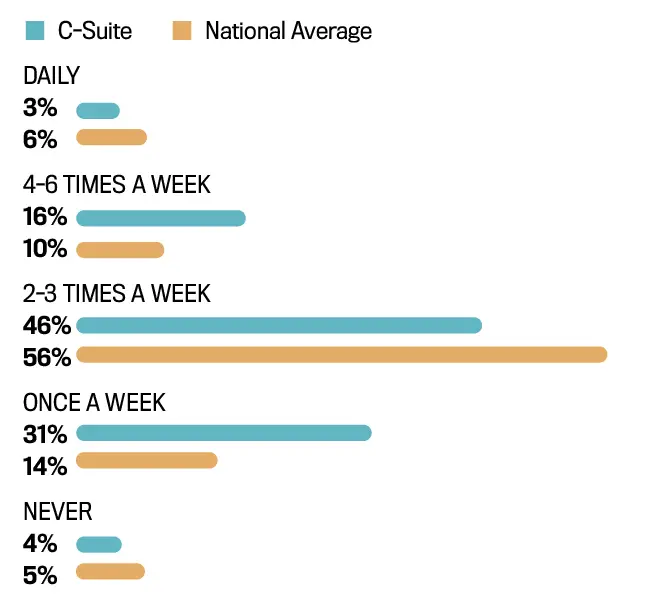
To counteract all this, America’s C-Suiters are generally an active bunch: 78 percent of respondents exercise at least three times weekly, with one-third classifying their routines as vigorous or extreme, compared to only 25–30 percent of Americans meeting the CDC’s physical activity guidelines.
Forty percent of male executives report vigorous/extreme-level activity vs. 19 percent of women, and women are more likely to identify as “sedentary” (32 percent vs. 17 percent of men).
Individual Advocacy Group CEO Charlene Bennett is among those with a regular routine, exercising at least five days a week before she starts her day. “I feel guilty if I don’t,” she says, adding that she maintains her regimen while traveling. “I’ve come up with a routine that you could do without having equipment around,” she says. “This [job] is stress on steroids… I recognized early on that without keeping myself healthy, this was not going to work.”
For many CEOs though, finding the time and energy to exercise is a real challenge. Manmeet Soni, who occupies the double role of CFO and COO at Summit Therapeutics in addition to being the audit chair for publicly traded bioelectric medicine company Pulse Biosciences, struggles. “I try when I’m home. I have a private instructor who comes and helps me out,” he says. “But when I come home after 10 or 12 days of travel, I don’t have the energy to exercise even with a private instructor. It takes me two to three days to recover.”
Most C-level executives surveyed do not smoke, but they do share a habit that research has shown to be just as harmful: sitting for long periods. According to CDC data, the average American sits 6.5 to 8 hours per day, and senior executives are no exception, clocking an average of 7 hours daily.
Research shows sitting more than eight hours a day with no physical activity raises the risk of dying to levels on par with obesity and smoking. “Prolonged sitting increases the risk of mortality by 16 percent and the risk of heart disease by more than 30 percent,” says Liz Gilman, M.D., MSM, a Mayo Clinic Executive Health Program physician leader.
To cut sitting time, Gilman recommends sit-stand desks and behavioral prompts such as digital reminders, with a goal of trimming chair time by 100 minutes per day. “Start with simple steps… but aim for two to four hours of standing or light movement during the workday to reduce risk and improve energy,” she says. She is a fan of walking meetings, noting that “addressing sitting time directly is more impactful than relying on leisure-time exercise alone.”
Moreno-Riaño makes a concerted effort to avoid excessive chair time. “I try to find as many opportunities to either stand up and have meetings standing up or have meetings as I’m walking around the office or on our campus,” says the Cornerstone University CEO, who estimates his daily sitting time at just three hours.
That behavior has influenced his team as well. “I’ve seen my team actually do some of the same things, have meetings in different places,” he says. “It’s been important for me to set an example that I not only care about the moral and intellectual development of people, but I’m trying to embody also a lifestyle that’s good. And that’s important for my campus to see. You’re setting a tone.”
The payoff would be well worth the effort, advises Daniel Dudenkov, M.D., a Mayo Clinic physician seeing Executive Health patients on the Jacksonville, Florida, campus. “Physical activity is the most powerful health and longevity tool we have,” he says, suggesting that executives start by asking one question: How can I build more movement into my day? “Small adjustments like taking the stairs, alternating between sitting and standing or setting reminders to move every hour can meaningfully boost energy, reduce stress and support long-term health.”
Executives eat healthier than most Americans, our study finds: 56 percent eat fruits and vegetables daily vs. only 10 percent of adults nationally. Executives in the Mid-Atlantic region are most likely to meet CDC guidelines when it comes to fruits and vegetables, while those in the South are least likely. Only 41 percent of Southern executives say they eat produce daily, vs. 65 percent in the Mid-Atlantic.
Women are also more likely than men to meet CDC recommendations, 65 percent vs. 51 percent, respectively, nationwide.
Slightly less than half of executives (48 percent) report consuming beef, poultry, fish or pork daily, vs. 70 percent of Americans. Executives in the Pacific region report the lowest meat consumption, as compared with the Central region, where 59 percent consume meat daily.
Most executives (54 percent) don’t follow a specific diet, though the Mediterranean diet (10 percent) and intermittent fasting (8 percent) are the most popular approaches among those who do.
Convenience is also a factor: Two-thirds of executives rely on restaurant or prepared meals two or more times weekly, averaging three times—similar to national trends (72 percent). Turakhia attributes that frequency to the demands of busy travel and meeting schedules. “We’re going from sunup to, quite frankly, sometimes the very next day; meetings, entertainment, drinks, et cetera, they all lead to a really crappy week when we’re on the road.”
Executives can take simple steps to minimize the impact of travel on their diet, says Sara L. Bonnes, M.D., M.S., a Mayo Clinic Executive Health physician at the Rochester, Minnesota, campus. “Include at least one fruit and, when possible, one vegetable with every meal and snack,” she says. “This simple strategy supports consistent, healthy choices even during fast-paced meetings and meals.”
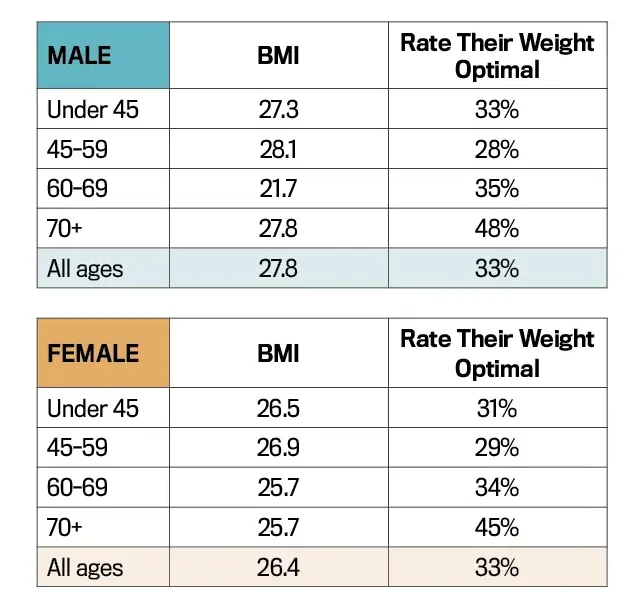
Still, our surveyed CEOs—both male and female—fall on average within the “overweight” range on their body mass index (27.4), given the “healthy weight” range is between 18.5 and 24.9. The average male executive in the U.S. has a BMI of 27.8 compared with an average of 26.4 among female executives. That’s leaner than the average American BMI of 29.2 though.
Two-thirds of respondents acknowledge not being at their optimal weight vs. 83 percent of Americans, according to a 2025 Hims & Hers survey. The good news: 77 percent are making or thinking about making lifestyle changes to reverse that.
Atul Jain, M.D. , a Mayo Clinic physician supporting Executive Health patients at its Scottsdale, Arizona, campus, says readiness to change is essential for leaders who want to sustain peak performance and longevity. “When executives embrace preventive health and lifestyle medicine—prioritizing sleep, nutrition, exercise and stress management—they set the tone for a culture of well-being that drives organizational success,” Jain says.
With age comes wisdom, and so, apparently, does weight acceptance: 47 percent of executives age 70 or older consider themselves at an ideal weight (despite a BMI in the “overweight” range, 26.6), vs. 33 percent of those under 45 (BMI of 27.1).
Sixty percent of senior executives work exclusively from company headquarters, and another quarter have a hybrid arrangement. Only 14 percent work from home five days a week, in line with the national average.
Younger and newly appointed executives tend to work remotely more often than tenured peers: 35 percent of those under 45 work remotely at least part-time, as well as 52 percent of those with tenures of less than one year, compared to 37 percent for 5+ year tenured older executives.
Chicoine works from home on Fridays but draws a line there. “I would not want to work from home 100 percent of the time. I wouldn’t do it five days a week. I don’t think it’s good for business.”
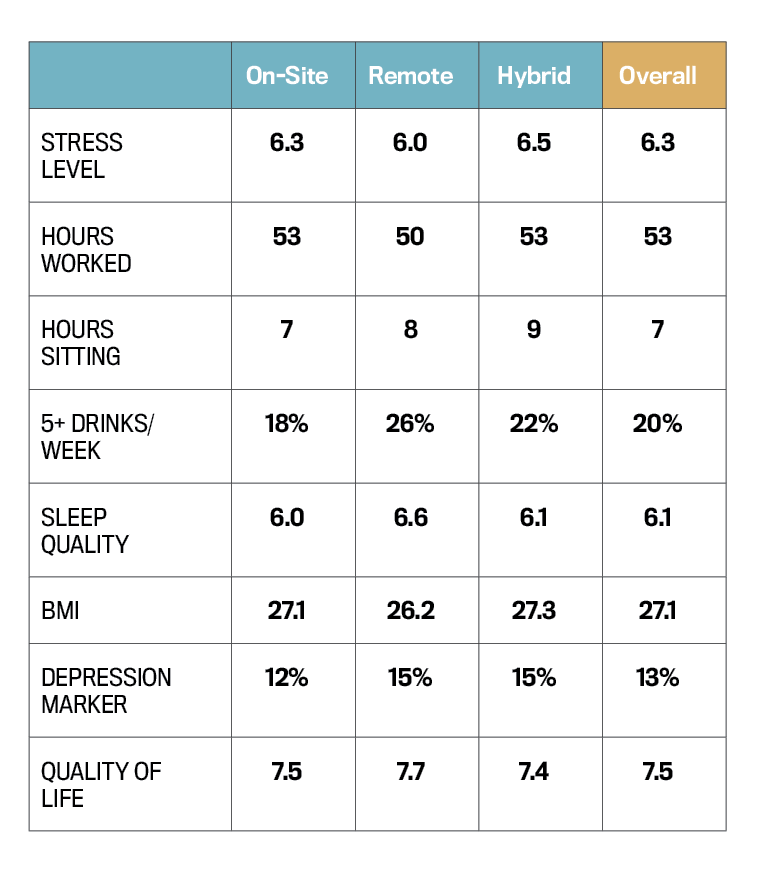
From a health perspective, there are pros and cons to each. Hybrid executives report the highest stress level (6.5), while fully remote leaders log fewer hours and report a higher quality of life—though they are most likely to drink more than five alcoholic beverages per week. Meanwhile, those who work primarily on-site report the lowest depression risk rate, lower alcohol consumption and fewer hours sitting, though also the lowest sleep quality.
Despite their job stress, C-Suite executives fare better than most Americans when it comes to getting a good night’s sleep: 27 percent have trouble falling or staying asleep 4–7 nights per week, compared with 38 percent of Americans who struggle to fall asleep and 46 percent who struggle to stay asleep three or more nights weekly, according to the National Sleep Foundation.
“When you’re up going for an 18-hour day, you’re pretty tired when you go to bed at night,” says Tabor, who adds that he’s learned what works. “I know that there are certain foods that I cannot eat in the afternoon and expect to sleep all that night. Or my last cup of coffee has to be at 12:30 in the afternoon.”
When asked to rate the quality of their sleep on a 1-10 scale, 48 percent say “Good” to “Very Good” (rated 7 to 10), nearly identical to the U.S. average of 49 percent, according to a March 2025 SSRS Opinion Panel poll.
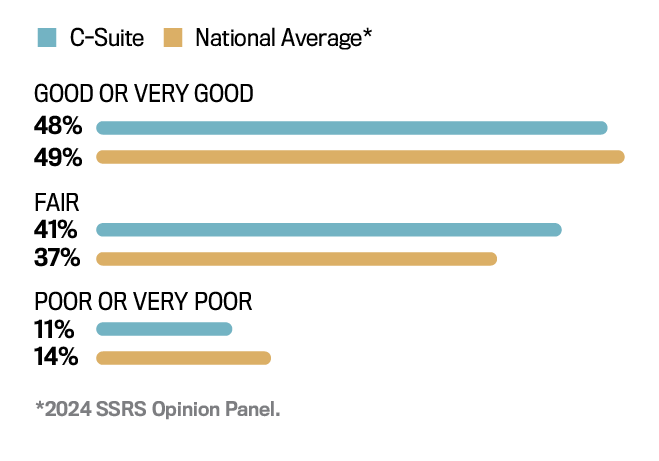
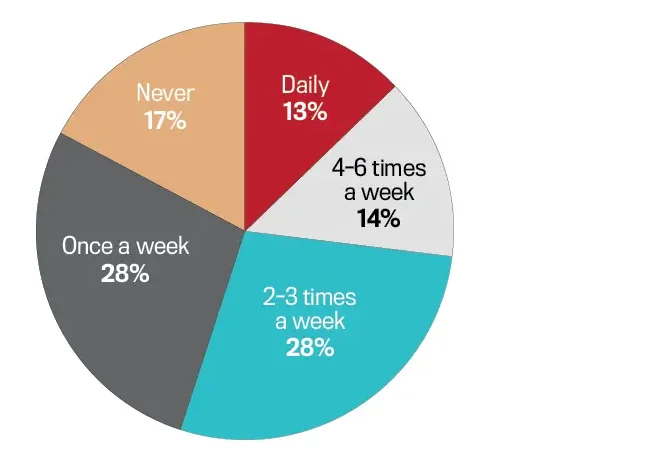
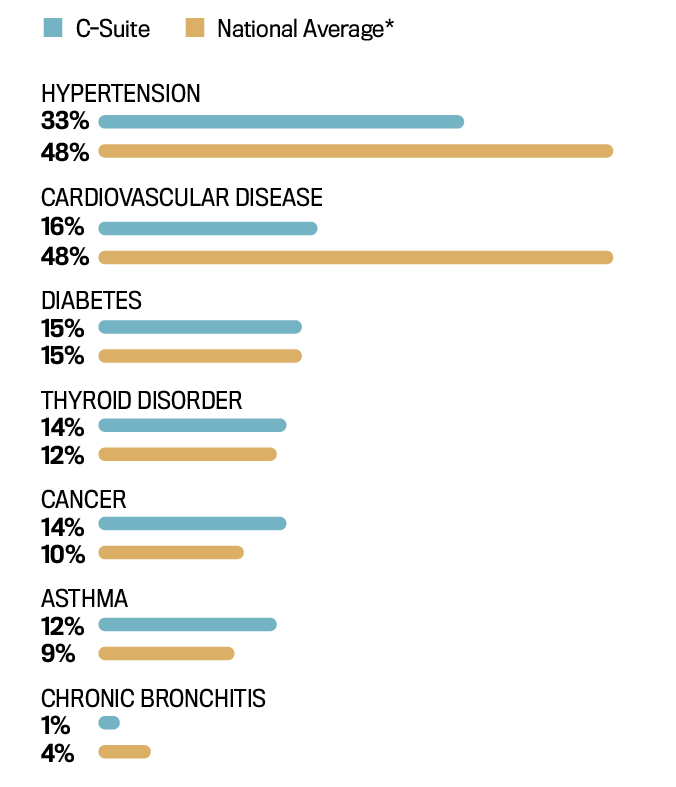
Overall, America’s C-Suite executives report strong health, above national averages:
“Some of this is genetics, and some is luck,” notes Brian Dougan, M.D., a Mayo Clinic Executive Health physician who stresses the importance of a personalized preventive care evaluation. “[But] it turns out that much of our future health is under our control.”
Among executives who are experiencing health issues, hypertension (33 percent) and cardiovascular disease (16 percent) top the list of most common afflictions but at far lower rates than the national average of 48 percent.
Most important, despite the stress and workload, C-Suite executives generally rate their quality of life higher than does the broader population: 82 percent of executives score themselves at 7 or more on a 0–10 scale, vs. 49 percent of U.S. adults (Gallup, 2025). And their average rating is a healthy 7.5.
Many executives attribute this to having purpose in their lives. Lynanne Kunkel, CHRO and chief transformation officer at Vail Resorts, says she draws her energy from the C-Suite’s high demand, fast-paced environment. A mother of five and a chemical engineer by trade, “I’ve always chosen more demanding paths,” she says, adding that, for her, the work-life balance concept “sets up a false expectation of some magical equilibrium.”
Her three-part formula: set priorities, allocate your time accordingly and accept the consequences of those choices. “A lot of people talk about the guilt they feel on the things they’re saying no to,” says Kunkel. “I very rarely feel guilty about those things, even if it’s something that I would like to do… because that’s a tradeoff. That’s the choice I made.”
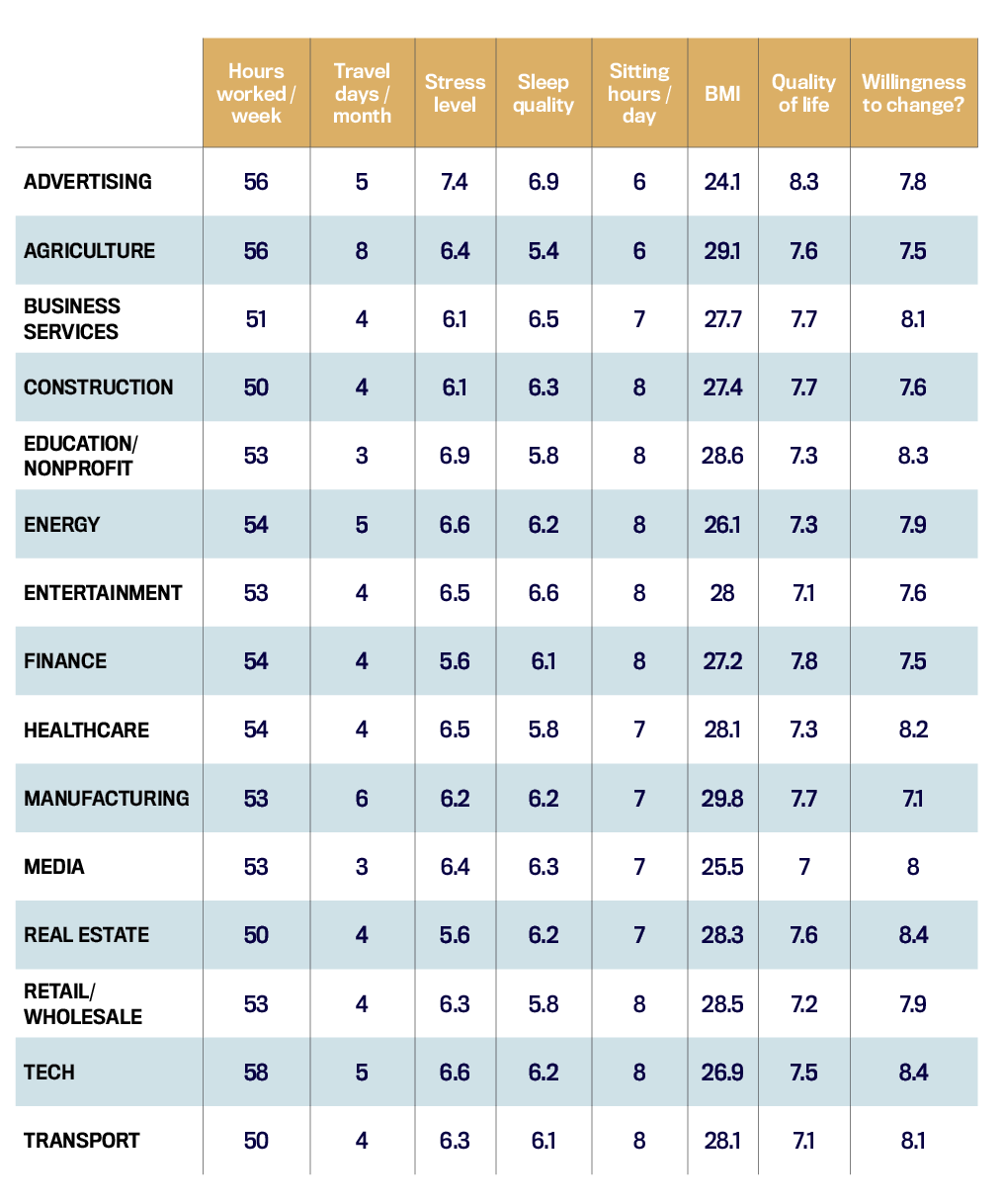
While C-Suite leaders across industries face similar pressures, the data reveals that the sector where you lead matters. Tech executives are burning the midnight oil with the longest work weeks, agriculture leaders are racking up frequent flyer miles, and advertising execs have mastered an intriguing paradox—reporting both the highest stress levels and the best quality of life. Below, see how health and wellness metrics stack up across 15 sectors.
0
1:00 - 5:00 pm
Over 70% of Executives Surveyed Agree: Many Strategic Planning Efforts Lack Systematic Approach Tips for Enhancing Your Strategic Planning Process
Executives expressed frustration with their current strategic planning process. Issues include:
Steve Rutan and Denise Harrison have put together an afternoon workshop that will provide the tools you need to address these concerns. They have worked with hundreds of executives to develop a systematic approach that will enable your team to make better decisions during strategic planning. Steve and Denise will walk you through exercises for prioritizing your lists and steps that will reset and reinvigorate your process. This will be a hands-on workshop that will enable you to think about your business as you use the tools that are being presented. If you are ready for a Strategic Planning tune-up, select this workshop in your registration form. The additional fee of $695 will be added to your total.

2:00 - 5:00 pm
Female leaders face the same issues all leaders do, but they often face additional challenges too. In this peer session, we will facilitate a discussion of best practices and how to overcome common barriers to help women leaders be more effective within and outside their organizations.
Limited space available.

10:30 - 5:00 pm
General’s Retreat at Hermitage Golf Course
Sponsored by UBS
General’s Retreat, built in 1986 with architect Gary Roger Baird, has been voted the “Best Golf Course in Nashville” and is a “must play” when visiting the Nashville, Tennessee area. With the beautiful setting along the Cumberland River, golfers of all capabilities will thoroughly enjoy the golf, scenery and hospitality.
The golf outing fee includes transportation to and from the hotel, greens/cart fees, use of practice facilities, and boxed lunch. The bus will leave the hotel at 10:30 am for a noon shotgun start and return to the hotel after the cocktail reception following the completion of the round.