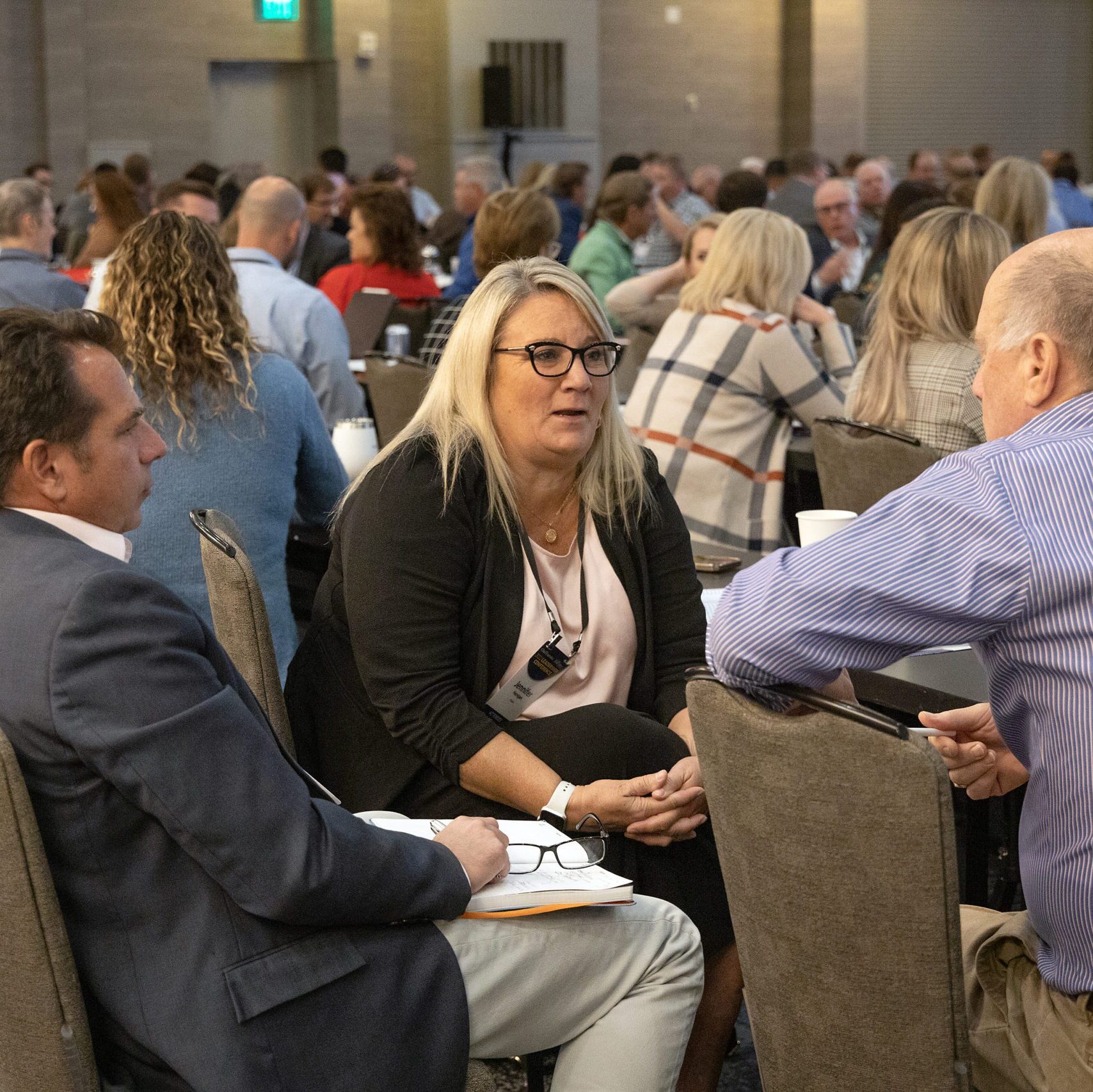
We just spent three days in St. Louis running our 2026 Manufacturing Leadership Summit and I came away more convinced than ever that in the age of AI, automation and factory 4.0 the most critical way to develop a competitive moat in the future is people.
There’s something in the air in St. Louis right now, something worth studying. The city’s mid-market manufacturing community—Barry-Wehmiller, the Gund Company, Cambridge Air Solutions, Wadlow Electric, all of whom our attendees visited and learned from—has been quietly cross-pollinating for years, sharing playbooks on people-first operations and continuous improvement.
Call it the St. Louis Model: the idea that genuinely caring for your workforce and running a disciplined, high-performing manufacturing business aren’t in tension. They’re the same thing. The numbers back it up. Gund is in the top 2.5 percent of publicly traded companies on key financial metrics. Cambridge Air has averaged 12 percent bottom line over the past decade and improved revenue per employee by 40 percent in five years. Regrettable turnover at Gunn: 1–3 percent. Industry average: 45 percent.
Thankfully, their methods are very copyable—and they’d love to share. Steve and Rich Gund didn’t invent their culture. They took it from Barry-Wehmiller, which they benchmarked from other companies, which borrowed from Toyota. Cambridge Air’s John Kramer said the same. The playbook includes daily all-company stand-up meetings, structured listening programs, frontline-owned continuous improvement time (30 minutes a day, every day), servant leadership training for every manager, and individual development conversations that start with “where do you want to be in five years?” not “here’s your performance rating.”
“You’re not going to produce a product by a bunch of random acts,” said Rich Gund. “You have to build processes and systems.” Culture, he reminded, is no different.
All of which helps in an era of tariffs, China, AI, margin pressure, workforce risk. Here’s some of what I took back from the summit as we all try to navigate continued economic uncertainty:
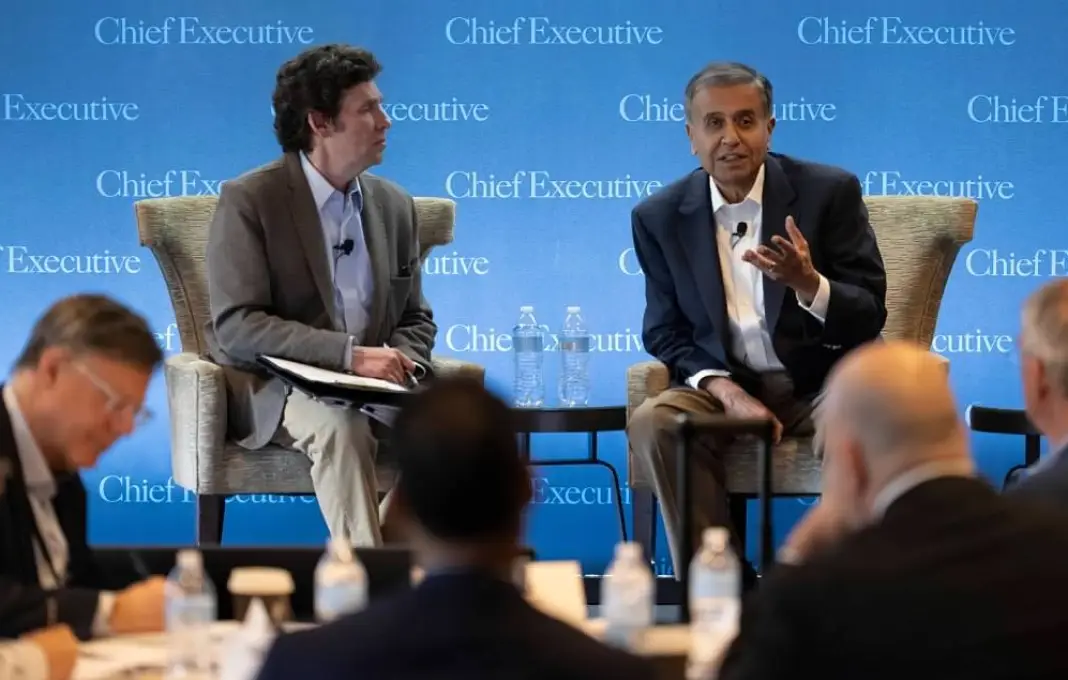
- Forget stability. It’s not coming back. Ram Charan, who advises CEOs and boards across the globe and flew in from Sao Paulo for the summit, asked the room how many were feeling the adverse effects of tariff uncertainty. Nearly every hand went up. His message: Stop waiting for the environment to normalize. “The people who understand we will not have stability again” are the ones who win. Your job isn’t to manage through the turbulence—it’s to get better at operating inside it than your competitors. (Read: Ram Charan’s Manufacturing Playbook for A Turbulent New Era)
- Cash first, everything else second. With supply chains disrupted and customers pushing for price cuts, Charan’s foundational point was blunt: “No cash, no continuity.” He pushed attendees to get the whole leadership team—not just the CFO—tracking cash positions daily. “Nobody goes out of business if their EBITDA runs down. You go out of business when your cash runs out.” His prescription: a daily war room with operations, procurement, sales, HR and an AI person, scanning for external signals and cash traps every morning.
- Use AI to think, not to write memos. The real value of AI for manufacturers right now isn’t productivity automation said Charan. It’s strategic thinking. His advice: Feed your supply chain data, your customer data, your pricing inputs into Claude or ChatGPT and use it as a thinking partner—modeling scenarios, running iterations, surfacing patterns. He described a Chinese company that ran 50 pricing and product mix iterations through DeepSeek and turned a billion-yuan loss into a 750-million-yuan profit. “It’s here, it’s free. Learn how to do this.”
- But don’t skip the data work. Scott Carlton, president of Tokai Carbon USA, spent two days being the most honest person in the room about AI. His company has invested $2.4 million and nearly four years building the data infrastructure—cleansing, correlating, building a semantic layer across 21 years of production records—before they could even begin testing AI agents against it. Current ROI: zero. Expected ROI: “Talk to me in 2028.” His lesson: “If you are not scrutinizing your business processes, thinking through your data strategies, AI is not going to be much for you anytime soon.” (Read: AI In Manufacturing Is Hard, Says A CEO Actually Doing It)
- You’re not negotiating price anymore. You’re negotiating reliability. Both Charan and Wil Knibloe and Bart Kelly of Crowe consulting made the same point from different angles: in a volatile supply environment, availability and consistency are what customers actually need, even if their purchasing team is asking for price cuts. “We are not negotiating price, we are negotiating resilience,” Charan said. “Reliability of service for which we will get the pricing.” Retrain your sales force accordingly—and have the courage to hold the line. Charan cited a supplier who refused to cut price for Walmart for six months. Walmart came back.
- Complexity is killing your margins quietly. Most manufacturers have let their customer and product portfolios drift—marginal customers getting A-customer terms, low-volume SKUs eating production time, freight costs absorbed rather than passed through. Knibloe and Kelly pushed attendees to do an honest A/B/C/D ranking of both customers and products, map margins against complexity and start making decisions. Half the room raised their hands when asked if they made money on freight. The other half should look into it.
- Your people are your moat—and your biggest risk. New research from Brian Gerritsen and Chris Hayes of Travelers, based on a survey of 700 C-Suite executives and frontline risk managers, found that employee safety is the number-one perceived threat to manufacturers’ competitive advantage—ahead of regulatory, legal and technological disruption. The average manufacturing worker now spends 76 days away from work after an injury, up from 72 the previous year. One underinvested lever: post-injury management. Companies that have a clear, well-communicated process for what happens after someone gets hurt see dramatically faster return-to-work times and meaningfully higher employee trust.
- Innovation comes from problems, not whiteboards. Jim McKelvy, co-founder of Square (now Block), closed day two with a framework he calls the Innovation Stack—the idea that truly defensible companies build layers of intertwined solutions to hard problems that can’t be cherry-picked by competitors. Square survived Amazon’s attempt to destroy it not because it outspent or outmaneuvered Amazon, but because Amazon could only see the surface. “They could copy what they can see.” McKelvy’s advice for finding what’s worth building: “I look for things that seem messed up.”