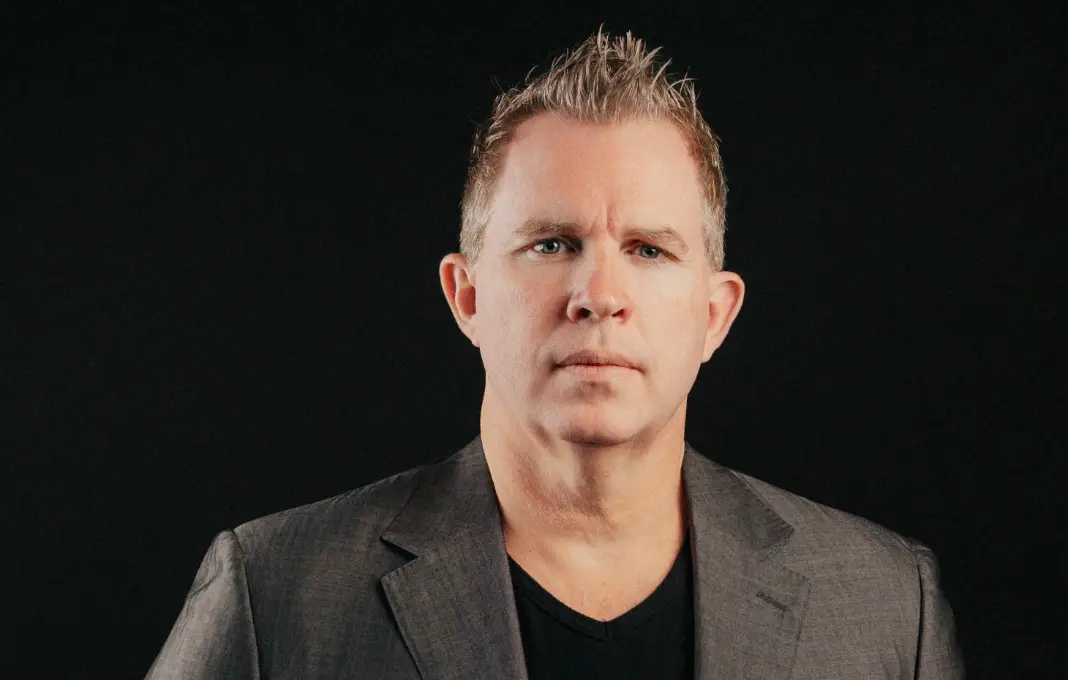
For manufacturing developer Charles Carey, expanding domestic production serves a mission beyond growth.
Carey is the founder of CIG Companies, which develops and finances renewable energy initiatives, and the leader behind solar manufacturer U.S. Modules. “We are building domestic capability that supports American energy independence, strengthens infrastructure and creates meaningful U.S. jobs,” he says. “For me, that matters.”
U.S. Modules makes its panels domestically, with an initial 400 MW production line and a facility designed to scale to roughly 1.4 GW as additional lines come online. The operation is expected to grow to about 250 employees as it expands. The company also prioritizes hiring veterans, with lessons from military service helping shape its executive and leadership programs.
In an interview with Chief Executive, Carey shares insight into U.S. Modules’ manufacturing process, the value of veteran-led operations and why culture is his biggest priority.
What distinguishes U.S. Modules?
What distinguishes U.S. Modules is that we are building for something bigger than a factory. We are building domestic capability that supports American energy independence, strengthens infrastructure and creates meaningful U.S. jobs. For me, that matters.
Just as important, we are trying to build it the right way. That means disciplined execution, a healthy team and a culture that does not treat people like an afterthought. Our backbone is hunger, humility and zeal. Hunger to keep improving. Humility to serve the team and stay coachable. Zeal to bring real pride and energy to the work. If we do that well, we do not just build panels. We build something durable.
What do your manufacturing operations look like?
We commissioned our first production line in March of this year. The facility is designed around cutting-edge, utility-scale solar module manufacturing, with safety, quality and stability as core priorities. At the time we opened Production Line 1, we were around 50 team members, and that includes production support, engineering, quality, supervision and operating personnel. The site is configured for two production lines as at scale.
Operationally, our focus is simple: build a manufacturing environment where process control is strong, standards are clear and the team can be successful. We are still in the early growth phase, so there is more technical detail we can continue to provide around process flow, equipment and line optimization, but at a high level, that is the model: safe, repeatable production with a long-term mindset.
You’ve described the operation as veteran-led. What does that actually look like on the manufacturing floor, and how does it influence how teams are built and run?
For us, it’s about how leadership shows up. It means clarity. Accountability. Calm under pressure. Respect for standards. Respect for each other. On a manufacturing floor, those things matter.
A meaningful part of that comes from the leadership development work we’ve built into the organization. Our executive and leadership program is shaped in part by lessons drawn from military service, including the discipline, clarity and resilience required to lead well when the work is demanding. That program also emphasizes a grit-based approach to development, helping leaders and team members clarify goals, build persistence and stay committed over the long term.
So, on the floor, it translates into something very practical: steadier leadership, better follow-through, stronger trust and teams that understand both the standard and the mission behind it.
What advantages have you seen from hiring veterans into manufacturing roles, especially as you scale production?
Veterans often bring qualities that translate naturally into manufacturing: discipline, adaptability, accountability and a strong sense of team. As you scale, those qualities become even more valuable, because growth puts pressure on culture as much as it does on operations.
We’ve also been intentional about supporting that through leadership development and recruiting. Part of our leadership model is informed by military lessons around persistence, clarity and commitment, and that mindset has been a strong influence on how we think about building teams. It is not just about hiring veterans for the sake of saying we did; it is about recognizing that they often bring habits of execution and resilience that strengthen the workplace in a very real way.
What are the gaps you’re still trying to solve when it comes to building a reliable manufacturing workforce in the U.S.?
One gap is not just skills, but readiness. It is one thing to hire for a role. It is another thing to build a workforce that can sustain high standards over time.
So, for us, the challenge is building the full pipeline: technical skill, consistency, leadership development and long-term retention. That is why we are culture-first in how we hire. We can teach a lot. What is harder to teach is hunger, humility and zeal. The more we can combine both, the stronger the workforce becomes.
You chose to build in College Station. How much did access to engineering and technical talent influence that decision, particularly with Texas A&M University nearby?
It was a major factor. Honestly, it was a pretty easy decision.
College Station gives us proximity to a serious engineering and technical talent base, and Texas A&M has a long-proven history in engineering, manufacturing and practical problem-solving. That matters a lot when you are building something that has to scale well.
We also just love being there. It is a strong community, and we are excited to grow with the people, businesses and local leadership in that area. We look forward to building real relationships there. Go Aggies!
How do you think about recruiting and training early-career talent coming out of engineering programs versus experienced manufacturing hires?
The answer is both. You need both represented.
Early-career talent brings energy, fresh thinking and long-term upside. Experienced manufacturing hires bring judgment, pattern recognition and operating maturity. The real opportunity is creating an environment where both can succeed together.
For us, the bigger priority is culture first. We want people who care, who can learn, who can work on a team and who want to build something meaningful. Then we pair that with strong training. I believe the training programs we are building and will continue to build can become some of the best in the industry, and that is how you create real opportunity at every level.
Are there specific skill sets that are harder to find locally as you scale production capacity?
Yes. As you scale, it is always harder to find certain combinations of technical competence, leadership ability and manufacturing discipline all in one person.
That is why local hiring alone cannot be the whole answer. You need local talent, experienced outside talent and a development system that helps people grow into bigger roles over time. We are very focused on that. The goal is not just to fill seats. The goal is to build capability.
What’s next for U.S. Modules?
What is next is our second production line. That is the next major step up in production and opportunity to grow.
PL1 matters because it gets the system moving and proves our quality and capability standard. PL2 matters because it expands our production capability and moves us closer to the scale we ultimately need. From there, the goal is simple, even if execution is much more complex: build more panels, get them installed and help power America with dependable domestic energy infrastructure.