For many businesses, the latest smartphone features matter far less than whether a device can do one job reliably, securely and at the right price. That has created an opening for mobile-device makers willing to customize hardware and software around the specific needs of industries such as healthcare, logistics and retail.
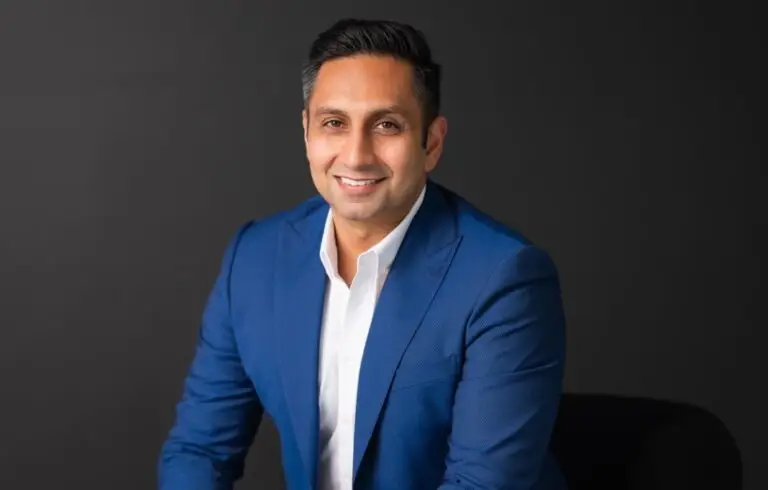
NUU has built its business around that premise, evolving from a consumer-focused mobile brand into a provider of purpose-built Android devices for enterprise customers. Founder and CEO Danny Sit spoke with Chief Executive about the company’s shift toward enterprise mobility, its manufacturing model, the growing demand for alternatives to Tier 1 OEMs and where he sees the next opportunities for NUU.
What distinguishes NUU from the competition?
NUU delivers something that most Tier 1 OEMs simply can’t—enterprise-grade hardware customization, strict regulatory compliance and a price point that doesn’t punish businesses for needing something tailored to their workflow.
Where large brands prioritize mass-market standardization and rigid product roadmaps, we build purpose-driven Android solutions in close collaboration with our customers and partners. That means everything from custom hardware design and Android Open Source Project builds to mobile device management integrations and dedicated-use devices engineered for specific environment —whether that’s a hospital floor, a logistics hub or a retail operation.
As an Android Enterprise Recommended Gold Partner, our focus has always been on reliability, security, compliance and long-term partnerships—not just selling hardware. That distinction matters enormously to the enterprises and healthcare organizations we serve, where a device failure isn’t an inconvenience; it’s a patient safety issue or a business continuity crisis.
How did NUU get its start, and how have you grown?
I founded NUU on a straightforward but ambitious premise: that businesses and consumers were being asked to overpay for technology that didn’t truly serve their needs. My goal was simple: supply high-quality, tailor-made mobile devices at a price point that made sense, without forcing anyone to choose between a premium flagship they didn’t need or a subpar device they couldn’t trust.
We started in the consumer space and grew globally through carrier, retail and distribution partnerships. Then COVID changed everything. When the pandemic hit in 2020 and disrupted retail, I made a deliberate decision to shift gears.
Drawing on my manufacturing background, I took a much more hands-on role in design, development and production, and we began repositioning NUU as a serious enterprise player, specializing in bespoke Android solutions for MDM and AOSP applications. It was a pivot that allowed us to bridge the gap between consumer-grade hardware and true business-grade performance.
That bet paid off. In 2022, we were named to the Inc. 5000 list of America’s fastest-growing private companies for the first time, with 145 percent three-year revenue growth. We’ve made the list three consecutive years: No. 3,559 in 2022, No. 3,802 in 2023 and No. 1,376 in 2024. For me, that trajectory isn’t just a ranking. It’s validation that the market was ready for what we were building, and that we executed at the right moment.
What do your manufacturing operations look like?
Our manufacturing model is built on complete vertical integration, with global facilities overseeing more than 10,000 factory workers across production, quality and collaboration. We manage the entire supply chain, from concept and component sourcing through software flashing, certification prep, QA testing and final production.
That depth of control matters. It means we can move faster than OEM competitors, support customization more efficiently, and give our partners genuine transparency throughout the development cycle.
Our products undergo rigorous certification, including from the PCS Type Certification Review Board, the Federal Communication Commission, carrier approvals and Android Enterprise validation, with additional compliance layers for regulated industries.
In healthcare, for instance, we’ve worked closely with partners to develop a controller for a first-ever fully functional Bluetooth insulin pump in smartphone form factor, a product that not only met demanding medical standards but exceeded them. That kind of project requires a manufacturing partner willing to go deep on compliance and customization, not just produce units at scale.
Why are more businesses looking beyond Tier 1 OEMs today?
Businesses want flexibility, faster execution and better value, and increasingly they’re finding that the largest OEMs can’t deliver on all three. Rigid product roadmaps and limited customization slow innovation, inflate costs and leave companies deploying devices that are close to what they need rather than exactly what they need.
Our agility lets us collaborate closely with customers, tailor both hardware and software to specific use cases, and help organizations improve margins while reducing total cost of ownership. In sectors like healthcare, where device performance is directly linked to patient outcomes, “close enough” simply isn’t good enough.
How important is supply chain agility in today’s environment?
It’s never been more critical. Rising memory costs, semiconductor pricing volatility, tariff pressures and global logistics complexity have made supply chain resilience a genuine competitive advantage, not just an operational concern.
Having a partner with deep supply chain visibility and the ability to adapt quickly translates directly into pricing stability, product availability and faster time to market. For our customers, that means fewer surprises and more confidence in their deployment timelines. Our vertical integration and proactive supply chain management are central to how we deliver on that promise.
NUU has published thought leadership on healthcare device strategy. What’s your perspective on where the industry needs to go?
The healthcare device conversation has been dominated by BYOD for years, and BYOD absolutely has a role to play, especially for patient engagement and access. But there’s a hard limit to what a consumer device running third-party apps can do in a clinical setting.
As I’ve said publicly, patient safety is the invariant. When an alarm must fire every time, you need a locked, AOSP-based controller you can test, audit and update on your schedule. That’s how healthcare teams achieve deterministic alerts, reduce re-validation risk, and satisfy modern FDA cybersecurity expectations without exploding total cost of ownership.
Our healthcare white paper frames mobile deployment choices not as IT preferences but as patient-safety and compliance imperatives, concluding that while BYOD companion apps remain vital for scale and engagement, alarm authority should reside with a provisioned, locked Android controller to meet current expectations under the FD&C Act 524B, FDA secure-by-design guidance, and ISO/IEC software lifecycle standards. That’s the direction the industry is moving, and NUU is positioned to lead it.
What’s next for NUU?
The next phase is focused on enterprise mobility, healthcare technology, AI-enabled connected devices and purpose-built Android solutions at scale. We see growing demand for dedicated devices designed around specific workflows, particularly in healthcare, logistics and IoT, where reliability, security and long-term support aren’t optional features—they’re table stakes.
We can now provide everything from Wi-Fi-only devices to global network connectivity in more than130 countries, and our devices operate across 30 countries with a global view of cyber threats that helps protect the enterprises we serve.
At the same time, we’re not abandoning our consumer roots. Democratizing access to premium technology, making it affordable without making it generic, is still central to who we are.
Our goal is to keep innovating while staying agile, customer-focused and partnership-driven. The companies that will win the next decade in enterprise mobility aren’t the biggest; they’re the most responsive. That’s always been our edge.