Editor’s Note: With a bevy of stressors, every CEO knows—and fears—the truth about this job. It can be a killer. That’s led Chief Executive to team with the renowned faculty at Mayo Clinic Executive Health to help you rethink some of the most important—and too-often overlooked—aspects of maintaining good health as CEO. We’ve collected the articles in a growing library. We hope you find this initiative useful.
When Mayo Clinic’s Executive Health program opens the doors of its new 75,000-square-foot center in Rochester, Minnesota this July, it will be the most visible sign yet of how seriously the institution has come to take a deceptively simple idea: The health of a CEO is not a personal matter. It’s a business one.
Over and over, he’s found, CEOs who take good care of themselves tend to take better care of those around them as well, with implications not only for individual organizations, but for society as well.
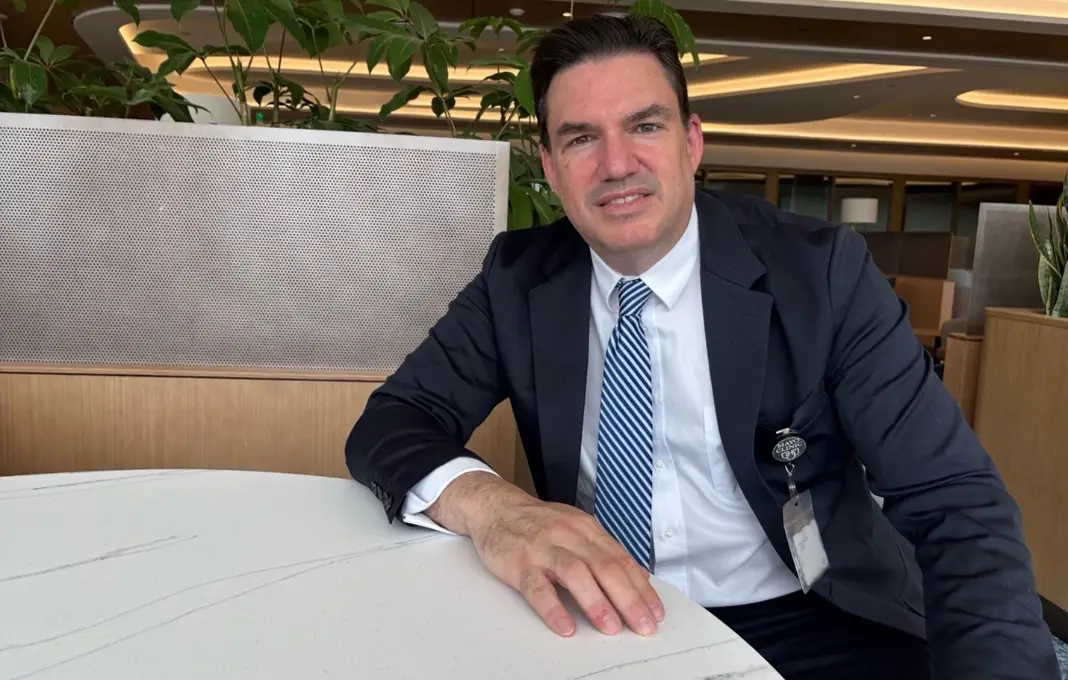
Ryan T. Hurt, M.D., Ph.D., has been making that case from the inside for more than a decade. A professor of medicine and division chair of general internal medicine at Mayo Clinic, Hurt has spent his career at the intersection of clinical nutrition, physiology and preventive medicine—and since 2012, he’s applied all of it to an unusually high-stakes patient population: sitting CEOs and senior executives. He also co-authored a forthcoming research paper based on a joint Mayo Clinic-Chief Executive study examining the state of C-Suite health in America.
We sat down with him at the new facility to ask what the data—and thousands of patient appointments—have actually taught him about the state of CEO health in America, and what all of us—all of you—could do a bit better. What follows was edited for length and clarity.
What are you seeing that’s changing about the way executives, particularly CEOs, are dealing with their health?
Many CEOs are becoming more aware of health and longevity. They want to learn about how can they live longer, healthier lives. We call that healthspan. The challenge is there’s a lot of things out there that aren’t necessarily good practices that sometimes CEOs and other execs will partake in, like peptides that are non-FDA approved. So often what the exec will do—a CEO comes, “Hey, my friend injects himself with testosterone every week. Should I be doing that?” What we do is we individualize the care and we answer questions based on their individualized approach for each one of these patients.
Do you feel there’s a lot of misinformation drifting in and getting people to focus on the wrong things?
Absolutely. They’re focusing on the wrong things. What you should ask them is, “Well, tell me about why you wanted to get that test, or why did you want to get that injection? Tell me more.” And so that’s what I usually dig into in that 90-minute appointment where they’ve never really discussed that with anybody before.
Why do you want to get that full body scan? Well, you know what, my friend died of pancreatic cancer, and my primary care doctor told me there’s no good test for pancreatic cancer. And so when you really dig to the root, instead of getting that full body scan, let’s do the Grail test [an expansive blood test for cancer markers]. So let’s do that because it’s less problematic than getting a whole body scan at this point.
What are some of the basic things we should be more focused on?
Key to longevity is muscle. I’ll ask them, what are they doing for resistance training? And most of my CEOs are running, they’ll do a ton of aerobic exercise, but virtually none of them are doing dedicated resistance training. Lifting weights, 90 to 120 minutes of resistance training per week will decrease your mortality.
I have dumbbells in my office. When I’m on a zoom call, one day I do biceps and back, the next day I do shoulders and legs. I do it right here at work. I’ve cut my percent body fat from like high 20s to 19 percent body fat, which is really good.
To fuel those muscles, we need adequate protein. Most people are doing protein wrong. We want one to 1.2 grams per kilogram of your body weight per day. I like to spread it out a little bit as well. And then fiber—we should be 25 to 30 grams per day. Most of us are falling short.
And then the third pillar is sleep. That’s the hardest one. The myth of ‘I only need five hours’—it’s about 1 to 2 percent that probably need only about five hours of sleep genetically. The rest of us need seven to eight. That’s the sweet spot. The problem with CEOs is they’ll go to bed late and they’ll wake up multiple times at night, and sometimes they can’t get back to sleep because they’re thinking about that meeting. Insomnia is very prevalent in CEOs and execs.
Do you find Oura rings and things like that useful?
I love wearables. I’m a wearable guy. I’ve researched a ton of the wearables. Probably a dozen of my peer reviewed papers have been in wearables. I’ve got a nifty device called a Sonu headband, which is FDA approved for sinuses. We’re actually studying it for insomnia too, because it does some low grade vibration, like putting the kids in the car and driving them around puts them to sleep. So we havee a clinical trial looking at that for executives.
I like the Oura ring. What I’ll do is I’ll say, “Here’s what I want you to do—I want you to have good seven hours of quality sleep. Let’s review your data. Oh look, your oxygen actually is dropping. We need to screen you for obstructive sleep apnea.” So I have them give me their wearable data. I’ll say, “Okay, let’s look at your Apple Watch data and your heart rate, see what’s going on when you’re exercising.”
We’re building AI agents to eventually be able to have people feed in their wearable data and have an agent say, here’s some recommendations for you based on that data.
Are you finding more acceptance of things that used to be seen as a little bit woo woo—meditation, mindfulness? Is this a generational shift?
In general there are generational differences. The greatest generation, boy, they will self-neglect themselves right up to death. “I’m not going to go to the doctor—that’s where you go to die,” because that’s what they experienced in the Great Depression. “Hospitals are places you go to die.”
I think as you get into the boomers kind of getting in that retirement age and retiring, they really want to pivot to some of these longevity techniques, and they’ll do anything, they’ll try anything to extend that lifespan. Meditation’s a core part of that. They know that the mind brain is an important piece. If their mind is healthy, then they’re going to be healthier longer.
But I also think in general we’re more probably accepting of some of these novel technologies. Everybody wants the alternative to pills and medicine, which I think is okay. A lot of the integrative medicine that we practice here is outside of medications. It is that mind body, that meditation kind of connecting the whole body, if you will.
Good family practice, good primary care can do preventative medicine. The problem is if you only have 15 minutes in a primary care appointment, the way this healthcare system’s set up is we cut out all the preventative stuff. Because we have to address the pain with walking, all the acute medical issues and sometimes the chronic issues like the diabetes, the high blood pressure. And then we usually at the end write you some medication that gets you out the door.
Here, the focus is that 90-minute visit with each patient. And a big chunk of that is the preventative medicine. I review all your vaccines—shingles vaccine, very important not only for prevention of shingles, but there’s emerging data that suggests that it probably helps with prevention of dementia. I pick up every week patients that I see in executive health when I’m going through the checklist. “You have a first degree relative that has a history of colon cancer—we recommend colonoscopy now at age 45.” A lot of execs don’t even know that that timeframe has moved down because we’re seeing earlier GI cancer.
What’s the best tip you find yourself giving most often to CEOs?
Back to those three. Resistance training—when they say, “I can’t get to the gym,” I say, what do you do in your office? Let’s get some dumbbells. “Well, I travel a lot.” Well, put a pack of resistance bands in your bag and every day, 15 to 20 minutes, work on different muscle groups. Ninety to 120 minutes per week. You’ll pop out of that chair quicker, you’ll feel better.
Most people are doing protein wrong. We want one to 1.2 grams per kilogram of your body weight per day. And then fiber, enough fiber per day. Those are my just two nutrition tips.
And then sleep. So those are my three pearls. It is amazing to me, almost every single patient, unless they’ve seen me before or seen one of my colleagues that preaches these things, how very few are doing those things right.