The CEO had a strategy that was undeniably brilliant. It would shorten the time to production by a third, solve a supply chain issue and get items to market faster than the competition. He had worked it all out with his C-Suite team, and everybody bought in. There was a big all-hands meeting where the strategy was unveiled: gorgeous PowerPoint slides, even a short, animated video showing how the new pipeline would work.
Six months later, nothing had happened.
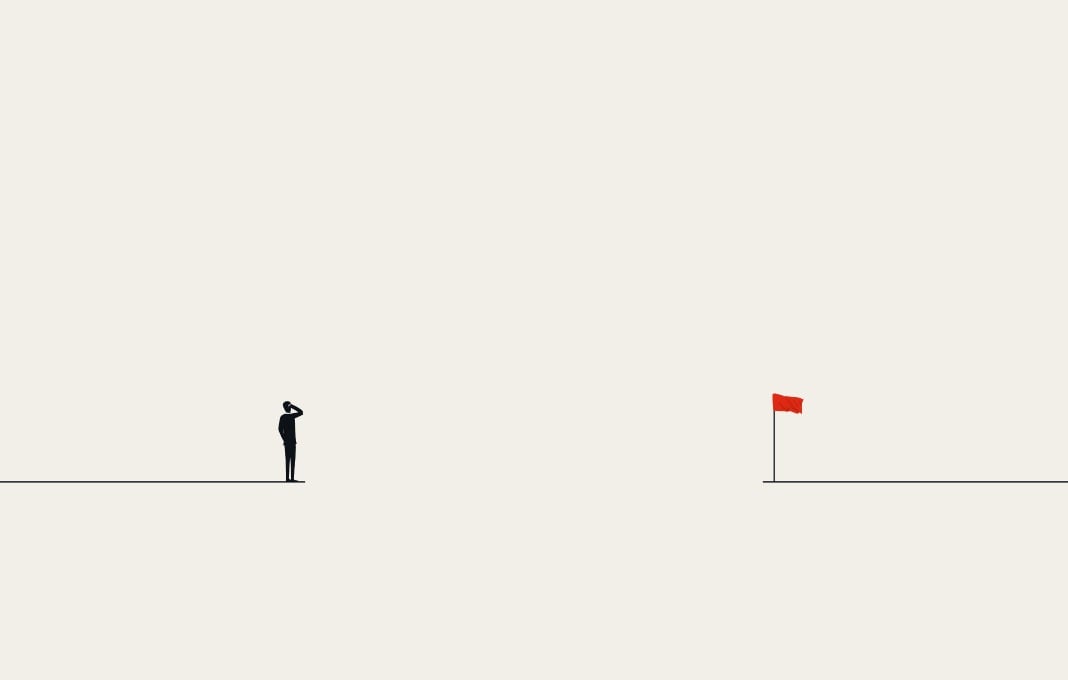
The strategy was brilliant. But is execution didn’t happen. There was a gap. What stalled?
The governing principle I bring into every leadership room I work in is this: Quality x Acceptance = Effectiveness. It sounds simple. Its implications are not. In this case, the company was unable to execute because the strategy simply didn’t transmit. The transmission gap is one of the largest and most persistent sources of friction executives face today.
You’ll have to excuse me, but I’m a movie producer. Everything I do, I see through the lens of filmmaking. A big tech convention in Las Vegas with lots of booths? I see that as a film sales market. A product launch date? I see that as a red-carpet premiere. A new startup idea? I see that as getting a team together to make another movie.
It’s one of the reasons I’m able to collaborate with executives and companies across industries, from multibillion-dollar players to seed-funded startups. I’ve made 40 movies. That means I’ve had 40 startups. Found an idea, found the money, pulled the team together, put it into production, tested it and brought it to market. In the successes, I had franchises. Of course, I’ve also had 400 projects that didn’t get made. So I’ve known the sting of a brilliant idea that never found its place in the market or the psyche of its intended audience.
Which brings me back to that CEO, and to a documentary I produced called A Plastic Ocean. It’s a film about, you guessed it, plastic in the ocean. Not something I imagined would have blockbuster potential when I signed on. If people have a choice between Wolverine versus Ant-Man, Wolverine versus Iron Man, Wolverine versus Barbie, Wolverine versus anybody, they’re going to see Wolverine. But I used to be the president of National Geographic Films. The environment is dear to my heart. I care deeply about environmental stewardship. So I signed on.
On the first day, though, recognizing that we were not making a Marvel sequel, I knew we were going to have to find a way to reach our audience. Problem was, we didn’t have a big budget. We had to find a way to transmit our message clearly.
We had a strategy. Get the people who care deeply about this issue into the cinema on opening day. But how?
Quality x Acceptance = Effectiveness.
We knew we were making an extraordinary film. What we needed was acceptance. So, over the months of filming and editing, we built a coalition of 250 nonprofits involved in plastic abatement, ocean health, waterway and environmental stewardship. On a single day, we asked them to transmit one message to their communities: share the trailer we had just posted on YouTube with everyone they knew.
They did. Within days, we had more than a million views. That transmitted a second message, this one to the people at Netflix, who scooped up the film and gave it global exposure. To date, because it became the primary advocacy message for concerned citizens, A Plastic Ocean has been responsible for more than 150 new laws worldwide, laws that improve recycling and reduce single-use plastic.
We solved the transmission gap by finding a strategic way to gain acceptance with our first audience, the people already deeply connected to the values of the film. That acceptance then transmitted an entirely different signal to our second, far more powerful audience: the decision-makers at a global streaming platform that put the film in front of millions of people.
We got everybody aligned, singing from the same page, and then determined the language, imagery and methodology that would carry the signal clearly across every channel.
That is what strategy transmission looks like when it works.
Across 440 attempts at getting projects made, here’s what I’ve learned:
- Identify the first audience whose acceptance matters. Don’t start with the whole company. Share the strategy first with the core group whose input, behavior and visible commitment will improve the plan and carry it forward.
- Build carriers, not just communications. It’s nice to have a deck, but decks don’t execute. People do. Recruit people to be your ambassadors, people who will interpret and be able to explain the value of the strategy in their own words and by their actions.
- Test for understanding and action, not delivery. Yes, people received your Slack message. But did they read it? Moreover, did they interpret it as you intended? Many transmission failures can be solved with a concise, live conversation rather than going back and forth with written communications where tone may not be clear and people can’t respond naturally with give-and-take.
Think about that CEO. He had the slides. He had the video. He had the all-hands meeting. He had the buy-in. What he didn’t have was a transmission system that carried the signal from the office where the strategy was born to the people responsible for delivering it.
So here is the question: When your team describes your strategy, do they find themselves in the same position as the CEO, brilliant in the boardroom, invisible in the organization?
If the answer to that question is yes, you don’t have an execution problem. You have a transmission problem.