Somewhere, someone may already be copying your company’s most sensitive data, even though they can’t read it yet. They’re betting they will once quantum computers are powerful enough to break today’s encryption.
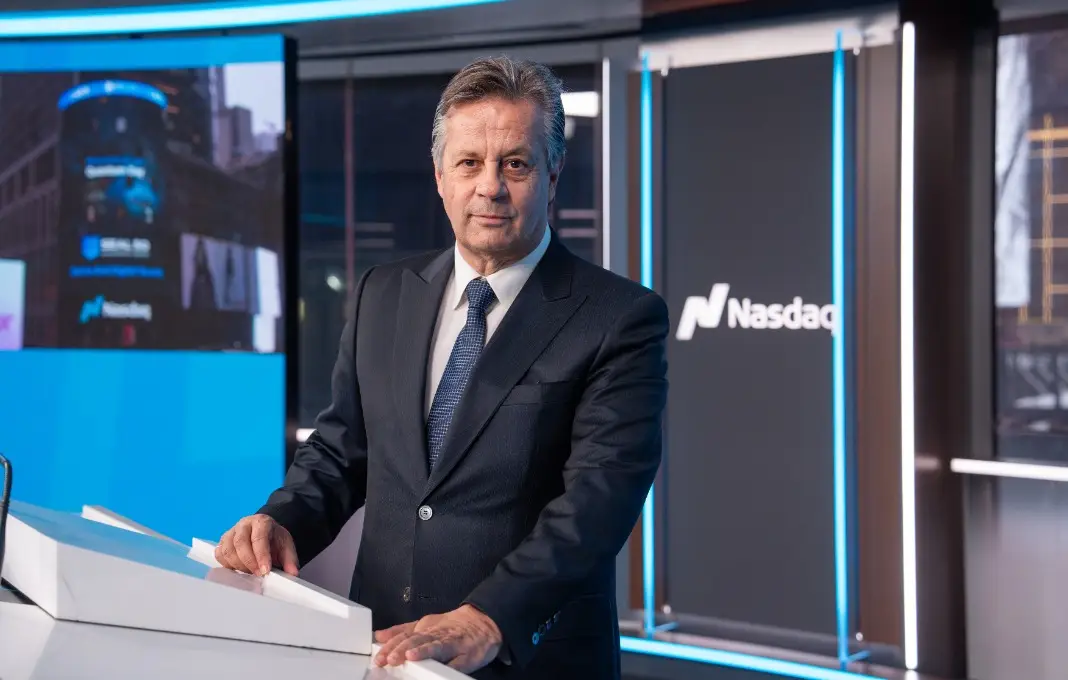
That strategy, known as “harvest now, decrypt later,” is why Carlos Moreira says CEOs can’t afford to wait on quantum security.
Moreira is CEO of SEALSQ, a Swiss company that makes post-quantum semiconductors and security systems built to withstand quantum attacks. The company operates globally, with several offices and sales representatives in the U.S.
Quantum security is often treated as a future problem. What should convince CEOs to invest now?
The quantum threat is not a future event—it is already influencing today’s security decisions in a rather impactful manner. Sensitive information stolen today can be stored and decrypted once sufficiently powerful quantum computers become available. This is commonly referred to as “harvest now, decrypt later.”
The risk this presents is significant and it affects governments, financial institutions, healthcare, critical infrastructure and any organization around the world responsible for managing valuable intellectual property.
The transition to post-quantum security is also a long industrial process. Car ECUs, insulin pumps, grid sensors and factory controllers can remain in service for decades. Unlike a server, organizations cannot simply push a cryptography update to a chip soldered into a medical device or embedded in critical infrastructure. A car sold next year could still be on the road in 2042.
Replacing billions of connected devices, upgrading infrastructure, certifying new hardware and adapting supply chains cannot happen overnight. CEOs who begin now will manage the transition in an orderly way, while those who wait may find themselves facing regulatory pressure, higher costs and greater operational risk.
At SEALSQ, we believe post-quantum security should become part of every organization’s long-term resilience strategy, much like cybersecurity is today.
As post-quantum chips move into production, where are the biggest risks to security, reliability and supply?
Security starts long before software is installed. It begins during semiconductor design, manufacturing, provisioning and lifecycle management. Every stage of the supply chain represents a potential point of vulnerability.
The industry therefore needs trusted manufacturing partners, certified secure elements, hardened hardware roots of trust, cryptographically secure provisioning and complete traceability from wafer to deployed device.
Reliability is equally important. Post-quantum algorithms require greater computational resources, so manufacturers must optimize performance, power consumption, and long-term durability without compromising security.
Finally, supply-chain resilience has also become a strategic issue. Countries increasingly recognize semiconductors as critical infrastructure, making sovereign manufacturing capabilities and diversified production essential.
SEALQ in 2025 acquired IC’Alps, a French integrated circuit design company. What does the integration of IC’Alps change for SEALSQ, and which manufacturing dependencies remain outside your control?
The acquisition of IC’Alps represents an important milestone in our strategy to vertically integrate secure semiconductor development. By bringing world-class ASIC design expertise into SEALSQ, we significantly strengthen our ability to design, optimize and industrialize next-generation secure chips while accelerating innovation and reducing development cycles.
This integration gives us greater control over one of the highest value portions of the semiconductor supply chain.
Obviously, no semiconductor company is entirely independent. Advanced wafer fabrication, packaging and certain specialized manufacturing processes continue to rely on global foundry partners. Rather than attempting to own every step, we have established trusted partnerships while maintaining complete control over security architecture, cryptographic IP, certification and lifecycle management.
A recent example is our partnership with GlobalFoundries to co-develop secure semiconductor platforms, including certified post-quantum security IP and secure chiplet architectures. The collaboration combines SEALSQ’s expertise in hardware-based security with GlobalFoundries’ manufacturing capabilities, while supporting trusted and traceable semiconductor supply chains in the United States and Europe.
You’ve spent decades building companies around digital trust. What’s one leadership lesson you’ve learned about preparing organizations for technologies that customers don’t yet fully understand?
Technology alone never creates transformation—trust does.
When we began developing and delivering to customers solutions such as digital certificates, IoT security and hardware roots of trust many years ago, these technologies were often viewed as niche concepts. Today they are fundamental to the global digital economy. Quantum security is following the same trajectory. It’s projected by McKinsey and Company, Boston Consulting Group and others to become a multi-billion global market.
I have learned that leadership requires investing before markets even identify and fully appreciate the opportunity. That means building teams that are comfortable with uncertainty, educating customers continuously, working closely with regulators and standards organizations, and maintaining a long-term vision despite short-term market cycles.
Innovation is rarely about perfectly predicting the future. It is about preparing responsibly for multiple futures and ensuring that, when the market is ready, your organization already has the technology, industrial capability and credibility to lead.