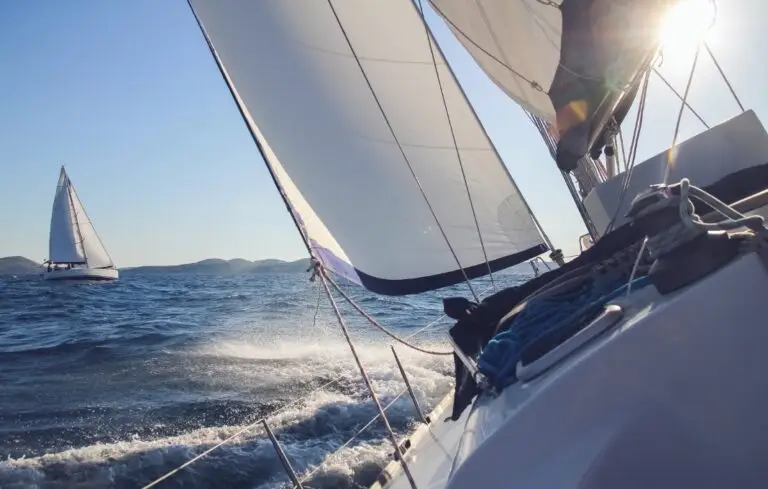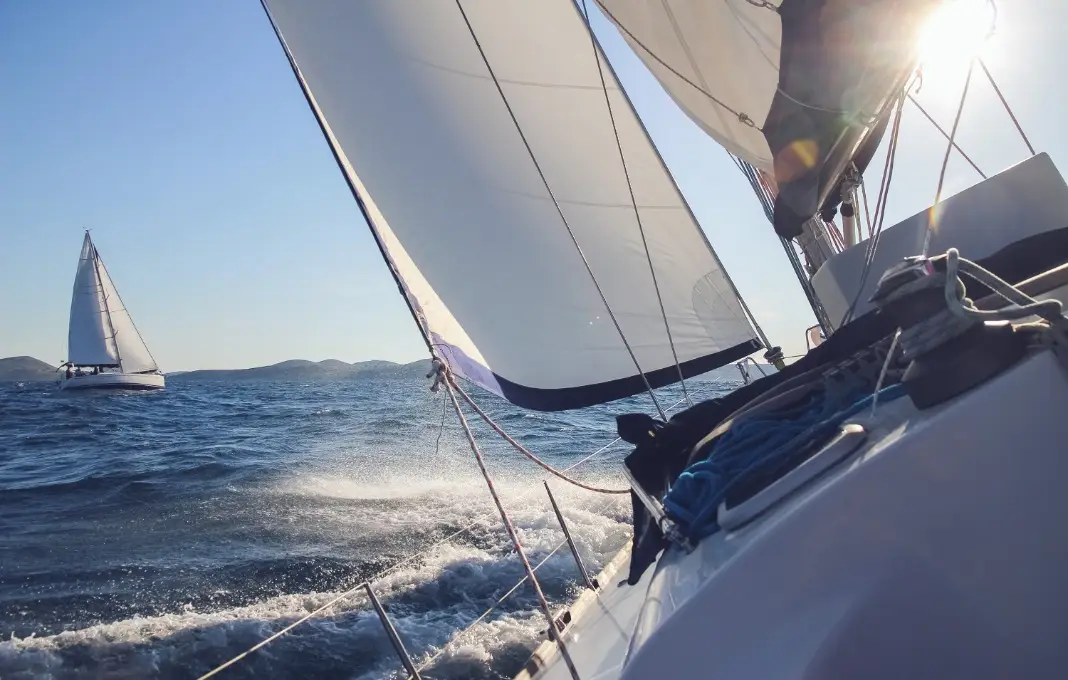
We lost a sailboat race this summer by 13 seconds. My decision, made before the race even started, cost us at least three minutes and, ultimately, first place.
We had a fast boat and talented crew and, while we were competing against some of the best sailors in the sport, our team collectively had the experience and talent to take the top spot. But one mistake I made before the race began undermined all that effort.
This is a story about execution, about winning or losing when you have a great product or technology, the required finances and super talent on your team. And it’s about the central role of leadership decisions and culture as powerful drivers of success.
I’ve spent much of my career leading companies and advising executives, but as I often say, “Everything I know about leadership I really learned on my sailboat.”
Here’s what happened.
A Costly Assumption
I race my J/130 sailboat, CHARIAD, from its home port of Marblehead, Massachusetts. We have an eight-member team that has won many races and regattas. On a sunny summer Sunday morning, we boarded CHARIAD for a race in Massachusetts Bay. The forecast called for 12 to 18 knots of wind, promising great sailing conditions.
Five minutes before the start of the racing sequence, as is typical, the race committee posted the course. I gave the helm to a crew member and went below to talk with our navigator. I went back to the wheel believing I understood the strategic information and could make the decisions needed to get us underway. I was wrong.
The first leg of the course was towards the wind and the second leg was downwind, a typical course. I assumed the wind and the first two legs were lined up, which is how race committees usually set up the course, and it was also what the weather forecasts predicted for that day.
With everything we had to adjust and set up to prepare for racing in heavier wind, I did not make the connection between the actual wind direction and the compass headings for the first two legs.
Before the race started, I had to decide what sails we would use and how we would position the boat relative to the wind. I did not ask the navigator where the wind would be relative to our heading, nor did I ask what side of the boat the spinnaker would be on for the second leg or what spinnaker we should use. I assumed I knew the answers because of how these races are usually run.
I directed that we prepare to hoist the larger A2 spinnaker, designed for sailing directly downwind, and prepare to raise it with the wind on the right side of the boat.
Both decisions were wrong—and it would have been easy for me to know they were wrong if I had simply asked about the wind direction relative to the course heading.
When Execution Isn’t Enough
We got a great start just to the left of a boat skippered by an Olympic sailing medalist and winning America’s Cup sailor. We sailed with this competitor 10 yards to our right for two miles.
I worked hard every second to find some combination of sail trim and steering that would make us a little faster. Driving a racing sailboat in heavy wind requires intense concentration, balancing the enormous forces of wind and waves with small adjustments to the wheel.
Our crew was performing well, but I was so focused on our speed and the boat beside us that I did not think through what the conditions were telling us about the next leg of the course.
When we approached the first mark, our competitor went around it first and immediately jibed, putting the wind on the left side of the boat before raising its spinnaker.
I immediately realized the mistake I had made.
We were about to put the spinnaker up on the wrong side of the boat. We were already at the mark and did not have time to change our setup. We sailed in the wrong direction while getting the sails under control, then jibed the spinnaker and headed toward the next mark.
I’m not sure how much time we lost while sailing in the wrong direction, but it was at least three minutes. We would have finished in first place if our time over the whole race had been just 13 seconds faster.
Our single biggest performance shortcoming was my failure to make sure that I, and we as a crew, understood the basic geometry of the course and wind direction using easily available information.
The same thing happens in business: You can have great products, talented people and excellent execution, but a consequential decision based on a faulty assumption can put all of that at risk.
As the leader of your company, your primary responsibility is to create the future through the decisions you make today. The most consequential decisions are often made in silence or behind closed doors. Do I make this investment? Buy this company? Hire this person? Launch this product?
And sometimes the greatest risk is assuming you already know the answer.
The Role of Culture
Something else happened during our race, something positive, that illustrates the importance of culture.
While driving the boat, I noticed what I thought was a problem with a line controlling the spinnaker. I called out to correct how the line was led. The crew member who had coordinated the setup asked for clarification. He then explained why the setup was correct and why my instruction to change it was wrong. I realized he was right.
The culture we had established among the crew gave this team member permission to question what I was saying. That exchange helped us avoid another mistake.
But it also highlights what went wrong before the race. We had created a culture in which crew members felt comfortable challenging my instructions, but I had not taken advantage of their knowledge when making the decisions that mattered most.
There is an important difference between being willing to hear that you’re wrong and actively asking your team to challenge your assumptions before you make a decision.
In this case, I hadn’t followed the advice I give leaders through my writing and speaking: ask questions, listen to other points of view, take extra time to make sure you understand what’s going on.
Permission Starts with the Leader
After the race, back in the harbor with the sails put away, we gathered in the cockpit for our usual debriefing discussion of what went right, what went wrong and what we could learn. I asked for comments, and a couple were offered. I then said that I wanted to talk about the mistakes I had made and ask for comments on how to avoid similar mistakes going forward.
The crew’s comments helped me understand what I could have done differently, and the discussion gave others permission to talk about mistakes they made and clarified how the teams on the bow and in the cockpit could coordinate better.
Our debriefs work because I talk about what I got wrong and ask for help getting it right next time. As the leader, I am giving others permission to share what they learned and ask for help doing their jobs better.
Permission starts with me.
But the lesson from this race is that the same openness must be part of the decision-making process, not just the review afterward.
If you lead a company, division or department, the decisions you make are among the most consequential factors in its success. Take time to ask questions, test your assumptions and listen to feedback, particularly when you believe you already understand the situation.
And create a culture in which your team feels free to tell you when you are wrong by modeling that openness yourself and actively seeking out the perspectives that could change your mind.
We had the right boat, the right crew and the right information we needed to win that Sunday. What we lacked was one simple question, asked at the right time.