There was a time when the perks of being a CEO were easy to recognize: the company car, the country club membership, travel privileges, even private jet access—a collection of benefits that signaled an executive had reached the top.
Those perks haven’t disappeared entirely, but they’ve declined substantially over the past eight years, according to new research from Chief Executive Group.
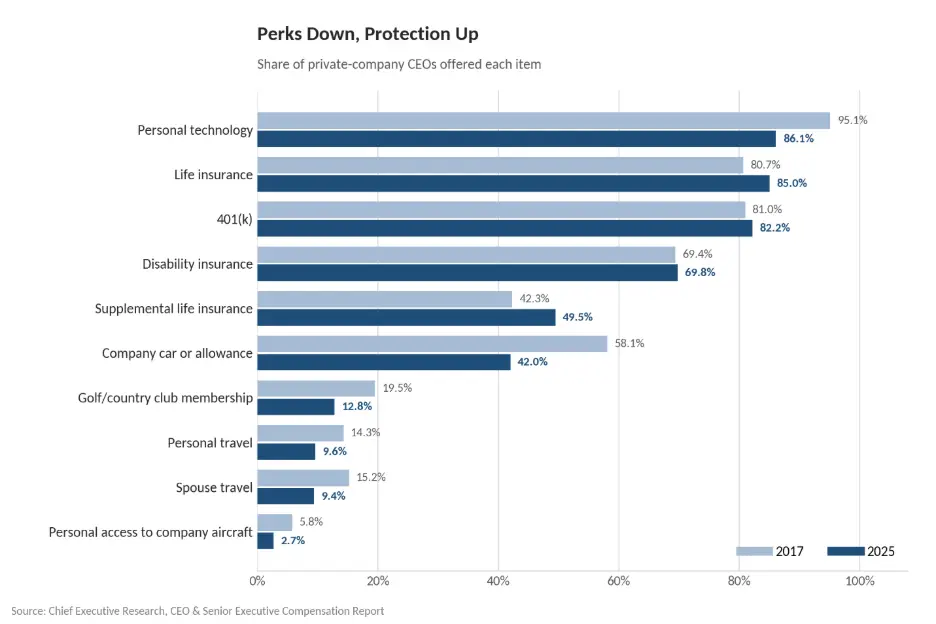
The shift is particularly apparent in automobile benefits. In 2017, 58 percent of private-company CEOs received a company car or car allowance. By 2025, that figure had fallen to 42 percent—a 16 percentage-point decline and one of the clearest signs of changing practices.
Other traditional privileges have followed a similar trajectory:
- Golf and country club memberships declined from 20 percent to 13 percent of CEOs.
- Personal travel benefits dropped from 14 percent to 10 percent, while spouse travel benefits fell from 15 percent to 9 percent.
- Company-paid personal technology, once nearly universal, declined from 95 percent to 86 percent.
- Even personal access to company aircraft, a benefit available to relatively few private-company CEOs, dropped from 6 percent to 3 percent.
Meanwhile, other benefits are gaining ground. Insurance, in particular, stands out:
- Life insurance coverage increased from 81 percent of surveyed CEOs in 2017 to 85 percent in 2025.
- Supplemental life insurance rose from 42 percent to 50 percent.
- Disability insurance coverage remains relatively stable, at 69 percent in 2017 and 70 percent today.
In the Eye of the Beholder
The changes raise a broader question for companies: Are executive perks still delivering value or are some simply holdovers from an earlier era?
A well-designed compensation program includes a series of elements: base salary, bonus, long-term incentives, equity, benefits and perks. Each serves a different purpose. Salary provides stability. Bonuses and equity reward performance and future value creation. Benefits and perks address other personal and financial priorities and desires.
But they don’t all carry the same weight.
How Private-Company CEO Compensation Breaks Down
Share of average total CEO compensation, 2025
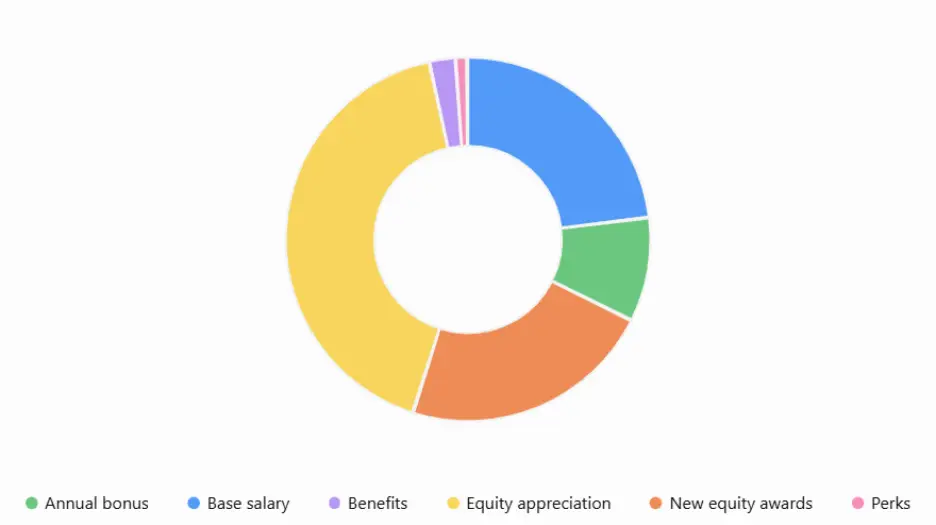
Benefits and perks account for a relatively small share of total compensation, but their perceived value can vary considerably from one executive to another.
A company may spend thousands maintaining a traditional perk that does little to attract or retain its leadership team. Another benefit, potentially less expensive, could be far more meaningful.
The opportunity is to evaluate the offer with the same discipline applied to other compensation elements, rather than simply renew arrangements established years ago. Some considerations:
- Which benefits do executives actually use?
- Which help distinguish the company when recruiting?
- Which contribute meaningfully to retention?
- Which continue primarily because they’ve always been part of the package?
For Jim Nelson, CEO of chemical instrument manufacturer Parr Instruments, the answer is straightforward: Give executives the opportunity to earn more rather than spend money on perks they may not value. “Our [perk] philosophy has been pretty no frills. We don’t pay for cell phones, we don’t pay for cars,” he says “The goal is really the operating profit, how high can we get that, because then we’re all rewarded. And then you can go spend your own money however you want to spend it, instead of us spending it on little perks.”
That approach may not appeal to all executives, but it underscores an important distinction in today’s comp packages: A perk’s cost to the company isn’t necessarily the same as its value to the person receiving it. As traditional trappings of executive status lose ground, the opportunity for companies is to make sure the benefits they provide are ones their leaders actually value.
For more benchmarks by company size, industry and ownership structure, explore Chief Executive Group Research’s latest CEO & Senior Executive Compensation Report.