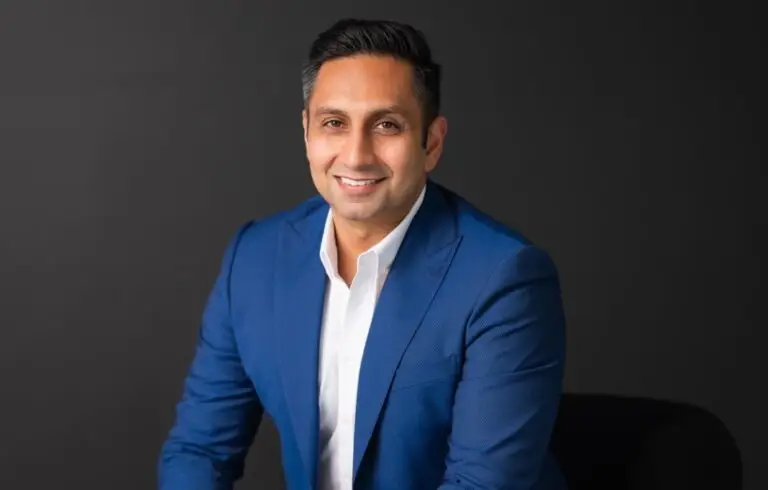
Rich Steinmeier runs the largest independent wealth management platform in the country, and he’ll tell you its advantage comes down to a single line of business: supporting financial advisors and the institutions that employ them. That singular focus underwrites considerable scale—more than 32,000 advisors, roughly 1,100 financial institutions, and $2.6 trillion in advisory and brokerage assets serving some 8 million Americans. It also shapes how Steinmeier spends the firm’s money, most of it flowing into the infrastructure advisors can’t easily build alone: technology, service capacity, AI, cybersecurity and regulatory capability.
Elevated to the top job in 2024, Steinmeier has spent his first stretch as CEO pressing on two levers. The first is culture, which he treats as the mechanism by which thousands of daily decisions across technology, operations and risk either compound or collide. The second is absorbing complexity at the platform level, so that independent advisors facing the same AI disruption and threat landscape as the largest institutions don’t have to answer it with a fraction of the resources. He spoke with Chief Executive about the lessons of the chair, why pace matters as much as direction, and what it takes to keep a large, distributed organization from bottlenecking on its own leader.
What makes LPL different than other firms in the wealth management industry?
LPL was founded nearly four decades ago with a clear focus: supporting financial advisors and institutions. That is our sole focus and the mission of every employee at LPL. We do not have other lines of business, so we can put the advisors at the center of everything we do.
That focus has put us in a distinct position in the market. Today, we operate the largest independent wealth platform, supporting more than 32,000 advisors, partnering with about 1,100 financial institutions, and helping advisors serve roughly 8 million Americans across $2.6 trillion in advisory and brokerage assets.
That scale matters because it allows us to make sustained, practical investments in the core infrastructure advisors rely on—technology, service capacity, artificial intelligence, cybersecurity, and regulatory capabilities—so they can spend more time with clients and less time running the machinery of the business. In real terms, it gives independent advisors and banks the ability to operate, grow and compete with the capabilities typically found inside large institutions, without giving up control or having to build that infrastructure themselves.
As the industry consolidates and operational complexity increases, that combination of independence, scale and support creates a more durable operating model to help advisors succeed.
After being promoted to CEO in 2024, what are the top two to three lessons you’ve learned so far?
Stepping into the CEO role reinforced for me just how different the job is at this scale and level of responsibility. Three things quickly became clear:
One is that focus isn’t a nice to have—it’s the job. In a business our size, there’s no shortage of good ideas. The hard part is deciding where to place bets—time, capital, leadership attention—and being honest about what’s going to wait. When everything is treated as a priority, execution breaks down.
Another is the importance of pace. Even the right moves can create friction if you stack too much change on the organization at once. I learned quickly that leadership isn’t just about setting direction—it’s about calibrating how much the business can absorb at any given moment, so momentum builds rather than stalls.
It also reinforced the importance of how decisions get made. We’re a large, distributed organization, and the best insights often come from those closest to clients and the work. My job isn’t to have every answer—it’s to create clarity, ensure the right inputs are heard, and keep decisions moving without bottlenecks.
One of the main tenets of your leadership philosophy is that “culture is the engine of performance.” Tell us more about that.
When I say culture is the engine of performance, I mean it very literally. Culture is how work gets done—how decisions are made, how quickly issues surface, how teams operate under pressure and how the organization responds when things don’t go as planned. That shows up in how our business performs and in the experience our clients have with us every day.
That’s why, early on after stepping into the CEO role, one of my priorities was to clearly define and reinforce LPL’s values as practical operating principles. We worked across the firm to make sure those values translate into how we lead, how we make decisions, and how we support advisors—especially when the work is complex or the stakes are high.
In a business like ours, client service isn’t delivered by a single team or function. It’s the cumulative result of thousands of decisions across technology, operations, service and risk. When the culture is clear, those handoffs work better. Teams solve problems closer to the issue, escalate sooner when something isn’t right and spend less time navigating internal friction.
The environment for financial advisors is changing rapidly. What are you seeing and how is LPL helping them?
Advisors are operating in a far more complex environment than even a few years ago. Client expectations are rising, margins are tighter, regulation continues to evolve, and technology—especially AI—is moving faster than most individual firms can absorb on their own. At the same time, cyber risk has shifted from an edge case to a constant.
With AI, we see real opportunity alongside real risk. Used well, it can remove friction from advisors’ day-to-day work and free up more time for client service. Used without discipline or guardrails, it can quickly create compliance, data, and trust issues. Our role at LPL is to take AI on at the platform level—investing where it meaningfully improves outcomes and putting the right governance, security and controls in place—so advisors get the benefit without having to manage the complexity themselves.
Cybersecurity is the other major shift. Independent advisors and institutions face the same threat landscape as large financial firms, but without the scale to defend against it individually. That’s where the platform matters. We make sustained investments in cybersecurity, monitoring and resilience so advisors don’t have to build that infrastructure on their own.
At its core, everything we’re focused on—from culture to technology to risk management—is about building a platform that lets independent advisors succeed through change, not be distracted by it.