As with any new shift in the tectonic plates of technology, experts are quick to light up your emails with panaceas to guide you through the turbulence of new AI risks and opportunities. Yet, strategy consultants, schools, attorneys and associations are getting surprised daily along with the rest of us, as groundbreaking AI offerings emerge.
Academic and commercial recipes flood the zone, despite a vacuum of scholarly expertise and data specific to the implications, uses and dangers of AI. As a professor from another top university charged with retrofitting AI into its curriculum admitted to me, “We’re doing an AI branding around content. However, our students will always know more than any of our faculty because the scientific and engineering building bocks of AI have little to do with its practical strategic usage, which is unfolding by the hour.”
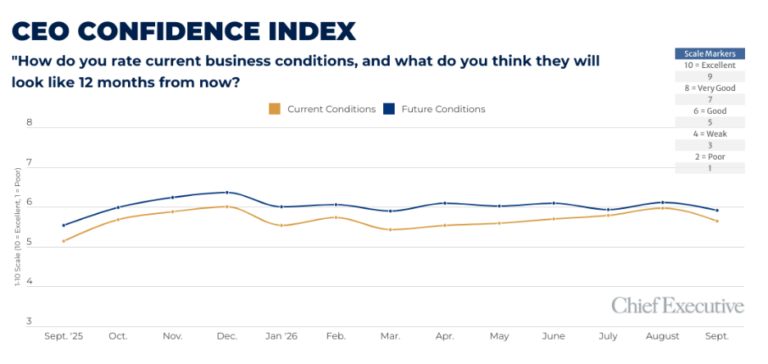
Our latest CEO survey from the June 2026 Yale CEO Summit buttresses this, particularly as it relates to how CEOs view their boards’ understanding of AI. When asked, “How well do you think corporate boards understand what to evaluate on AI governance,” 73 percent of CEOs responded “not well” or “not at all.” This is the consensus, despite all the tech titans and AI specialists added to corporate boards recently.
But that doesn’t mean CEOs should bury their heads in the sand, hoping for a rollback to the use of books, scrolls and quill pens. Your board’s best preparation is not to rush off to learn coding, nor to point to the $100 billion Mark Zuckerberg misplaced with his miscue on the metasphere that was supposed to transform all media.
There are five distinct types of preparation your board would be smart to engage in, none of which require a PhD in applied math, quantum physics or AI. This is not to ignore systemic risks of AI such as environmental degradation, but these lessons are focused on enterprise-level lessons for corporate boards.
1. Avoiding obsolescence. Two years ago, Alphabet’s Google was being written off as an anachronism, with many believing that search was dead. Then the advent of Gemini showed that predictions of Google’s demise were premature, with tech titans from Apple’s Tim Cook to Salesforce’s Marc Benioff saluting Gemini as a frontrunner in the AI race. Similarly, under Arvind Krishna, IBM savvily pivoted from hardware to AI software; Marc Benioff is repositioning Salesforce for the AI era with Agentforce; Michael Dell reinvented Dell by doubling down on a burgeoning AI servers business; and Greg Brown pivoted Motorola Solutions from old school telecommunications to AI-powered drone solutions.
2. Career clichés. For now, the overwrought job displacement alarms are most relevant for new workforce entrants struggling to get traction. At my recent Harvard 50th reunion discussion, expert panelists advised students to study computer science when the reality today is these graduates are as hardpressed to find entry level jobs as humanities majors.
While the current workforce is reskilled, the sad lessons of major job displacements from digitalization in the early 2000s and automation in the ’80s were that workforce retraining efforts often trained workers for alternative jobs that were also disappearing—the job training itself obsolete.
3. Guard your information. Protect your identity from intellectual property theft and data security that have proprietary, if not existential, value.
4. Don’t fall for the hype about physical infrastructure demands and the lure of more compute. Your company’s real problem is likely to be interoperability barriers between different data pools that block the execution of much-vaunted AI opportunities. Data centers are not likely to be your company’s problem.
5. Remember your history. Don’t be jaded by the dot-bomb collapse of a quarter century ago. Secretary of Defense Donald Rumsfeld was once mocked for distinguishing between the known-knowns and the known-unknowns. When it comes to AI, the only certain known-known is that your board has no idea. Yogi Berra’s advice bears remembering, “The future ain’t what it used to be.”