
After several years of false starts, corporate dealmaking is finally stirring back to life. The signs are everywhere: CEOs edging back into strategic purchase mode, their confidence buoyed by healthier balance sheets and a more stable, if less than ideal, interest rate environment. Private equity firms loosening the purse strings on an estimated $2 trillion in dry power and, simultaneously, putting a backlog of portfolio holdings in play. Founders who hit pause on exit plans starting to reengage. AI both fueling deals and being leveraged to evaluate them.
Buy and sell opportunities abound-but so do hurdles. Cost of capital remains high. A steady stream of exterior threats, from geopolitical crises to regulatory action, continues to ignite risk and fuel uncertainty. Across industries, pockets of inactivity linger, particularly in software, where the “SaaSpocalypse” induced by the rise of AI agents prompted valuations to plummet, miring the entire sector in a fire sale environment. In short, the current deal-making environment differs vastly from that of the 2021 boom that saw 62,000 deals, many at sky-high valuations, inked.
Still, 7,924 transactions representing $861 billion in value were announced in Q1 of 2026, marking the strongest start since 2021, according to S&P Global. M&A veterans we spoke with characterize the remainder of 2026 as promising for deals, even as they note that the playbook for pursuing them has changed. They’re sourcing strategically, stress-testing harder and longer, scrutinizing cultural and operational fit earlier and leaning into AI, not only as a reason to buy but also as a powerful tool to evaluate targets faster and more intelligently.
‘We don’t want surprises’
That level of rigor is paramount for Limbach CEO Michael McCann, who takes what he calls a “concierge approach” to potential acquisitions where speed matters far less than fit. “We want to talk to the company for six to nine months at the bare minimum, and sometimes that ends up being three or four years,” says McMann, who steered the $650 million building systems solutions company through six transactions since 2021, most recently the $66 million purchase of Pioneer Power, its largest deal yet.
The company uses that time to scrutinize the stability of staff and financials over several years, vet the target’s customer base for issues like over-concentration and examine career development practices for employees, as well as how Limbach can raise a potential target’s margins and strengthen opportunities. ““We look at the financials multiple times, dig as deeply as we can into the organization and really get to know the people and make sure they understand what their experience will be, because at the end of the day, this is a people-driven business,” says McCann. We don’t want surprises, and that definitely takes time.”
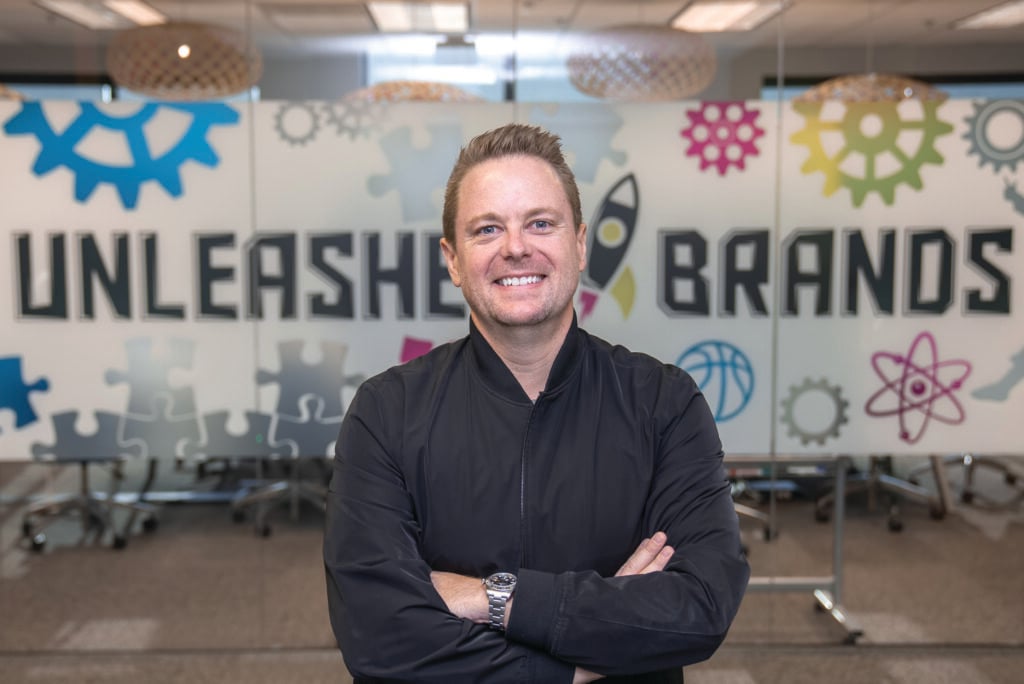
Industry: Youth entertainment and education
Transactions: 14 acquisitions, including The Little Gym, Class 101, Sylvan Learning and Water Wings Swim School
Goal: Building a portfolio of complementary brands
Advice: “Make sure your integration is thoughtful and a two-way process; move fast where speed helps, but slowly where trust matters because you’re building trust.”
What’s different: “Velocity is there but you can run into challenges due to bid-ask spreads, high interest rates and inflationary pressure on consumers.”
Such extended courtships are only possible because the 125-year-old company typically sources its own deals, a practice that allows it to avoid the time-pressure and cost of attempting to outbid competitors. “Often, we’re approaching sellers, who may be at the end of their careers, and almost acting as bankers advising the company,” says McMann, whose deal mission is to extend his company’s reach geographically or expand on the customer solutions it offers.
“Sometimes we’ll talk to companies and they’ll transact with someone else or won’t transact at all. So we kind of concierge owners, laying out the options to help them think long-term as we weigh whether a deal makes sense for us. We want to make sure the puzzle pieces will ultimately fit together.”
‘Don’t kill what you bought’
Direct outreach also worked well for Michael Reid, CEO of publicly traded Megaport, which recently acquired Latitude, a startup that first came to his attention when it maxed out an ultra-high-speed network between Miami and New York that his network-as-a-service company had just launched. Intrigued, he reached out to the founder, whose company had developed software automating server infrastructure. The conversation led to a strategic partnership and, over time, an acquisition opportunity.
“They came to us looking for investment capital,” Reid recounts. “I said, ‘We’re not a VC or PE company, but if we brought our two companies together we could help you scale the business into our customer base. Would you be interested in exploring an acquisition?””
Latitude’s founder was initially leery, having previously chosen to steer clear of traditional private equity transactions where the focus is typically on accelerating growth and engineering an exit within a relatively short time horizon. Reid was able to alleviate those concerns through candid conversations. “I’m a huge believer that you shouldn’t acquire a company to kill what they’ve built,” he says. “And I had no interest in breaking their culture. We wanted to embrace it and empower them to grow. So that was a dating process. They needed to decide we were the right fit.”
Being publicly traded helped, he adds. “That was important because public companies have an infinite game,” says Reid. “Our purpose is not to take their company, do something to it and get rid of it. Our purpose is just to grow it forever.”
The pre-existing relationship between the two entities helped them skirt one of the biggest friction points of dealmaking: trust around post-acquisition performance targets and earnout targets. The transaction ultimately carried a potential value of roughly $300 million, with half paid upfront through a mix of cash and stock and the remainder tied to a three-year earnout linked to Megaport providing a designated amount of capital and the acquired company scaling to hit earnout targets.
Contract terms that support both companies help ensure alignment on growth goals, says Reid. “I didn’t make their earnout EBITDA, I made it revenue linked to the capex we provide,” he explains. “The reason that’s important is because [acquirers] can mess around with costs, make cuts that prevent them from getting their earnout. So, in our case it’s super clear, and there is a risk element on both sides of the equation.”
‘Pound the pavement’
Building trust and creating a deeper understanding of the business by forging direct connections with potential future sellers lays the groundwork for an inside track if and when an owner eventually decides to pursue an exit. It can also help would-be buyers avoid a bidding war, says Jay Jung, CEO of Embarc Advisors, whose company advises startups on raising capital and strategic mergers and acquisition. “In a sale run by an M&A advisor like ourselves, the reality is that a decent quality business is going to get more than 10 bids from experienced buyers who already know the industry,” he says. “So it’s important for first-time buyers to kind of pound the pavement and source their own proprietary deals. And a lot of those deals get done. A big part of deal-making is empathy-it’s not just about the numbers.”
Industry: Building systems solutions
Transaction History: 6 acquisitions since 2021, most recently Pioneer for $66 million
Goal: Expansion of geographic footprint and customer solutions
Advice: “Learn from each experience. We go back and ask what we got right and what could have done better, and that has definitely helped us improve.”
What’s different now: “Over the past couple years, competition from PE firms has leveled out. It’s there but relatively normalized.”
Phil Nardone Jr., CEO of the $30 million marketing agency PAN Communications, employed that approach, combing through industry journals to find firms that had won awards or other forms of recognition, culling a list of top prospects and reaching out to founders.
“I would tell them what my intent was and ask if they were interested in talking,” Nardone recounts. “My success rate on getting a meeting with that first round of emails was 80 percent. People were flattered and honored. Several said, ‘I’m not considering an acquisition but I would love to talk.’ Fast forward, all three of the acquisitions I made began that way.”
‘Date a lot of frogs’
Key to the success of those transactions, Nardone adds, was developing—and strictly adhering to—a list of criteria and goals for each acquisition meant to instill discipline into a process that could otherwise be derailed by emotional attachment. Viable candidates needed to have a 20 percent profit margin for the past three years, good growth projections, compatible cultures and complementary geography and industry expertise. Nardone’s goal-setting sheet also specified a revenue target. “Getting it all written out in the beginning was necessary, because I can date a lot of frogs before I kiss the one that’s going to turn into a prince here,” he says. “And I can fall in love with the people.”

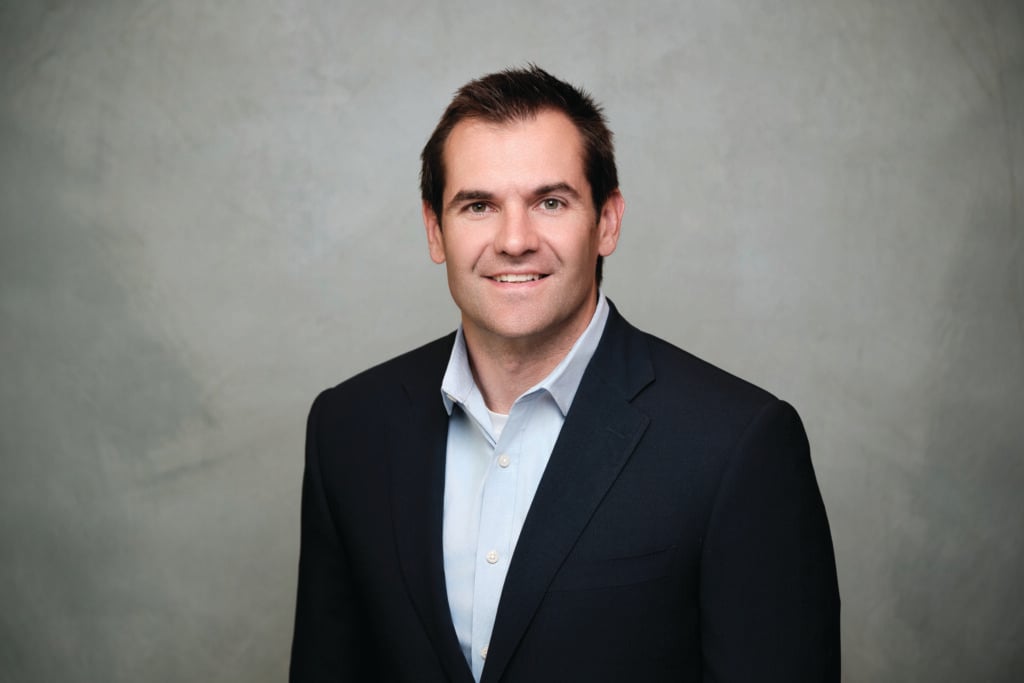
Industry: Technology
Transaction: Two acquisitions, most recently Latitude for $300 million
Goal: Extending into adjacent sectors
Advice: “It takes longer and is harder on your team than you think, because they also have to do the day-to-day job of running the company.”
What’s changed: “Six months ago, how you valued a company was pretty cut and dry, but now all those valuations have changed or are changing. I don’t know how you value a company now.”
Instilling diligence while also forging solid relationships with sellers during the courtship process can be tough to balance. But Nardone found it crucial for the middle-market transactions PAN sought, where founders would typically assume roles in the new entity. To vet leader-to-leader compatibility, he made a practice of dining socially with founders and their spouses or partners to talk about what their post-deal lives would look like early on.
“I got to know them, and they got to learn who I am as not just a CEO but a person,” he says. “I stayed very much focused on culture, people integration and what we would be like post-deal and allowed my CFO to dig into the numbers with their director of finance or CFO. then come back and teach me all about the good, the bad, the ugly.”
The goal of those dinner conversations, he says, was a candid conversation about the future. “You should talk about succession planning-for yourself, the seller, CEO and founder, as well as your leadership team-openly and honestly,” he says. “That’s huge, because in each case there will be nuances. At that second level, for example, some may be excited to be part of a bigger agency with a bump in comp and a bonus program, while others might want no part of that.”
‘Protect that magic’
Michael Browning Jr., CEO of Unleashed Brands, brought a similar approach to identifying potential acquisitions and vetting deals when folding child services brands into his youth enrichment platform company. The founder of Urban Air Adventure Park, he embarked on a mission to chase down the owners of The Little Gym largely because of the positive experience his wife and kids had at one of its locations. Acquisitions of Class 101, Sylvan Learning and Water Wings Swim School followed.
Browning’s criteria starts with the basic economics: The parent company’s financials and unit economics of franchisees must be sound, same stores sales must be trending upward, and net income or EBITDA number need to show profitability. After that, he asks: Is it innovative? Do franchisees and operators believe in the brand? Is there a passionate founder or leadership team? Is there white space to grow the brand? And then, can our platform make the business better without taking away what was special in the first place?

CEO, CSC
Industry: Corporate compliance services
Transaction: >12, including Intertrust ($2 billion)
Goal: Enhancing customer value
Advice: “Patience is a virtue… and then when the opportunity arises, you’ve got to be bold.”
What’s different now: “Al is going to change the way a lot of businesses are run. When you’re making a sizable acquisition, that raises the question of how to account for the possibility that the market could change dramatically.”
Next comes cultural and leadership fit, he says. “It’s so tricky,” he says. “Systems can be mapped, technology can be upgraded, but culture is hard to define. It’s how people make decisions when you’re not in the room. And when you acquire a brand, you have to be careful. A founder-built brand has a heartbeat. The goal has to be not to replace that heartbeat with corporate processes. You’ve got to protect that magic while adding the corporate muscle.”
If founders leave too soon or stay but aren’t on board with the changes underway, the people they inspired lose motivation, says Browning, who adds that former owners’ post-deal roles can vary but need to be discussed up front. “We want them there for as long as they want to be there,” he says. “Some want to continue to be involved in the day-to-day, others want to stay on in a brand ambassador role. Sometimes you have to have flexibility within a framework because it’s not always simple for a founder when you’re buying their life’s work. I always joke, ‘What do you want to be when you grow up?”
‘Everything is going to change’
When much of the company’s value resides in the people who built it, the departure or diminished role of a beloved founder can also lead to damaging turnover down the line. Employees who join startups often do so because they believe deeply in a particular leader, mission or way of operating, says Savneet Singh, CEO of publicly traded PAR Technology, which has been steadily acquiring complementary software providers to create a unified platform for restaurant and retail chains. “Early employees pledged at the church of that founder; that CEO convinced them to take a pay cut, believe in equity that may be worth nothing or may be worth a ton. They’ve taken a bet on a human being.”
Singh’s strategy of acquiring complementary software providers to create a unified platform for restaurant and retail chains has led to seven deals in eight years, most recently the $27 million acquisition of Bridg in January. Along the way, he learned to prioritize retaining founders and their employees when purchasing companies with startup origins.
“Our position is to heavily incentivize the core key contributors to stay and become part of the vision, the journey,” he says. “The team at Bridg is really passionate about what they build, so it’s about saying, ‘We share that passion and now, by the way, we have this huge customer base you can sell into… and retention grants and bonuses tied to performance.'”

СЕО, PAR TECHNOLOGY
Industry: Restaurant and retail technology
Transactions: Seven acquisitions in three countries over eight years, including Bridg ($25 million+) and Delaget ($132 million)
Goal: Building out a cohesive solutions platform a ton. They’ve taken a bet on a human being.”
Advice: “Align on a financial plan, an organizational design plan (so people know who’s reporting to whom) and a cultural plan (the values of the company) before you announce.”
What’s different now: “In software, deals are generally pretty frozen right all-time now; if you’re not in Al, multiples are at lows.”
At the same time. Singh is mindful that not everyone will, or should, come on that journey and finding out sooner rather than later is for the best. To that end, the company emphasizes transparency, acknowledging that systems, reporting structures, processes and even daily routines will inevitably evolve inside a larger organization. “Acquirers will come in and say, ‘We acquired you because you’re great; nothing’s going to change,” he says. “But the real answer is everything is going to change, from your email address and cybersecurity rules to the systems you use, so we’re completely transparent about that. We tell people: ‘Here’s the uniqueness of our culture. We are wicked passionate about the product you have. And if it’s a good fit, we’re going to do everything in the world to retain you, but if it’s not, let’s discover that now so you don’t waste your precious working hours with us and vice versa.’”
Jeff Helfgott, who has led 10 acquisitions since joining PE-backed men’s grooming brand Boardroom Salon for Men as CEO in 2024, agrees. “You want the people to feel like they’re part of the change, not a victim of it,” he says. “At the end of the day, all businesses are run by people. Not all of them will make the journey with you, but they can sure slow you down if you don’t have the right folks with the right enthusiasm.”
‘Don’t let M&A be emotional
Often overlooked in the due diligence process, lack of cultural alignment can keep an acquisition that looks good on paper from panning out in practice. In acquiring 13 companies across seven countries, most recently WonderPush and Octolis, the PE-backed company Brevo vets deals for cultural fit just as heavily as financial metrics, product alignment and synergies.
“We spend a lot of time ensuring we feel good about cultural integration and executive alignment because if we don’t see that, the possibilities drop drastically,” says Channing Ferrer, CEO Americas of the France-based company, noting that the cross-border nature of transactions his company pursues amps up the need for a close read on culture compatibility. “We need to be conscientious about geographic elements: This is a company based in Germany, while we’re based in France; will those cultures work together well enough?”
While cultural fit is, by nature, an “emotional evaluation,” Channing urges those new to the deal-making process to maintain discipline when evaluating and pursuing a potential transaction. “Don’t let M&A be emotional,” he says. “Deals will come and go, opportunities will always be there. You don’t want to get caught in the mindset of ‘I spent a lot of time on this deal; I’m going to force it to happen.’ That’s not a good move.”
The need to balance emotional intelligence with financial discipline surfaced repeatedly in conversations with dealmakers about the current M&A market. While deal-making momentum is building broadly, the CEOs likely to win in this acquisition cycle will not be the fastest or most aggressive buyers but the most intentional about pursuing them.
“That’s the trick,” says Brown. “Because there’s hair on every deal, right? But your job as a CEO leading acquisitions is to understand what you’re actually getting and what you’re going to do with it.”