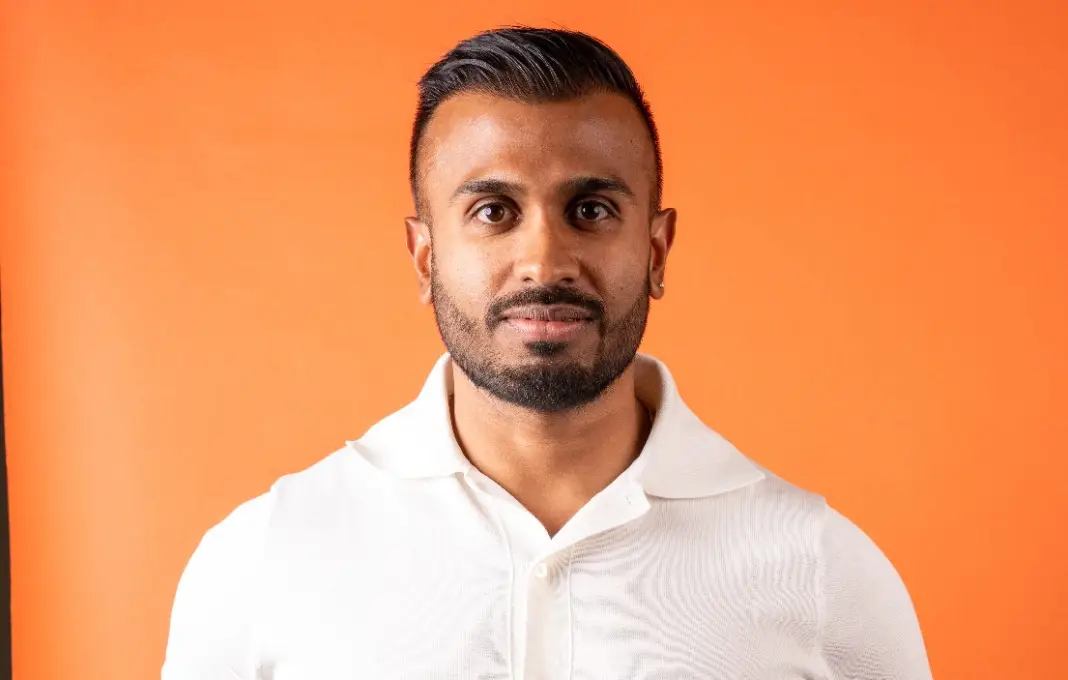
Ronneil Ramlal was certain he understood the market for Protein Chefs, the high-protein meal delivery service he founded in 2015: body-builders. So he set up booths at fitness shows and handed out samples, drawing plenty of praise but, to his surprise, very few paying customers. For about three years the company stalled at 60-to-70 customers a week.
It took online ad data to show Ramlal who was really buying and, after he retooled the marketing, packaging and customer service around them, revenue and order volume doubled, and the new market he’d tapped ultimately became 95 percent of his customer base. In the following interview with Chief Executive, Ramlal shares how to test an assumption cheaply and how long is too long to wait before pivoting.
You launched Protein Chefs specifically for bodybuilders and serious fitness enthusiasts. What made you so confident initially that they were the right market?
When we started Protein Chefs in 2015, there were maybe four other meal prep companies, so there wasn’t much competition at all. Everything was geared toward healthy, portion-controlled meals. So, at that time, I saw meal prep marketed mostly to athletes and fitness enthusiasts. I would see other meal prep companies at bodybuilding shows or fitness shows. Since we were offering fitness-focused, high-protein meals, I naturally thought that bodybuilders and serious fitness enthusiasts would be our target audience.
And, there was a lot of interest from that category. People would try the meals, say they were good and want to promote them, but they weren’t actually willing or able to pay for them. We would advertise Protein Chefs at fitness shows and have a booth where people could sample the meals. We expected to get some clients from those events, but eventually we realized we weren’t getting sales or conversions from the people we were targeting.
You say that assumption held back growth for more than two years. What did that plateau actually look like, and when did you finally conclude the problem might be the target customer rather than the product itself?
Since I was heavily focused on producing high-quality meals and paying close attention to customer service, we were able to retain the customers we already had in that initial phase. The hardest thing was getting new clients. After the first year, we started growing and getting some customers, but between the second and fourth year, we pretty much plateaued. For about three years, we were at that plateau, with roughly 60 to 70 customers per week.
What did you do to test that assumption? Walk me through the marketing experiments or research that revealed who was actually buying from you.
In the fourth year, we started investing in Google Ads because it was more cost-efficient for us to start there before scaling to Facebook and Instagram. That’s when I realized, after studying the data from these ads, that our target audience was different based on the impressions, clicks and people who were actually showing interest.
Within about a year, we started seeing growth, going from around 60 customers to around 100. The data showed us that our audience was generally between 25 and 54, fairly equally split between men and women, with higher household incomes and some connection to fitness, whether that was playing a sport or going to the gym.
Now, our customer base is about 95 percent busy professionals and business owners and about 5 percent athletes. The biggest realization was that the people who were actually able and willing to pay for the meals were different from the people we originally thought would be our customers.
What did the data tell you about busy professionals that surprised you most?
One of the things I didn’t know in the beginning was how many people were actually interested in meal prep. During the plateau phase, I didn’t know whether people didn’t want our meals or whether we simply weren’t reaching the right people. Once I started looking at the data, I realized that there was a massive audience of busy professionals who wanted to eat healthy but we weren’t really communicating with them.
Once you realized you had the wrong target audience, what did you change first—messaging, product, pricing, channels, packaging or something else?
We changed the marketing first and messaging went hand in hand. We changed the type of ads we were running and eventually started working on SEO. We also became much more professional with the advertising. We weren’t very good at graphic design before, so we improved the graphic design, fonts and the core message to make our ads more relevant to busy professionals.
We also changed our packaging. We moved from regular packaging to vacuum-sealed packaging, which helped retain the shelf life of Protein Chefs meals for up to six days, and we added sleeves to make the overall packaging look more professional.
We also changed our customer service. Busy professionals don’t have a lot of patience because their schedules are so demanding so we had to be more helpful, perceptive and understanding. We also paid much more attention to feedback. If someone said, “I don’t want these ingredients,” or “Don’t message me” or “Don’t call me,” we tried to make the experience as simple and hassle free from them as possible.
Did the pivot require you to change the product itself or primarily how you positioned and sold it?
The product itself was largely the same. We were always focused on offering gourmet, high-quality healthy meals curated by a chef. What changed was that we started learning from customer feedback about what people actually wanted.
For example, if one customer asked for a low-carb vegetarian meal, we wouldn’t necessarily change the menu based on one request. But if 10 customers started asking for the same thing, then we would consider it. That’s how we finally developed and improved our meal plans, based on customer feedback. We increased the variety of meal options and gave people more flexibility in how they could order, including the ability to start, pause, stop or skip meal prep deliveries.
We also started working more on the website, investing more in the business, partnering with more efficient courier companies, and hiring more staff and customer service agents. We added the one-time order option because we didn’t want people to feel forced into a subscription or have their credit card charged when they weren’t ready for that. We wanted to give people flexibility. Over time, the subscription model became a much bigger part of the business. Today, about 80 percent of our client base is on a subscription.
What happened to the business after you made the shift? What results can you point to that told you the new strategy was working?
Customer retention improved, revenue went up, and we were able to expand. Eventually, in 2021, we moved out of a shared kitchen and into our own 5,000 square foot facility. During COVID, we experienced rapid growth, and we were able to rebuild the business from scratch and set everything up more professionally, including our own office, kitchen and warehouse. When we made the shift and started seeing the right growth, our revenue easily doubled. After that, growth wasn’t 100 percent every year, but we saw growth of around 75 percent, then 50 percent, and now we’re around 23 percent to 25 percent growth compared with the previous year, even with a lot more competition.
We also started getting a lot more collaboration opportunities. Companies began reaching out to us to see if they could order meals for their offices. That was another sign that we were reaching a broader professional customer base and that the business was moving in the right direction.
Looking back, were there signals in your early customer base that you missed because you were too committed to your original thesis?
There could have been, but I was just starting out with limited capital. In the beginning, I was focused on making extremely healthy and tasty meals. As a bootstrapped company, there were only two or three people in the business, and we were taking care of everything, including deliveries and B2B operations.
What I realized was that we couldn’t afford to look out from the kitchen when what I really needed to do was to step out of the kitchen and actually look at the business and how we could grow. I eventually had to remove myself from kitchen operations and hire more people or expand their hours.
You advise founders to run “mini trials.” What does a good mini trial look like in practice, and how much evidence do you need before you make a larger strategic change?
I would say a mini trial must be frugal—don’t invest too much in the beginning. One of the biggest mistakes I see people make is thinking that they have to put large sums of money into the business. Instead, put a small amount of money into one aspect and see what you get back. That’s how we worked. We were very lean and had to cut costs initially. Once you get revenue and see a return, you reinvest it into the business.
During a mini trial, I would also start with a small group of people as your target audience cohort and put a certain budget toward testing it. Even for us now, if we have an idea for something new, we don’t know if it’s going to work. So, we might start by experimenting with 100 orders before going all in. If it doesn’t work, we discontinue it. If it works, we keep going.
I think everything has to be done with logic rather than emotion or impulsive thinking. When we started, people didn’t necessarily trust buying from a company they had never heard of. This pinched us since we knew our food was of superior quality but we had to build trust with people first. That takes time and patience.
If I had to put a number on the amount of evidence, I would say you should have proof from at least 50 people before making a larger investment but it also depends on the business. You also can’t compare yourself directly with much larger competitors because they have different resources and budgets.
How do you distinguish between a strategy that simply needs more time and one where the market is telling you that your underlying assumption is wrong?
After four years, with three of those years being essentially a plateau, I think you know that you don’t need more time. I was looking at our competitors and asking why they had more customers than us. They were even using the same courier company as us, so I knew the resources weren’t completely different. If they were getting 20 more customers than us, I had to ask myself how they were doing it and what we weren’t doing right.
I don’t think it should take that long to understand that something isn’t working. I would say two years maximum, maybe a year and a half to two years. If you don’t see anything after that, you have to change or pivot. The exception would be if there’s some kind of disaster, recession or other situation directly affecting your company or the market.
Once you repositioned the business around busy professionals, what changed in the numbers? What can you share about the before-and-after impact on revenue, growth, customer acquisition, retention or order volume?
Our order volume doubled. Revenue also doubled when we made the shift. Right now, about 80 percent to 85 percent of our customers are repeat customers, and we currently have the highest subscription base we’ve ever had.
Usually, people will come to our service and try the meals through a one-time order. If they like the meals and the service, they usually move onto the subscription. So, seeing our subscription base continue to grow tells us we’re doing something right.
Customer retention has also been a priority for us. In the beginning, because we had a smaller customer base, and it was difficult to acquire new customers, we worked tirelessly to keep the customers we had. We knew almost all of them personally. If they wanted something customized, we would try to do it. If they didn’t want a certain ingredient, we would accommodate it. If they wanted delivery to a certain address or before a certain time, we would try to make it happen. We were willing to do almost anything to retain them.
When we grew, we couldn’t be that granular with each customers’ requests but wanted to show our commitment to their needs in a different way. We are still one of the few meal prep services in our region that offers customizations and can alter meals based on food and allergy sensitives since our food is curated by a chef with 14 years of experience. We now also rely on highly personalized and around-the-clock customer service and a detailed customer feedback system to ensure that our clients are satisfied with us and see that we are willing to go the extra mile to make their health a priority at Protein Chefs. That has never changed.