The pressure to grow is relentless. The environment isn’t helping—tariff disruptions, shaky consumer confidence and AI are reshaping buying behavior faster than most organizations can absorb. But a clearer picture of how to pull through and win in this era is emerging: Technology can accelerate almost everything, yet durable growth belongs to the companies that treat trusted relationships as their most defensible competitive asset.
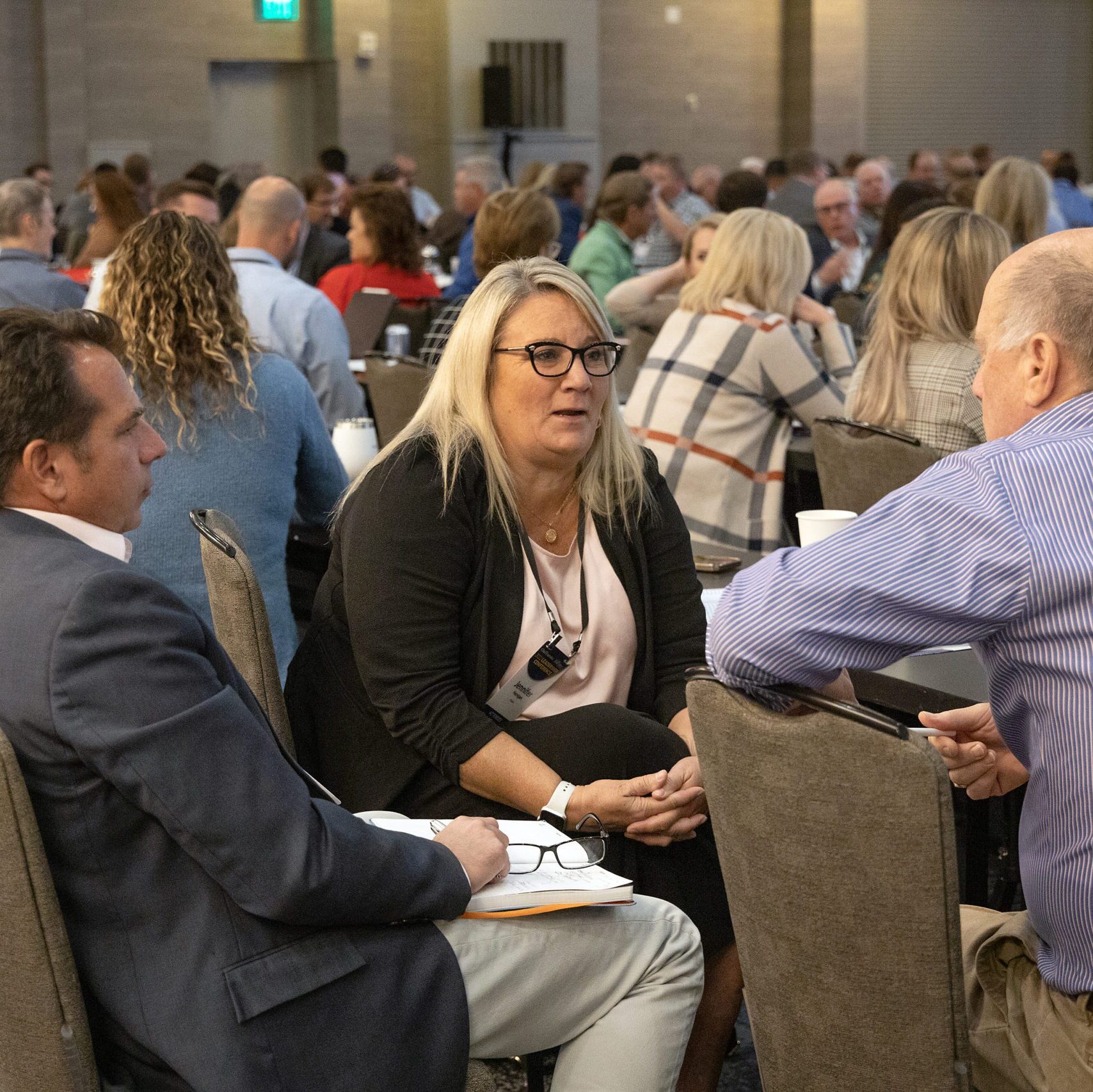
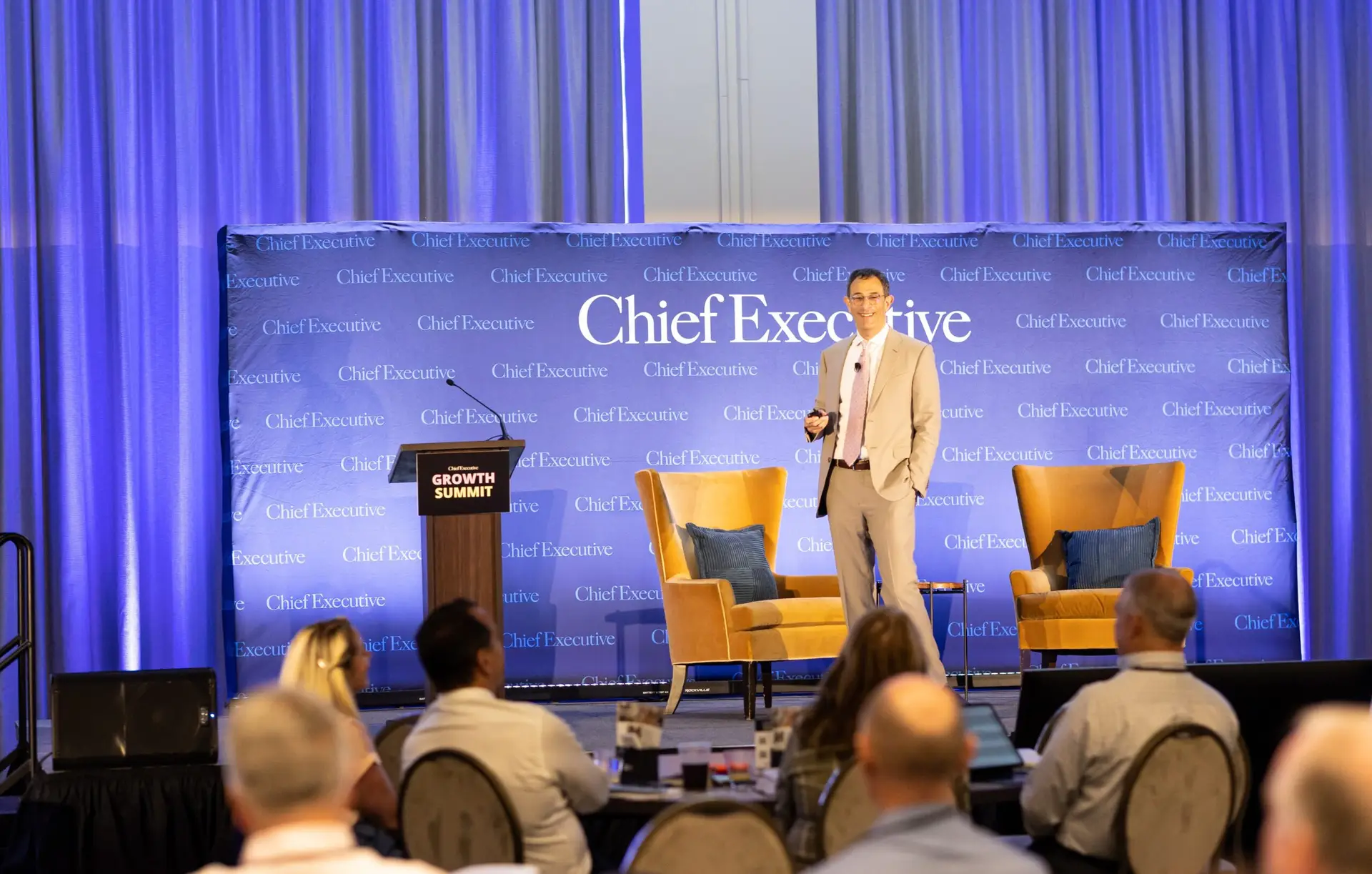
That was the thread running through Chief Executive‘s 2026 Growth Summit in Nashville. Here’s some of what attendees took home.
The product has to earn the marketing.
Fix what’s actually broken before you spend on telling anyone about it. Domino’s CEO Russell Weiner spent two years rebuilding his pizza recipe before launching the famous turnaround campaign. The reason for that sequencing isn’t patience—it’s survival. Great marketing accelerates the spread of a bad product. Weiner’s example: Oldsmobile’s “It’s not your father’s car” campaign failed because the product was still very much your father’s car.
“When you’re trying to fix something, there are two things: what is wrong, how do you fix it, and how do you message it,” he said. “There’s nothing that kills a new product or a new idea better than great marketing. If you have a new product and it’s not good, and you have great marketing—everyone’s going to hear and see it, try that bad idea.”
Find the tension your brand can actually break.
A tension is genuine coiled-up discomfort—in your brand, in your customer’s life or in the broader culture—that’s waiting to be released. When you find the right one and your brand is the thing that resolves it, the message essentially amplifies itself. In 2010, Domino’s brand tension (bad pizza) overlapped with a cultural moment when nobody trusted institutions to be straight with them.
A pizza company admitting its product wasn’t good—and fixing it publicly—broke both tensions at once. For every dollar they spent, Weiner estimated the earned media made it worth 15. The hard part isn’t the concept. It’s the search. “There are as many tensions as blades of grass in a football field,” he said, and consumer research is how you find the one your brand can actually own.
“When you find the right tension, it makes you nervous,” he said. “And that’s kind of the point—when the brainstorming started to get scary, that’s when I knew we were onto something.”
You’re designing your customer experience for the wrong KPI.
Lior Arussy, founder of Strativity Group, reframed the growth question with a simple challenge: If you have a customer who’ll pay you $50,000 this year, but that same customer is worth $1.5 million over a lifetime, which one are you designing for?
Most companies, he argued, are designing for the $50,000 version. His work with Mercedes-Benz, FedEx and others all followed the same logic—start with lifetime value, work backwards, redesign the engagement model to capture it.
“The operating question of most of my clients was, ‘What is the best, most innovative production model to create profitable products?’ What you fail to ask is: ‘What is the most innovative engagement model to create a profitable customer lifetime value—and then work backwards?'”
‘The margins are in the memories.’
Pricing power doesn’t live in the product—it lives in the emotional experience around it. Arussy made the point with a Disney figurine that costs five cents to manufacture and sells for $9.95. That’s not a margin on plastic; it’s a margin on memory. Customers who feel nothing in their interactions negotiate on price. Customers who feel something don’t.
“At Mercedes-Benz, we converted the whole network to sell on emotions, not on features. That was our ability to triple profitability in a highly competitive industry.”
When the world feels uncertain, customers buy trust—not features.
Kelly Goldsmith, who holds the E. Bronson Ingram Chair at Vanderbilt’s Owen Graduate School of Management, echoed Arussy’s. In high-uncertainty moments, consumers stop making analytical decisions and rely on feeling, she said. The feeling that produces the highest return is trust—which means brand-building and consistency matter more right now, not less.
“When the world feels uncertain, consumers are less likely to rely on the facts and figures when they make their decision. What they’re more likely to rely on is how you make them feel. And the feeling that’s going to generate the highest ROI—that feeling is trust.”
Demographic segments are a trap but values-based segments are the unlock.
Goldsmith walked through a consistent pattern of marketing failures with one root cause: targeting people who look like the hypothetical customer rather than people who share the values the product actually serves. Gatorade Light was designed for women, but the real competitor was free tap water—the target segment cared about hydration, not calories. Swiffer flopped in Italy because the product signaled convenience, and convenience meant “not really clean” to Italian households.
The question isn’t who looks like your customer. It’s what job they’re hiring your product to do. “Don’t let your marketing team tell you your core customers are ‘women aged 24 to 35 who live in major metro areas.’ They need to understand what those customers value.”
If your people aren’t owning their efforts, look in the mirror first.
Kerry Siggins grew StoneAge, a Colorado-based maker of high-pressure waterblast tools, more than tenfold over 20 years. The breakthrough wasn’t a strategy—it was recognizing that her own leadership style was suppressing the ownership culture she was trying to build.
When she shifted from “drive, drive, drive” to what she calls cool, calm and collected, people started speaking up within months. The culture changed not because she mandated it but because she stopped blocking it.
“If you do not see people owning it within your organization, you need to look at why. How are you leading? How are you creating the conditions for ownership to exist? Because if I wouldn’t have changed, so many of these things wouldn’t have happened—I would’ve unintentionally stifled people’s creativity, their willingness to speak up.”
Unspoken expectations are fantasy.
After a leadership team meeting dissolved into departmental turf battles, Siggins went home and wrote out her executive team’s operating principles—not as an HR exercise but as a CEO accountability document. It became the basis for annual live 360 reviews and a conflict resolution touchstone.
“Unspoken expectations are fantasy,” she said. “If you do not clearly line out how you expect people to show up, and you do not agree to those expectations, then they’re merely your expectations—they are not reality.”
AI is reshaping the buyer before your seller ever gets involved.
Tiffani Bova, chief strategy and research officer at Futurum and author of GrowthIQ, made the case that the funnel has fundamentally changed. With up to 94 percent of buyers now using AI in their purchase process, a company’s online presence and positioning are doing the selling before any human engages.
Meanwhile, half of all salespeople miss quota in a given year and spend only about 40 percent of their time actually selling. Most growth stalls aren’t caused by market conditions—they’re caused by internal inertia. “The rigor that goes into marketing, R&D, partnerships—that rarely happens in the art of selling. Do we have the right people deployed against the right accounts, with the right comp plans, the right capabilities, the right enablement?”
The people doing the most with AI in your company are probably invisible to you.
Marc Sirkin, chief growth officer at Walk West, described what he calls the jagged edge: Within any organization right now, some employees are quietly rebuilding their workflows with AI—building real applications, automating processes—while others haven’t touched the technology in months. These fast movers don’t cluster by title or technical background. They run on curiosity.
Sirkin described an events manager with no coding background who built a suite of working production applications in three months, without permission and without IT, on his own time. Leadership had no idea. “AI is not evenly distributed in your org chart. It’s not sitting in IT or in marketing or in sales. It runs on things like curiosity and a willingness to experiment,” he said. “You’ve got people rebuilding workflows from the ground up—working for the same manager, on the same team, as people who haven’t touched AI in months.”
Find your ‘Bridgers’.
Harvard Business School professor Linda Hill, who has spent decades studying how organizations actually scale innovation, argued that every company needs three kinds of leadership to turn innovative ideas into reality: Architects who build cultures capable of innovating repeatedly, Catalysts who construct ecosystems across sectors and communities, and Bridgers who work across organizational and external boundaries to bring in capabilities you don’t have inside.
They’re the reason Delta’s biometric boarding pass exists—someone inside the company had to convince a skeptical IT department to let a startup plug into Delta’s systems, then work with TSA and government agencies to make it legal. That person wasn’t a senior executive. She was someone with a wide internal network, a zigzag career and no need to take credit.
Hill says Bridgers are going to be the most essential assets in every company as we try to growh and scale in an increasingly quick-moving and complex era. “Really question your assumptions about who has the potential to help move you to the future,” she said. “There are some really unusual suspects who are the people who can help us get there.”