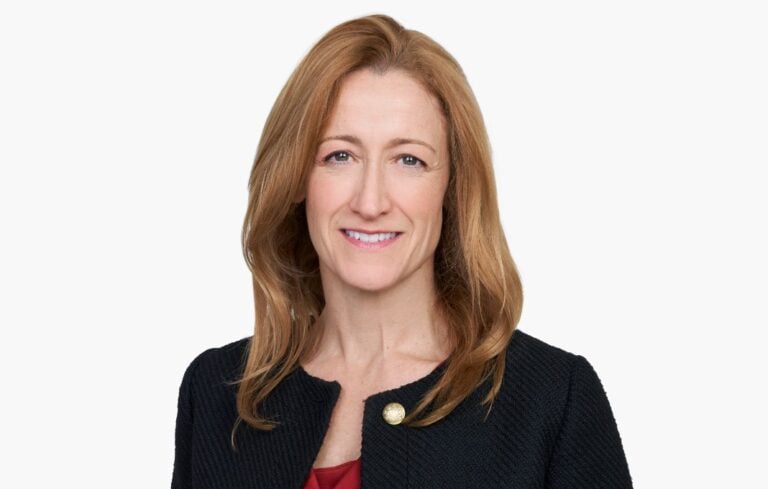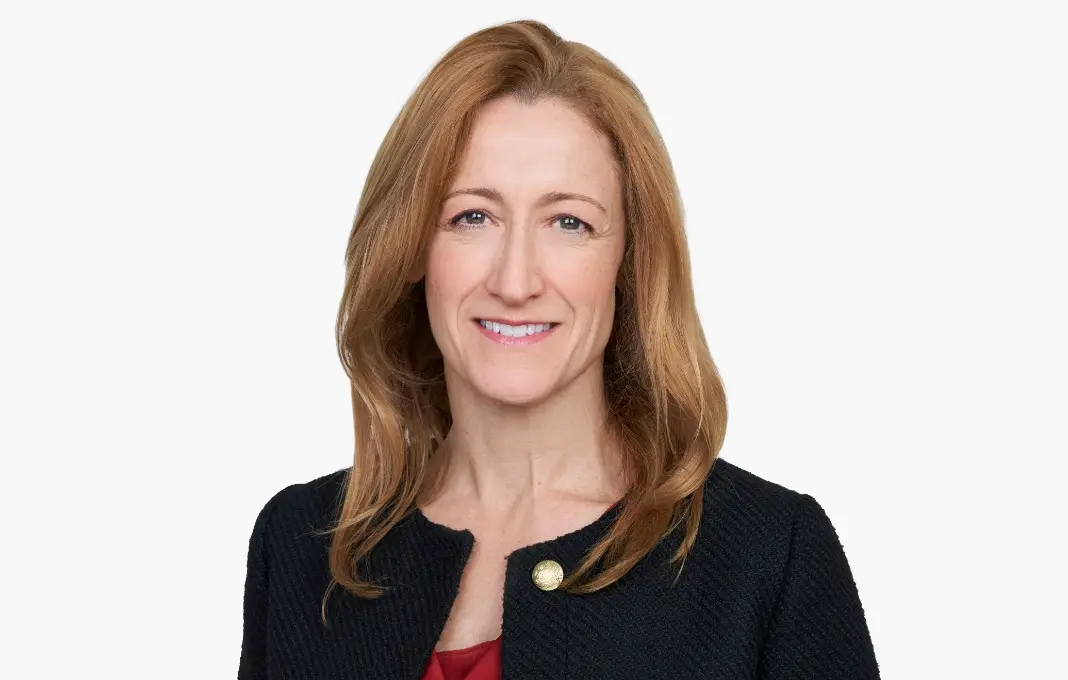
While most CEOs have a clear sense of what AI can do for their business, far fewer have worked out what it’s doing to their business, specifically the risks they carry. Every AI-driven decision, automated process and customer-facing chatbot adds exposure, from model failures to deepfakes and synthetic identities. Hiscox USA CEO Mary Boyd says the risk is changing shape, yet her own company’s data suggests most leaders haven’t caught up: 77 percent of U.S. small businesses are underinsured.
Boyd started as an actuarial trainee at Chubb and spent more than 30 years in the industry, at Chubb, The Hartford and Plymouth Rock, before taking the helm at Hiscox USA in 2024. She sees AI from both sides: as a tool her company is scaling carefully, and as a new category of risk it has to underwrite. In the following interview, she talks about where speed creates advantage and where restraint does, the exposures leaders are missing, and why moving from operator to leader is “a change in kind.”
Hiscox is scaling AI across the business, but has taken a measured approach, emphasizing governance, training and human oversight. At a time when many organizations feel pressure to move quickly, how do you decide where speed creates competitive advantage and where restraint creates long-term value?
The pressure to move fast on AI is real. But speed, technique and discipline aren’t opposites. They are the basis of agility, innovation and high performance. The business leaders and coaches alike, who get this right treat them as complementary, and the skill is knowing when each is required.
I think of AI as a general-purpose capability, much like electricity. It will power nearly everything we do, so the real challenge is embedding it responsibly into our operations. That’s why we use a dedicated framework to ensure AI is used ethically, responsibly and compliantly across the business. This governance gives us the confidence to move faster and scale what works.
Our guiding principle is to augment, amplify and unlock our human potential. AI helps us reduce friction, improve efficiency and frees our teams to focus on judgment, advice and complex risk. Customers should be able to move seamlessly between AI and human support, with people remaining accountable for the decisions that matter most.
The mistake many executives could make is to treat AI as a choice between speed and caution. The better approach is to determine what can be automated safely and where human judgment adds the greatest value. Organizations that make those distinctions thoughtfully can move faster, innovate with confidence and build something durable.
You’ve said that AI is changing the nature of risk itself. What emerging risks do you believe business leaders are underestimating today, and how should organizations prepare for them?
Leaders often may underestimate how quickly their risk profile is changing. As businesses rely more on AI-driven systems for decisions, operations and customer interactions, they’re taking on new exposures—from model, data and automation risk to emerging threats like deepfakes and synthetic identities. The risk didn’t just get bigger—it’s changing shape.
What concerns me most is that many business leaders haven’t adjusted their approach to risk accordingly. We see that in our data. Our 2025 Underinsurance in Small Business Report found that 77 percent of U.S. small businesses are underinsured, suggesting many organizations haven’t fully accounted for how growth, technology adoption and operational changes have changed the risks they face. A company that has doubled in size or embraced AI-enabled processes may still be relying on protection and risk management practices designed for a very different business.
As new risks emerge, from AI liability to cyber and IP exposures, business leaders can’t rely on yesterday’s assumptions. Leaders who recognize that shift are better equipped to identify gaps and strengthen resilience. That’s why risk review should be a living process tied to growth, not an annual exercise.
When adopting a new AI tool, ask not only what it can do for business, but also what new vulnerabilities it creates and what safeguards need to evolve alongside it. Resilience isn’t built in a crisis—it’s built by identifying threats before they become business problems.
In addition to AI, what capabilities are you investing in as you look to the next chapter of growth for Hiscox USA?
The growth has been remarkable, but it’s not just a story of scale. We opened in the U.S. in 2006 and, in 2010, became the first insurer to offer small business insurance online and over the phone in real time. We recognized early that business owners wanted choice in how they engage with insurance, and that insight continues to shape our strategy today.
As we look ahead, our most important investments are in creating a seamless customer experience. Business owners don’t think in terms of direct, partner or broker channels—they expect us to be there when and how they want to engage. Delivering on that requires dynamic data, connected systems and intuitive service across every touchpoint.
Finally, we’re investing in education to help customers navigate an increasingly complex risk environment. As businesses adopt new technologies and face evolving cyber and operational risks, our role isn’t just to provide coverage—it’s to help leaders make informed decisions about protecting what they’ve built.
You often describe your role as fixing, building and coaching. Looking back across your career, how has your definition of leadership evolved as you’ve moved from solving problems yourself to leading increasingly large and complex organizations?
Early in my career, leadership meant individual performance and building new solutions or solving the problems in front of me. If something was broken or needed building, I studied it, collaborated with my peers and worked to deliver.
That instinct served me well. Although I was delivering as a high-performing individual, I knew our greatest success depended on the collective strength of the team. This made the transition to a leadership role natural—however, strengthening as a leader merits intentional effort and investment in our own capabilities in this role.
Our role shifts from how well we build a product to how well we build strategy, identify required capabilities, align our talent to it and then unite their combined strengths to optimal performance. We serve to build the team that delivers the best results and products. This takes different skills and discipline.
It’s rewarding in a different way and multiplies our expertise, experience and coaching impact in the most rewarding of all. When you fix it, the win is the solution. When you coach, the win is helping someone else develop the capability and confidence to find success. For many high performers, that’s harder than it sounds.
My philosophy centers on setting a clear direction, building trust, listening, practicing patience and creating an environment where people can do their best work. A complex organization can’t run on one person’s instincts. The best ideas often come from the people closest to the work.
The move from operator to leader isn’t a promotion in degree—it’s a change in kind. Your job stops being to solve every problem and starts being to build an organization that can solve them consistently.