Some leaders navigate storms. Others stand at their center.
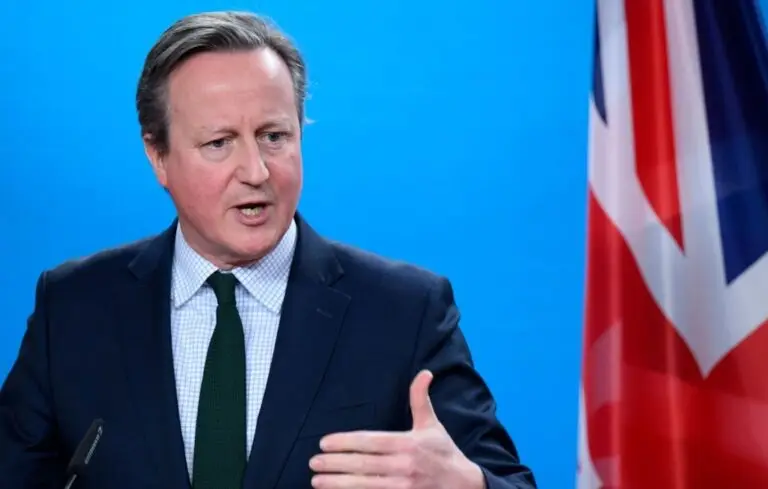
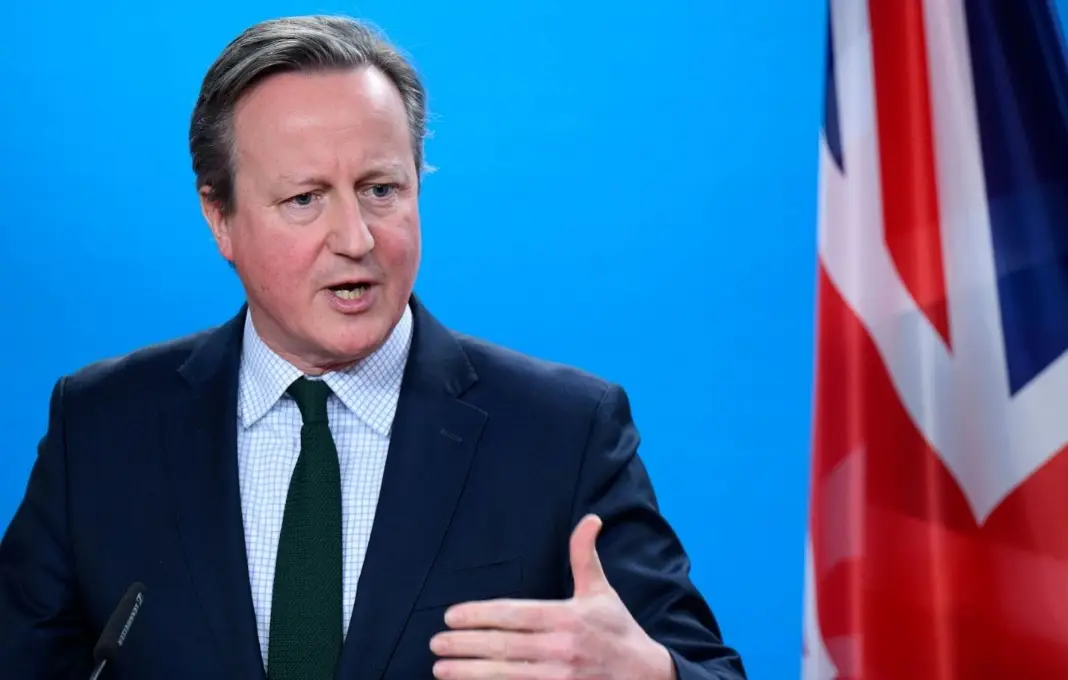
As Prime Minister, Lord David Cameron led the United Kingdom through the aftermath of the global financial crisis, its first coalition government since the Second World War, the Scottish independence referendum and the Brexit campaign. He later returned as Foreign Secretary amid profound geopolitical upheaval, having spent much of his career across the table from some of the world’s most powerful leaders.
That experience shaped my recent Q&A with Cameron, which began as a wide-ranging discussion about politics and global affairs but quickly became something far more specific. A conversation about leading under immense pressure.
Five imperatives stood out: 1) Look beyond the headlines 2) communicate with the patience of a teacher; 3) replace the script with authenticity; 4) protect time to think; and 5) give people credible reasons for optimism.
Don’t let today’s headlines become tomorrow’s strategy
One of Cameron’s most consistent themes was separating short-term noise from long-term priorities.
“There is no other job like being Prime Minister,” he told me. Every day brought a new crisis, controversy, unexpected headline or emerging issue demanding immediate attention. Yet those urgent demands were often not the reason he was there. He adds, “We’re going to try and deal with the short-term stuff and then find enough time and the best team and evidence to think about what the big strategic moves are we’re trying to make.”
During his time in office, those big moves involved reducing Britain’s deficit by £77 billion, growing the economy by 11-12 percent in real GDP, increasing employment by 2.45 million, attracting a total of £1 trillion in accumulated foreign direct investment, and helping transform London into a globally recognized technology hub.
It is easy to spend an entire week responding to emails, meetings, issues and escalations only to realize little time was spent discussing the future. Research from McKinsey consistently shows that organizations maintaining focus on a disciplined platform of strategic priorities outperform those constantly reacting to events.
The business lesson is straightforward. Great leaders acknowledge today’s challenges without allowing them to consume tomorrow’s opportunities.
Leadership is teaching, not just telling
Cameron believes many leaders underestimate how much communication matters in earning the vote of confidence in your organization. “You think you’ve explained something, and then you’re confused why no one understands it,” he said. “Good leaders also have to be good teachers.” He continued, “You have to be permanently explaining, always explaining, always communicating and telling people why you’re doing what you’re doing.”
In a world shaped by algorithms, social media and numerous sources of information, leaders can no longer assume everyone is hearing the same message. As Cameron observed, people increasingly consume different news, competing manifestos, and sometimes seemingly different realities. He explains, “Everyone’s got their own truth, and their own news.”
He illustrated the challenge with a personal story. While serving as Foreign Secretary, he spent 20 minutes in a video call with someone he believed was former Ukrainian President, Petro Poroshenko. Later, security officials informed him he had been speaking to a sophisticated deepfake. If a seasoned politician can be fooled, the rest of us should probably remain humble.
According to the Edelman Trust Barometer, employees consistently rank transparent communication among the most important leadership traits. The business implication is clear. Communication is not an event. It is a leadership discipline, and if your strategy is important, assume explaining it once is just the beginning of the conversation.
Authenticity builds political capital when difficult decisions arise
One of the more important leadership lessons Cameron shared was surprisingly simple. “When you dispense with the script and talk directly, your impact is much greater.” With years of experience behind him, he felt less dependent on prepared remarks and more comfortable speaking directly about issues he knew deeply.
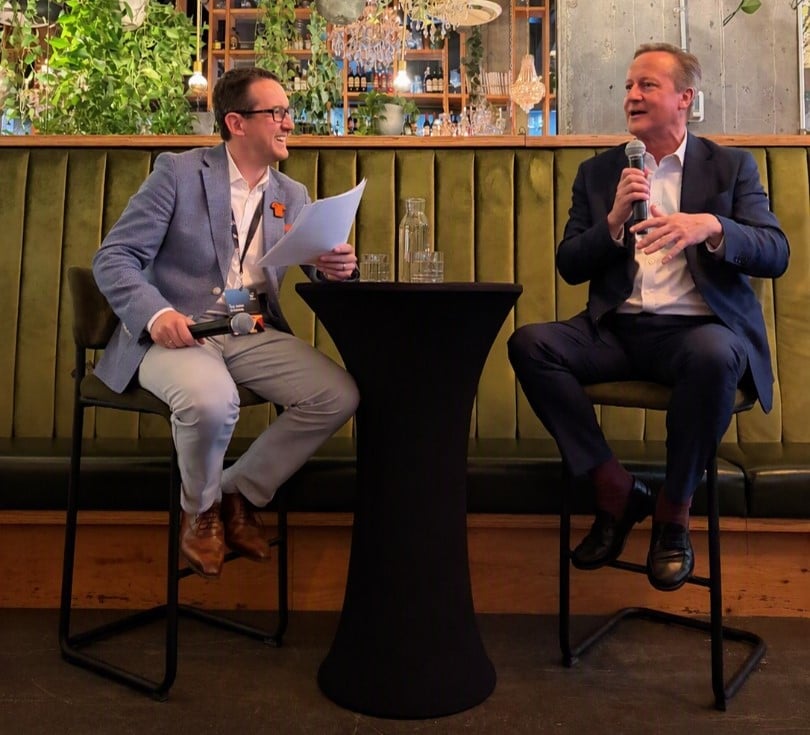
That authenticity also surfaced in the most unexpected and memorable story of our conversation. It was Cameron recounting a trip aboard Air Force One, where he found himself sleeping in President Obama’s bed. As Cameron told it, “Obama tucked me in, pulled the blanket up and proudly declared that Roosevelt had never done that for Churchill.” If leadership is ultimately about relationships, it’s hard to imagine a more memorable demonstration of the ‘special relationship.’
The story is amusing, but its significance lies in what it reveals, which is consequential relationships are built through human connection, not polished scripts.
In business, expertise creates confidence, and confidence enables authenticity. So, the next time you stand in front of your team, focus less on delivering perfect words and more on delivering a genuine message.
Thinking has become a leadership skill
Cameron’s observation about the erosion of time to properly think may have been the most consequential leadership insight of our conversation. Reflecting on Winston Churchill’s wartime cabinet, he noted that some of the most important decisions in British history were debated over several days. Today, he joked, such a discussion might struggle to last 10 uninterrupted minutes before emails, notifications, media requests or breaking news demanded attention.
As Cameron put it, “We have to find time to think about where we’re trying to take our country, our organization, or our business.” A Microsoft study found employees face unprecedented levels of digital interruption, making focused strategic thinking increasingly difficult.
Strategic thinking rarely happens in business accidentally. So, you need to protect time for reflection with the same intensity you protect time for operational reviews.
Optimism is still a competitive advantage
Despite geopolitical instability, AI disruption, rising tensions and economic uncertainty, Cameron remains remarkably optimistic for deeply personal reasons. He spoke movingly about advances in genomics, AI and medicine, reflecting on how dramatically treatment options have improved since the life of his son Ivan, who lived with severe medical challenges.
“We’ve only just scratched the surface of this,” he said when discussing the potential of AI and medical science to transform healthcare.
Society spends a great deal of time discussing what’s broken, but less time appreciating what’s improving. The leaders who inspire confidence understand the risks, but they also see the possibilities.
Optimism is most credible when it’s grounded in evidence rather than wishful thinking. So, consider giving your business team reasons to believe in a better future, not just reasons to worry about the present.
The leadership manifesto
Our conversation covered Brexit, AI, tariffs, energy security, populism, global alliances, misinformation, medical breakthroughs and the future of leadership. Yet the overarching lesson felt crystal clear. Focus on the things that matter, communicate constantly, be authentic, create time to think and remain optimistic about what’s possible.
Leadership today can feel like navigating through heavy fog. Cameron’s experience suggests that the most impactful leaders are rarely those who react fastest. They are the ones who maintain clarity when everyone else is distracted.
The question for all of us is this: In a world competing relentlessly for our attention, can we create the space to think clearly, remain steady under pressure and in the truest sense keep calm and lead on?