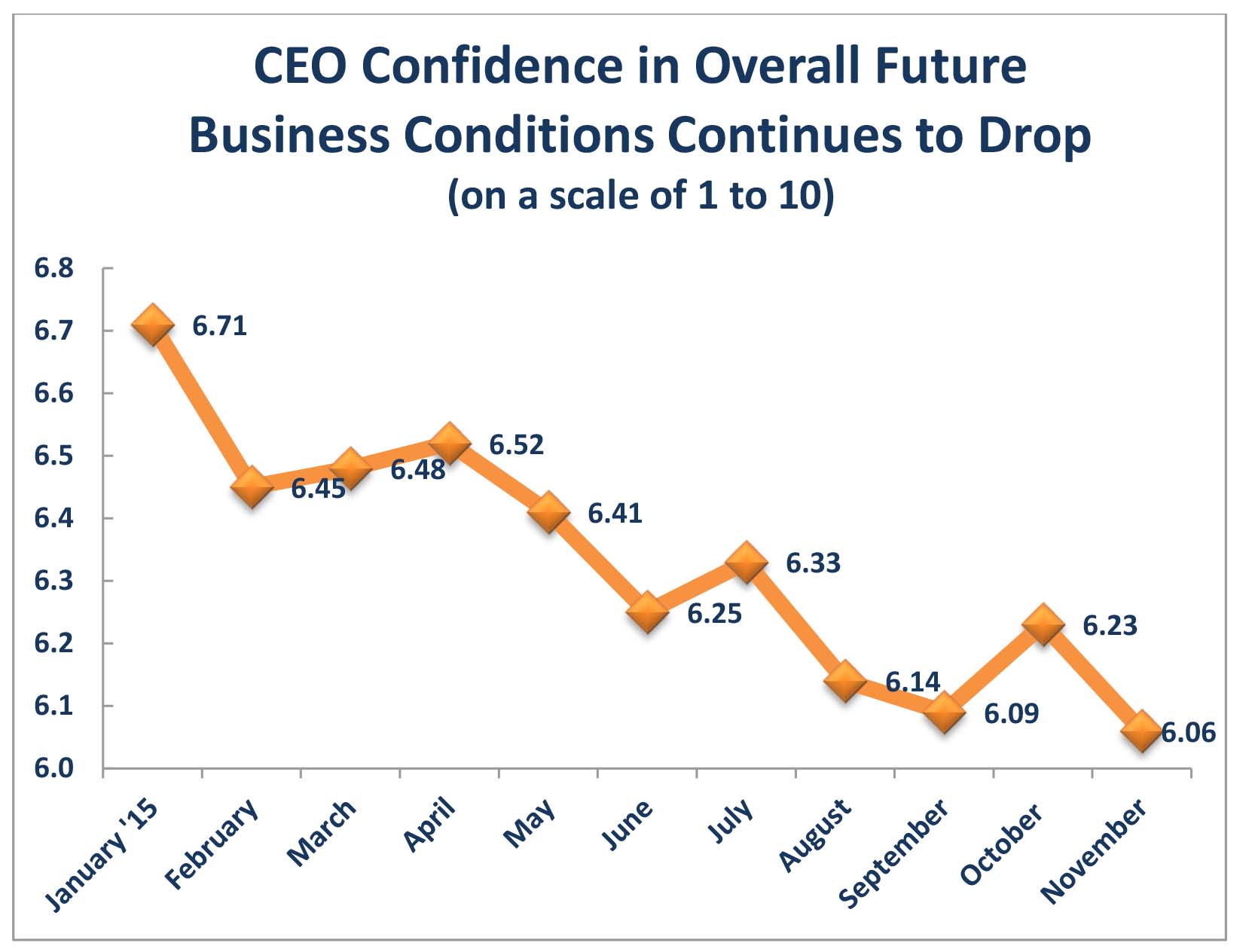
From flat interest rates to low oil prices, weak retail sales and the struggle over higher worker pay, many CEOs feel that nothing will improve until after the presidential election and are maintaining an air of cautiousness until then.
“Many of our clients feel the economy is stagnant,” another responded. “Decisions are on hold because of uncertainty of where interest rates are headed and concern over the lack of leadership in the current administration and the inability of Congress to accomplish anything.”
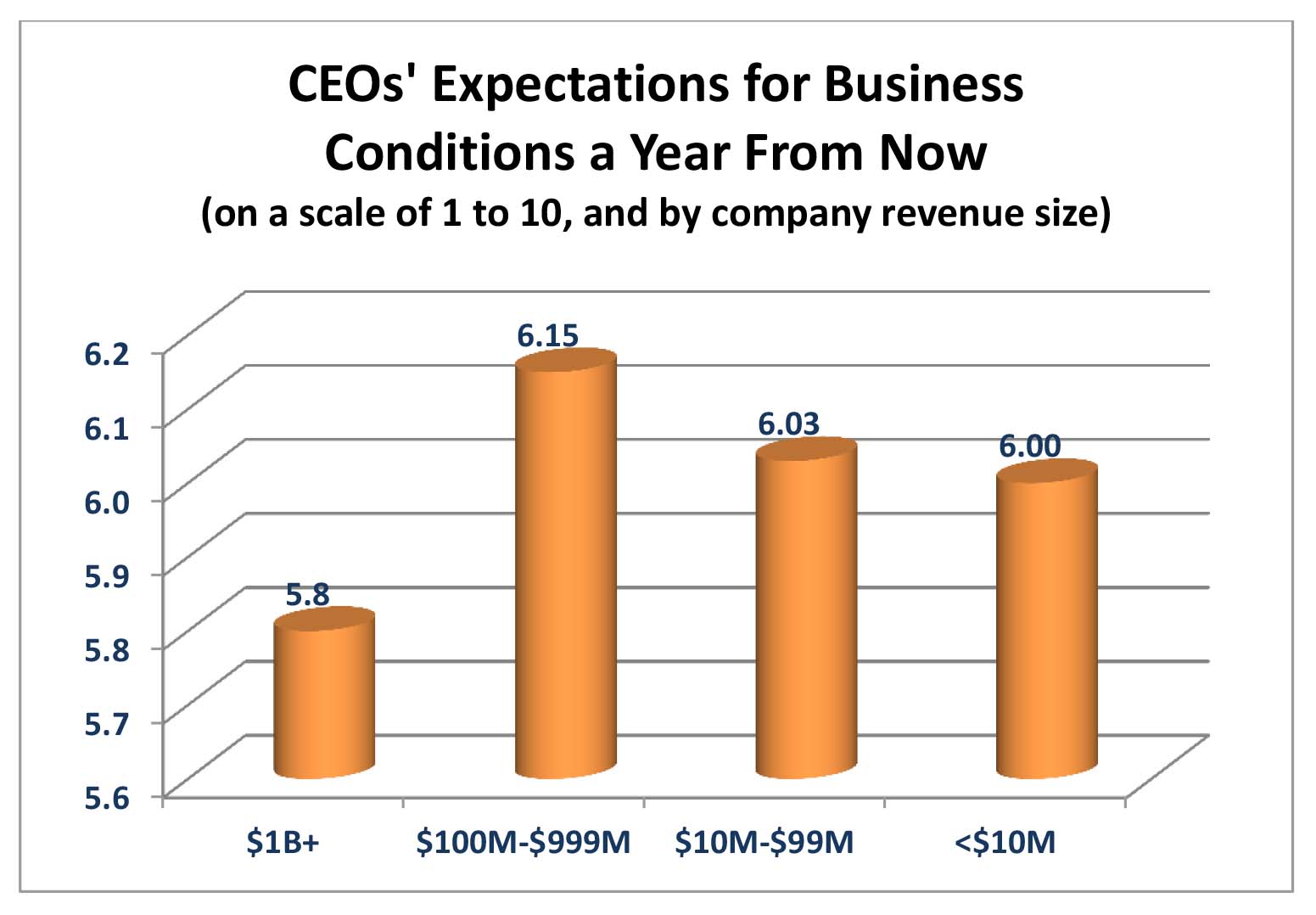
Large company CEOs—who are most exposed to international markets—have the least faith in future business conditions, registering a 5.8 on a scale of 1 to 10, compared with larger mid-market firms, which had the highest expectations, registering a 6.15 out of 10. Smaller mid-market firms were not far behind at 6.03, while small businesses rated their future expectations at 6.00.
“I don’t see an end in the near future of this weak cycle, as whenever one sector starts to pick up, another slows down,” one CEO said. It’s likely that until the presidential election next year, we can expect more of the same.
Market engineering is far more than clever marketing. It’s the operating system for category ownership…
Rising investment. Unclear outcomes. Increasing scrutiny on the executives responsible for both. The risk isn’t…
In a populist moment for America, standing your ground is the only strategy.
A useful model for how organizations in all sectors can lead responsibly when certainty disappears…
Staying cool and consistent under pressure shows your team that you are ready to handle…