There’s no question AI can help leaders move faster. It can summarize research, hone a presentation, draft a memo and turn rough ideas into polished prose in seconds.
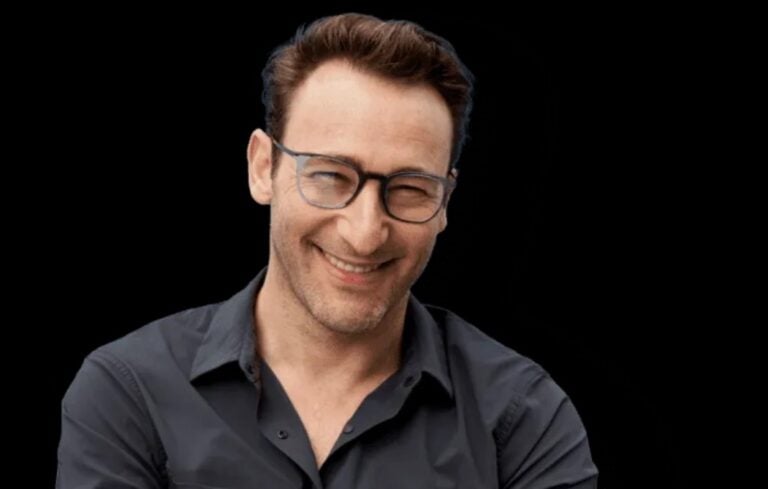
Globally renowned author and speaker Simon Sinek knows we are at a crossroads in storytelling. With the introduction of cutting-edge technologies like AI, creators now have the ability to produce work in ways like never before.
But Simon Sinek challenges CEOs to think about the long-term effects of those newfound freedoms.
The speaker behind the second most-watched TED Talk of all time knows that a story is about more than the words used; it’s also about who is telling it and how they got there. Some of the most valuable leadership capabilities—judgment, pattern recognition, resilience, the ability to communicate an original point of view—are developed through the process of doing difficult work, not merely by producing a polished result.
“AI could write my next book,” the accomplished wordsmith explains to me on a recent episode of the Corporate Competitor Podcast. “But if you only use AI for outcomes…in year seven, eight, nine, 10 of your career, you’re still entry level.”
He’s right. AI is a wonderful tool, but it can’t be the only one in your toolbox.
When I think about storytelling (which happens to be the subject of my newest book, The Business of Storytelling: Inspire Action, Build Trust, and Drive Results Through Story), I’m excited about the opportunities AI can give us, but I also believe that if we rely on the tech too much, it becomes unclear if we are good storytellers or simply good prompt writers.
That can be dangerous territory.
“If you haven’t done the work,” Sinek explains, “when bad things happen, you’ll get stuck in victimhood longer than is healthy—because you don’t know how to get out of it.”
Instead, Sinek advises CEO storytellers to get their hands dirty—write, re-write, re-re-write. For him, the journey matters just as much as the finished product.
“Process is human,” Sinek says, “because it’s imperfect and slow and meandering. I’m smarter and a better pattern recognizer not because books exist with my ideas in them, but because I wrote the books.”
He talks about all this and more on the podcast, including:
• Tell the stories YOU enjoy. When it comes to being creative, there’s perhaps one rule above all others: If your heart isn’t in it, the audience can tell. Simon understands that as well as anyone. That’s why he brings passion to every syllable of his stories. “I am telling you the story as I am living it out in my mind,” he says.
• Stories are like puzzles. When we think of a puzzle, Sinek says, we are really thinking of two things: the individual pieces and the completed picture. When he speaks to an audience, Sinek remembers to keep the bigger picture in mind, no matter what piece he’s discussing. “If one piece is out of place, it’s okay,” he says. “You can still tell what the puzzle is showing.”
• Creativity is not just a destination. With every year, we create new tools to aid in our creativity. In the 1960s, bands were Scotch taping literal tracks together in the studio. Today, they have vocal correction software and Pro Tools.
Original thinking still matters. Leaders need to know whether someone understands an idea—or merely knows how to generate a convincing version of it. Ultimately, for CEOs, successful storytelling should be less about the most polished product and more about figuring out your own route getting there.