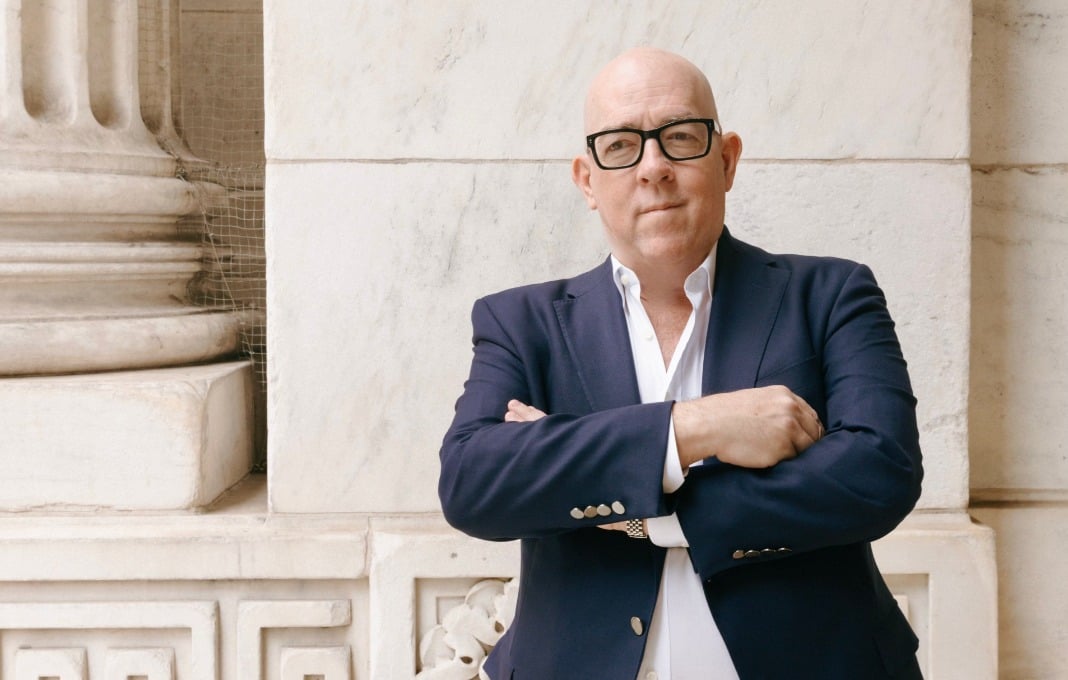
Now that AI is taking some of the drudgery out of CEO job, the harder work will only become more visible, says Adam Benowitz, CEO of VOX Funding, who sees a business world where financial models are built in seconds and scenarios are tested instantly, with information moving fast enough to erase many of the old bottlenecks around decision-making.
That speed, Benowitz suggests, will elevate leaders who can make quick calls and have the wisdom and judgment to guide people through uncertainty.
Benowitz also sees a generation of executives heading toward a far less forgiving landscape than the one they grew up in. Tighter capital and a shrinking pipeline of entry-level roles are likely to define the road ahead, and, as he explains in the following interview, the CEOs best positioned to navigate it will be the ones who know how to operate under pressure without assuming the next round of money or the next tool will solve everything.
Where do you expect AI to be making or shaping the biggest CEO-level decisions by 2031—and what decisions do you believe should never be handed over to machines?
AI is obviously the thing everybody’s talking about right now, and I do think it’s going to massively help executives move faster. A lot of things that used to take people days to do are going to take seconds. Building models, analyzing scenarios, processing information, AI is going to accelerate all of that.
From a CEO perspective, it frees up resources and gives you more tools to ideate and test things quickly. If you have an idea, you can immediately pressure test it. Before, maybe you didn’t want to spend three days building something just to see if it worked. Now you can do it instantly.
I think the people who really benefit are creative executives and strategic thinkers. AI can help everybody catch up faster, because a lot of capabilities become commoditized more quickly. That’s the interesting part. It helps the leaders, but it also helps the people behind them close the gap faster.
What I don’t think it replaces is relationships. In fact, relationships become more important in a world where everything becomes more commoditized. When everybody has access to the same tools and similar capabilities, trust and relationships become one of the biggest differentiators.
There are also decisions that should stay human. Creative judgment, leadership, culture, risk decisions, those things still matter. AI can inform decisions, but I don’t think it replaces the people making them.
Looking at how you hire and manage people today, what do you think will feel most unrecognizable about the workforce CEOs are leading five years from now?
I think there are going to be a lot fewer people doing mid-level functional work and rote tasks. AI is going to replace a lot of those jobs. That’s just reality.
The people who become more valuable are the people doing things the machine can’t easily replicate: creativity, strategic thinking, relationship building and leadership.
I also think AI literacy is going to become incredibly important. Understanding how to use these tools effectively is going to matter in hiring decisions across almost every industry.
Where I think it becomes especially tough is for younger people entering the workforce. If you’re a senior person with decades of experience and strategic responsibilities, AI probably helps you more than it replaces you. But if you’re 28 years old doing spreadsheet work or process-heavy work, it’s a different story.
I think the entry-level job market is going to become much tighter, and companies are going to hire fewer people into those traditional early-career roles.
What’s one part of the CEO job where the speed of decision-making has already become unsustainable—and what will CEOs have to change about how they work to keep up?
The speed of everything is increasing.
You used to ask an analyst to build a financial model and maybe get it back in a few days. Now you can ask AI to do it and have it immediately. That changes how companies make decisions.
It also changes how many ideas you can test. Before, maybe you didn’t want to spend the time or resources exploring ten different scenarios. Now you can.
So, CEOs are going to have to get much more comfortable making decisions quickly, processing more information and adapting faster. The pace is only going to accelerate from here.
When you look at the next generation of CEOs coming up now, what do you think they’re most underprepared for in the world they’ll be leading in a few years’ time?
I think a lot of younger executives have grown up during a very long period of abundant capital and relative stability. They haven’t really experienced what happens during prolonged, difficult economic periods.
There’s a difference between operating a business when money is flowing freely and operating when there’s real fear, tight credit and no access to capital.
I also think the remote work era hurt a lot of younger professionals developmentally. There’s a tremendous amount you learn by being physically around experienced operators, sitting in meetings, watching how leaders handle problems and just being in the office environment every day.
A lot of people missed some of those years during COVID, and I do think that matters long term.
How do you think access to capital for CEOs will change in the near term?
Right now, capital has still been relatively accessible. Even with some ups and downs, we’ve spent a long time in an environment where money has generally been available.
But if we go through another serious debt crisis or credit contraction, a lot of people are going to realize they’ve never actually operated in that type of environment before.
When capital tightens, everything changes. Businesses fail, credit gets tighter and the cycle feeds on itself. We saw that after 2008.
I think a lot of newer founders and executives don’t fully understand what it looks like when there really isn’t money available.
As lenders and investors get more data-driven, what will CEOs need to show capital providers that many don’t—or can’t—show today?
Honestly, I think we’re already there.
If you can’t show strong data, operational visibility and a real understanding of your business, you’re going to struggle.
The days of purely relationship-driven, non-data-driven deals are mostly over. Investors and lenders want transparency, they want performance metrics and they want to understand exactly what’s happening in the business.
That trend is only going to continue.
Do you expect capital to feel more democratized or more concentrated for growing companies, and how should today’s CEOs hedge against being on the wrong side of that?
I think smaller-scale access to capital becomes more democratized. Technology and embedded finance are making it easier for individuals and small businesses to access smaller amounts of money.
But I actually think larger-scale capital could become harder to access during tougher economic cycles.
It may become easier to get $25,000, but harder to get $3 million.
That’s why companies need to be more disciplined. Don’t build a business assuming there will always be another round of capital behind you. Don’t burn cash irresponsibly. Manage cash flow carefully and plan conservatively.
Because if markets tighten, the companies that survive are the ones that prepared for that possibility before it happened.