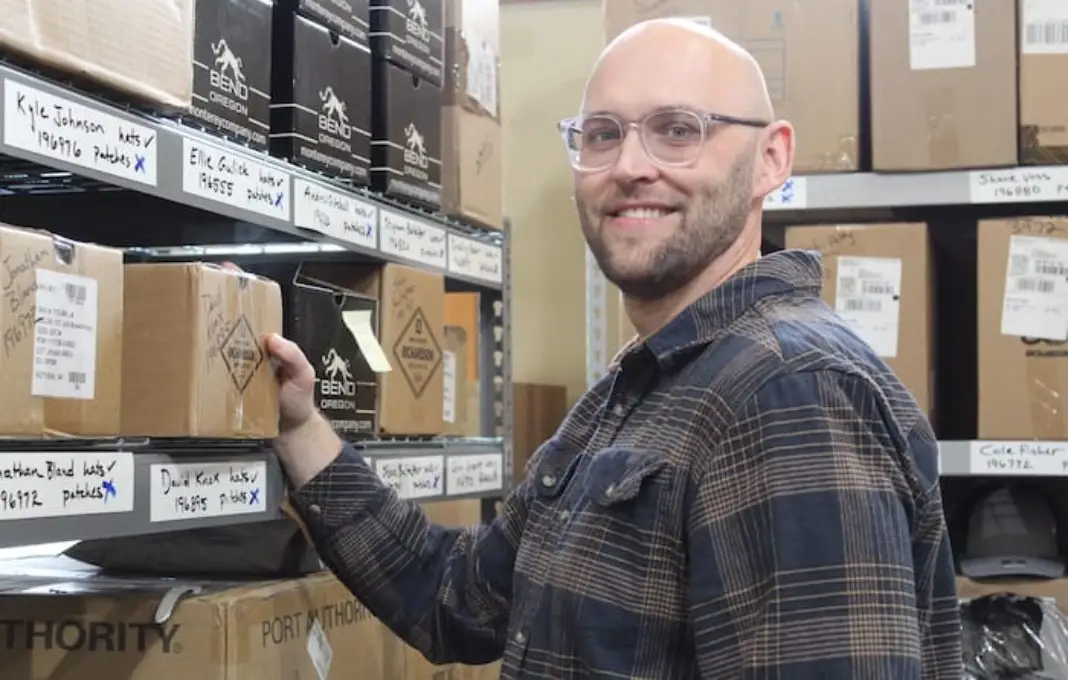
Eric Turney started at The Monterey Company as a sales rep in 2017. Back then, most of the company’s institutional knowledge about customers and deal histories resided in individual employees’ heads, inboxes and notes, which was adequate for its size, but not exactly scalable.
As Turney moved from sales into leadership and eventually ownership, recognized that the company needed some more modern systems to centralize and manage data as sales and headcount grew, and he helped introduce CRM, ecommerce, SEO, new reporting systems and AI-enabled workflows.
At the same time, Turney’s approach to modernization has been deliberately selective. For example, the company still assigns customers a dedicated representative from quote through production, preserving the personal-service model it has built over more than three decades.
In the following Q&A, Turney explains what he and his team chose not to change, where modernization created problems, how they moved more technical and marketing work in-house, and how Turney himself learned that scaling an established company is often less about replacing old systems than figuring out which ones are actually holding growth back.
How did you decide what needed modernization and what was worth protecting?
I tried to separate old from bad. The Monterey Company was founded in 1989, and personal service was a big reason customers stayed with us. I wanted to modernize CRM, reporting, our website, SEO and repetitive admin work without making customers feel like they were dealing with a machine.
Which changes had the biggest impact?
CRM had the broadest operational impact. We use Pipedrive, and having deal ownership, stages, activity and follow-ups in one place gave management much better visibility.
AI had the biggest impact on my own productivity. I’m not a developer, but I now use AI coding tools to build landing pages, troubleshoot our site and make changes I previously would have outsourced.
What initially got worse?
Tool sprawl. Every new platform promises to save time, but eventually employees have six or eight places they’re expected to check.
AI creates a similar problem. It can produce something in 30 seconds that takes 20 minutes to correct. More output does not automatically mean more useful output.
Why move more technical and marketing work in-house?
Speed. If every website change requires an outside developer, small tests become slow and expensive. Now I can have an idea in the morning and often test it that day.
We also started turning repeated sales questions into website content. If customers keep asking about minimums, pricing, turnaround times or proofing, the website should answer those questions before sales has to.
How did you modernize sales without weakening relationships?
We tried to automate information, not relationships.
A CRM should remind a salesperson to follow up. It shouldn’t make the follow-up feel robotic. Technology should make the salesperson more informed and responsive, not harder to reach.
What did you learn about employee adoption?
People resist systems when they don’t understand how the change helps them. Telling a salesperson that a new process gives management better reporting is not very motivating.
Adoption improved when the benefit was practical: fewer missed follow-ups, easier access to customer history, less time hunting for information.
You also have to enforce the system. If half the team uses the CRM and the other half keeps the real pipeline in their heads, you don’t actually have a CRM process.
Can you quantify the impact?
When I started with The Monterey Company as a sales rep in 2017, we were doing roughly $1 million a year in sales. Today we’re around $5 million annually, with recent months landing between about $400,000 and $480,000. It wasn’t one big change that got us there. It was years of improving the sales process, systems, marketing and how much work we could handle without losing the personal service that helped build the company in the first place.
The clearest impact of the new technology has been capacity. We can manage more sales activity, answer more customer questions earlier and complete more website and marketing work internally.
What looked like a technology problem but was really a management problem?
CRM hygiene.
Software can’t force a salesperson to enter a realistic close date, follow up, record the next step or remove a dead deal from the forecast. At some point, that is management.
The same applies to AI. If someone submits bad AI-generated work, buying a better AI tool may not fix it. You may have an accountability problem.
What should an established CEO modernize first?
Follow the friction.
Ask employees what they repeat constantly. Ask customers what confuses them. Look for where information gets lost and what managers are constantly chasing people for.
I wouldn’t start with, “What technology should we buy?”
I’d start with, “Where are we wasting time or creating unnecessary friction?”
Any other parting advice?
Don’t change things just to prove you’re modernizing the company. Some old processes are outdated. Others are part of why customers stayed for 20 years. Learn the difference before you start ripping things out.