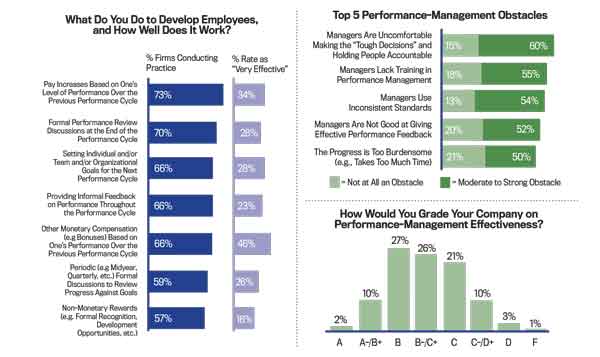
For example, while 73 percent of respondents said that their companies’ base-pay increases were set on performance levels, just 34 percent felt the practice was very effective. The perceived effectiveness of efforts like formal reviews, goal-setting and informal feedback was lukewarm (see chart, below). In fact, the only practice respondents ranked as “very effective” was “other monetary compensation” or offering bonuses based on performance. What’s more, a whopping 35 percent of respondents graded their companies at a “C” or below on overall effectiveness of performance management.
Why do so many attempts to improve performance yield so little? Respondents cited managers who aren’t comfortable making “tough calls,” holding people accountable, failing to maintain consistent standards and providing constructive feedback. What’s more, managers lack training in performance management and find the process too time-intensive.
Though volatile pressure continues to temper current business forecasts in the sector, year-ahead manufacturing confidence…
In an era of tariffs, China, AI, margin pressure and continued economic uncertainty the best…
Once you commit to a truly customer-centric operation, the path you chart will be very…
After a decade, we’ve found that distributed teams outperform when the operating infrastructure is right.
Leadership turnover creates uncertainty fast, especially when employees lose sight of the company’s core values.…
For those currently borrowing or considering credit, the shifting landscape demands careful strategy. Key considerations…