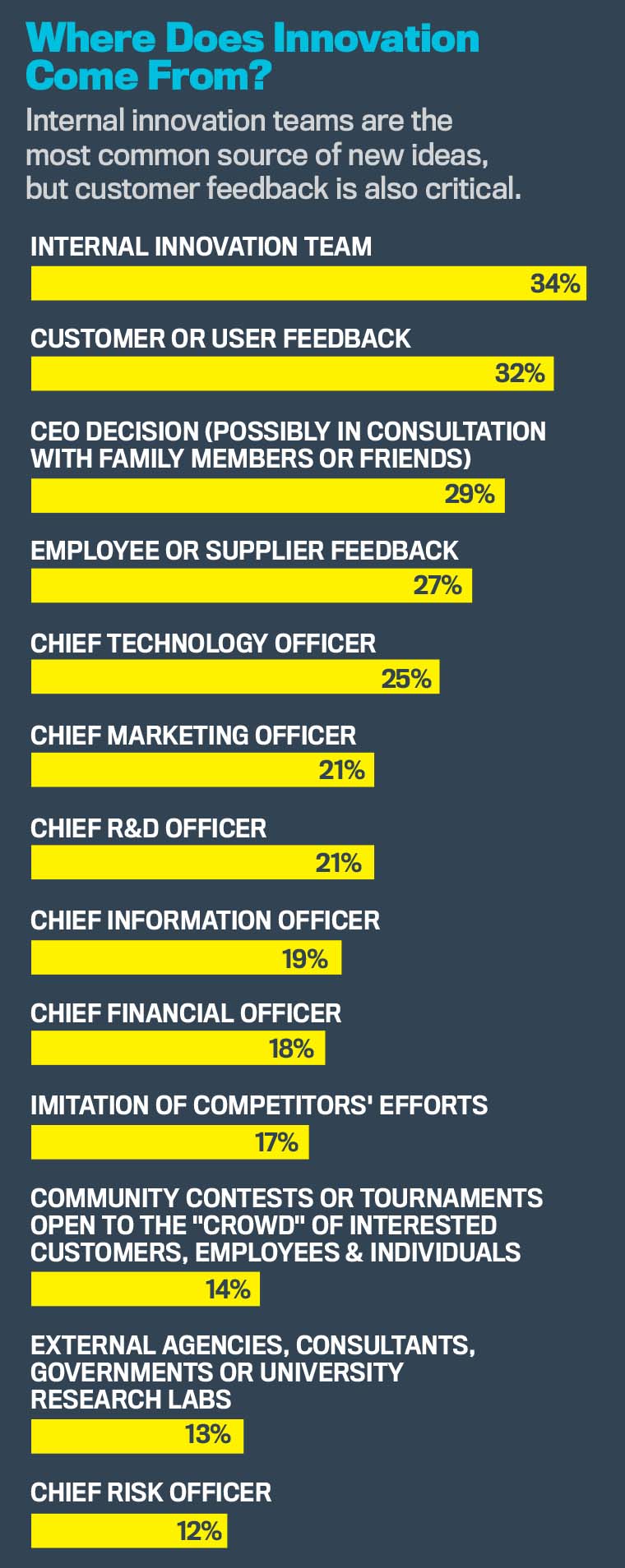
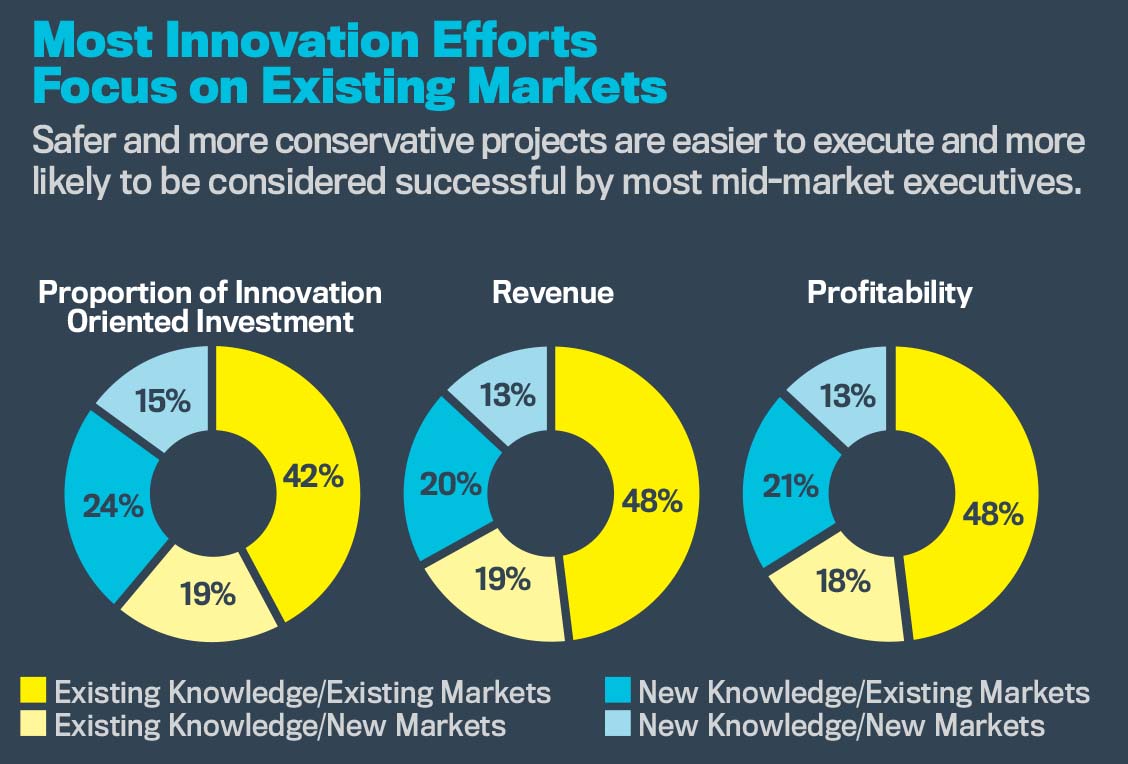
This success may be partly due to the fact that their innovation efforts tend to skew conservatively, focusing on familiar markets and knowledge rather than unmapped “blue oceans.” Furthermore, mid-market companies tend to use their own internal resources to generate ideas and to manage innovation risk carefully.
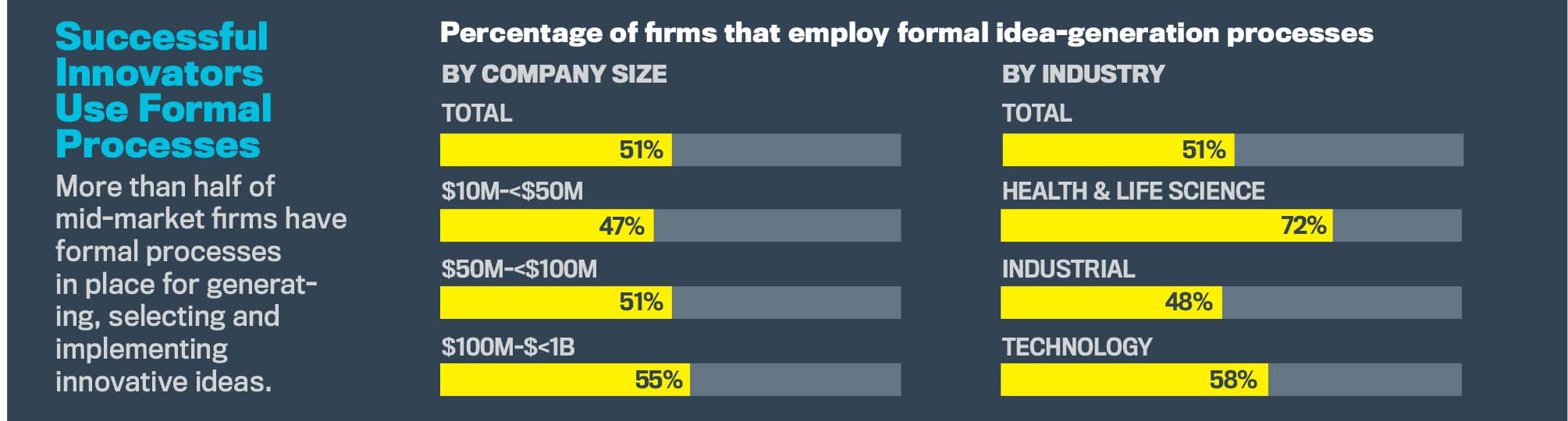
The most effective innovators tend to engage the entire company around innovation initiatives, fostering cross-departmental interaction, as well as the involvement of senior leaders. They are also more likely to possess a well-developed set of capabilities and practices—formal processes, tools to track and measure innovation, attention from senior leadership—to better manage the risks they take.
The statistics, tables and charts to follow offer insights on how the most successful mid-market companies foster innovation.
This article is taken from the November/December 2015 issue of Chief Executive magazine, page 22. To subscribe to Chief Executive, click here.
The bestselling author and advisor to CEOs shares what he’s counseling manufacturers as they navigate…
Market engineering is far more than clever marketing. It’s the operating system for category ownership…
Rising investment. Unclear outcomes. Increasing scrutiny on the executives responsible for both. The risk isn’t…
In a populist moment for America, standing your ground is the only strategy.
A useful model for how organizations in all sectors can lead responsibly when certainty disappears…
Staying cool and consistent under pressure shows your team that you are ready to handle…